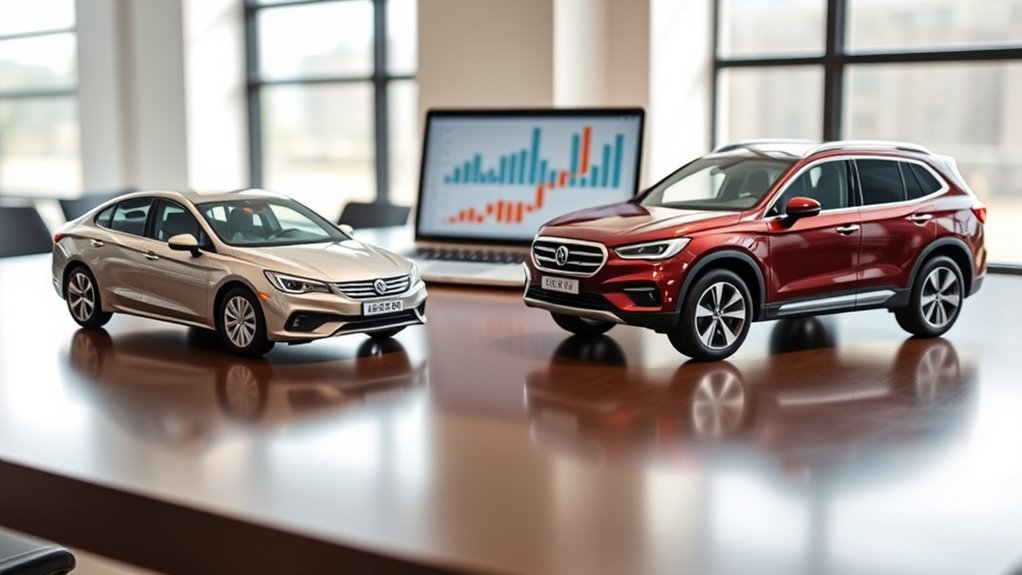

When deciding between leasing and buying a car for your business, leasing offers immediate tax advantages by allowing you to deduct monthly lease payments directly, simplifying your tax process. Buying, on the other hand, lets you claim depreciation deductions over several years, which can be financially beneficial long-term. Both options have their perks, and understanding these tax benefits can help you make the most of your investment. If you want to learn more about maximizing your advantages, keep exploring the options.
Key Takeaways
- Leasing allows immediate tax deductions for monthly lease payments, simplifying expense tracking.
- Buying enables depreciation deductions over multiple years, spreading tax benefits.
- Electric vehicle tax credits can reduce overall purchase costs, enhancing financial incentives.
- Lease agreements often include maintenance, lowering repair-related expenses and associated tax considerations.
- Business use percentage impacts the extent of deductible lease or purchase expenses for tax advantages.
Are you wondering whether leasing or buying a car offers better tax advantages for your business? The decision depends on several factors, including the type of vehicle you choose. If you’re considering electric vehicles, there are unique benefits and considerations that can influence your choice. Leasing an electric vehicle often means lower upfront costs and potential tax incentives, making it an attractive option for businesses aiming to reduce tax liability. Plus, electric vehicles generally have fewer moving parts, which can lead to reduced maintenance costs over time. This can translate into significant savings, especially if your business relies heavily on vehicle use. When you lease, maintenance costs are often included in the lease agreement, simplifying budgeting and reducing unexpected expenses. This can be a major advantage, as electric vehicles tend to have fewer maintenance needs compared to traditional combustion engines, but when repairs are needed, they can be more expensive if you own the car outright. Additionally, electric vehicles are known for their energy efficiency, which can contribute to lower operating costs and environmental benefits.
If you buy an electric vehicle, you might benefit from federal and state tax credits designed to promote clean energy, which can offset the higher purchase price. Additionally, owning the vehicle allows you to claim depreciation deductions over several years, providing ongoing tax benefits. However, you’ll be responsible for maintenance costs, which can be lower than those for gas-powered cars but still add up over time. Electric vehicles require less routine servicing such as oil changes, but battery replacements and system repairs can be costly if they occur outside warranty coverage. This makes the decision nuanced: leasing could reduce your exposure to unpredictable repair costs, while buying might offer longer-term financial benefits if you plan to keep the vehicle for many years.
In terms of tax advantages, leasing often allows you to deduct monthly lease payments as a business expense, providing immediate tax relief. On the other hand, purchasing enables you to claim depreciation and possibly take advantage of electric vehicle incentives, which can enhance your overall tax savings. The choice hinges on your business’s cash flow, how long you plan to keep the vehicle, and your ability to handle maintenance costs. If you prefer predictable expenses and want to maximize immediate deductions, leasing might be better. But if you’re looking for long-term ownership, potential resale value, and the ability to claim depreciation, buying could be more advantageous. Ultimately, understanding how electric vehicles impact maintenance costs and available tax incentives will help you make the most informed decision for your business’s financial health.
Frequently Asked Questions
Can I Switch From Leasing to Buying During the Lease Term?
Yes, you can switch from leasing to buying during the lease term, but it usually involves a lease transfer or lease termination. You might need to find someone to take over your lease through a lease transfer, or negotiate early lease termination with your lender. Keep in mind, fees and penalties may apply, so review your lease agreement and contact your leasing company to understand your options and potential costs.
Are There Tax Benefits for Electric or Hybrid Vehicles?
Yes, you can benefit from tax advantages when using electric or hybrid vehicles for your business. Electric vehicle incentives and hybrid tax credits can considerably reduce your taxable income or upfront costs. These incentives vary by location and vehicle type, so it’s smart to stay updated on current programs. Taking advantage of these benefits not only helps the environment but also boosts your business’s financial efficiency.
How Does Vehicle Depreciation Impact Tax Deductions?
Did you know that vehicle depreciation can account for up to 100% of your vehicle’s value in the first year? It considerably impacts your tax deductions by allowing you to write off a portion of your vehicle’s depreciation each year. This means, as your vehicle depreciates over time, your tax deductions decrease, helping you reduce taxable income. Keep accurate records to maximize these deductions and stay compliant.
What Are the End-Of-Lease Obligations and Costs?
At lease end, you’re responsible for lease end costs, which include any excess mileage charges and wear-and-tear fees. You might also face end of lease fees, such as disposition fees or early termination charges if you decide to end the lease early. Be prepared to pay for repairs beyond normal wear and tear, and guarantee all contractual obligations are met to avoid unexpected lease end costs.
Can Personal Use of Leased Vehicles Affect Business Tax Deductions?
Think of your leased car as a double-edged sword—personal use can cut into your tax deductions like a thief in the night. When you use the vehicle for personal reasons, it complicates your ability to claim full business deductions. To keep your tax benefits intact, track your personal versus business miles diligently, and consider adjusting your deductions accordingly. This way, you don’t lose the essential financial edge your lease could provide.
Conclusion
Ultimately, whether you lease or buy, understanding the tax benefits can make a significant difference in your business finances. Remember, “A penny saved is a penny earned,” so weigh your options carefully. If you prefer flexibility and lower upfront costs, leasing might suit you better. On the other hand, buying could offer long-term savings. Whichever route you choose, make sure it aligns with your business goals and keeps your financial health in check.