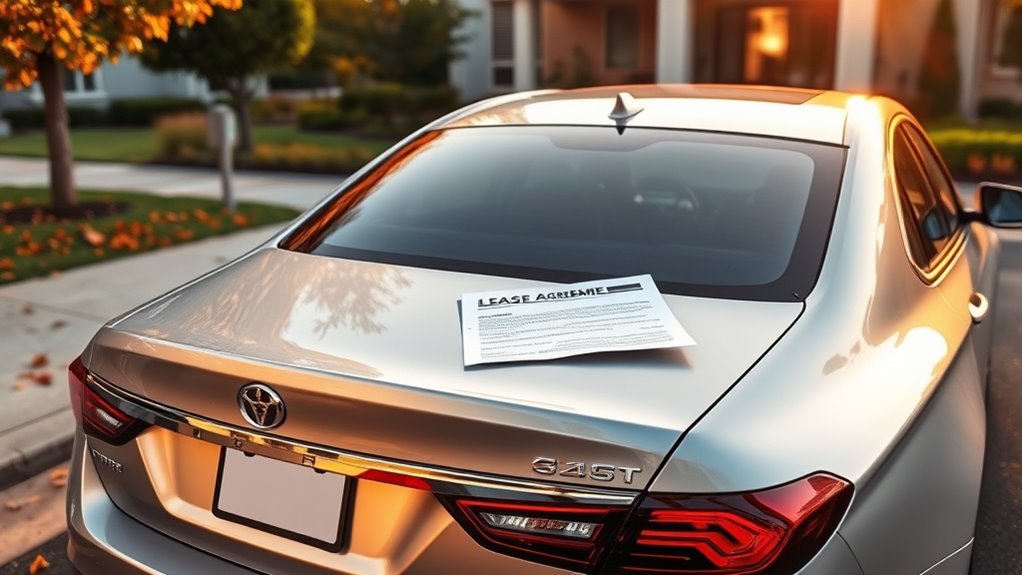

When it’s time to end your lease, you have options like returning the car, transferring the lease, or exploring early termination. Returning the vehicle involves scheduling an inspection, ensuring it’s clean, and understanding potential fees for damage or excess mileage. Lease transfer allows you to pass on your obligations to someone else, which can save you from costly penalties. To navigate this process smoothly and avoid surprises, you’ll find helpful tips if you continue exploring.
Key Takeaways
- Understand your lease agreement’s terms for returning, transferring, or early termination options.
- Schedule a vehicle inspection and ensure the car is clean and free of excess damage.
- Explore lease transfer options to avoid early termination fees and find a new lessee.
- Be aware of potential charges for excess mileage, wear and tear, or damages upon return.
- Communicate proactively with the leasing company to ensure a smooth and cost-effective lease disposition.

When your lease term ends, returning your car might seem straightforward, but understanding the process can save you time and money. One important aspect to evaluate is whether you want to simply return the vehicle or explore options like a lease transfer or early termination. If you’re thinking about ending your lease before the scheduled date, early termination is a possibility, but it often comes with penalties or fees. Knowing the rules around early termination can help you decide if it’s worth the cost or if exploring a lease transfer might be a better solution.
A lease transfer allows you to pass your lease obligations to someone else, which can be a valuable option if your circumstances change or if you no longer want the vehicle. Not all lease agreements permit transfers, so you’ll want to check your lease contract and discuss it with your leasing company. If your lease does allow a transfer, you’ll need to find someone interested in taking over the lease, and both parties will have to follow the proper application process. This can save you from early termination fees and help you avoid the financial hit of ending the lease prematurely.
When it comes to returning your car, the process involves inspecting the vehicle for any damage beyond normal wear and tear, ensuring it’s clean, and removing personal belongings. You’ll typically schedule an appointment with the leasing company or dealership to return the vehicle. During this inspection, any damages or excessive mileage might result in extra charges, so it’s good to review your lease terms beforehand to understand your responsibilities. If the car is in good condition, returning it should be a smooth process, and you’ll be free to move on to your next vehicle or leasing plan. Additionally, understanding the net worth associated with your lease can influence your decision, especially if you’re considering buying the vehicle at the end of the lease term.
If you’re contemplating early termination, keep in mind that most leases include fees that can be significant, often based on the remaining payments or the vehicle’s depreciation value. Sometimes, leasing companies are willing to negotiate or offer options like trading in the vehicle early for a new lease, which can minimize costs. Alternatively, if a lease transfer is available, it can be an easier way out, especially if you’re unable to afford early termination fees.
Ultimately, whether you’re returning your car at the end of your lease, transferring it to someone else, or opting for early termination, understanding the process and your options helps you avoid surprises. Planning ahead and communicating with your leasing company can make the transition seamless, saving you both time and money in the long run.

Little Max Long Reach Tool by IBR Tools
As an affiliate, we earn on qualifying purchases.
As an affiliate, we earn on qualifying purchases.
Frequently Asked Questions
Can I Negotiate the Lease Payoff Amount?
Yes, you can negotiate the lease payoff amount during lease negotiation. Start by reviewing the payoff calculation provided by your leasing company; it often includes residual value and fees. You can request a lower payoff by discussing your options, especially if you’re close to the end of your lease or if market conditions favor lower values. Remember, lenders may be open to negotiation to help you move on more easily.
What Are the Fees for Early Lease Termination?
About 20% of leaseholders opt for early termination, which can cost you between $200 and $500 in fees, plus any remaining payments. Early lease termination fees often include a lease transfer fee and may involve paying the residual value if you return the car before the term ends. You might save money by negotiating or exploring options like lease transfer to avoid hefty charges.
How Does Wear and Tear Affect My Lease Return?
Wear and tear directly impacts your lease turn in, as it determines your vehicle condition. If your car shows excessive or damage beyond normal wear and tear, you may face additional charges. To avoid surprises, inspect your vehicle beforehand and document any issues. Keeping your vehicle in good condition guarantees a smooth lease return process, and helps you avoid costly fees for damages that aren’t considered normal wear and tear.
Can I Extend My Lease Before Returning the Car?
Yes, you can often request a lease extension or lease renewal before returning your car. Contact your leasing company early to discuss your options, as they may allow you to extend the lease term or renew the lease for a new period. This can give you extra time to decide your next move, avoid penalties, or simply enjoy your vehicle longer while negotiating terms that suit your needs.
What Are My Options if My Car Is Damaged?
When your car shows scratches or dents, it’s like fighting a losing battle without a plan. You should first file insurance claims and get repair estimates to understand costs. If repairs are manageable, you might fix the damage before returning it, avoiding extra charges. Otherwise, you could be liable for damages, which could affect your lease end process. Always review your lease agreement and consult your insurer for guidance.
Conclusion
In wrapping up your lease disposition, remember that a smooth, stress-free surrender starts with smart planning and swift steps. Stay savvy by inspecting, simplifying, and scheduling your car’s return. By being prepared and proactive, you prevent potential penalties and pave the path for a fresh start. So, seize the opportunity to stay organized, streamline the process, and smoothly step into your next adventure—because a successful sale or surrender truly starts with strategic stewardship.