

To coordinate your fleet’s lease cycles and vehicle replacements effectively, plan your lease agreements around your operational needs and vehicle lifespan. Track lease terms carefully, opting for options like closed-end leases for predictable returns, and schedule maintenance to align with lease end dates. This proactive approach minimizes costs, avoids penalties, and ensures your fleet stays current and efficient. If you continue exploring, you’ll discover strategies to optimize these cycles even further.

Get business pricing on garage and car supplies
- Business-only prices and quantity discounts
- Tax-exempt purchasing
- Multiple users, one account, clear invoices
Key Takeaways
- Align lease end dates with vehicle replacement schedules for seamless transitions and minimized downtime.
- Monitor lease terms to proactively plan replacements before lease expirations occur.
- Coordinate maintenance schedules with lease cycles to extend vehicle lifespan and avoid lease violations.
- Choose lease types (closed-end or open-end) based on usage patterns to streamline replacement planning.
- Incorporate residual value assessments and market trends to optimize timing and costs of vehicle replacements.
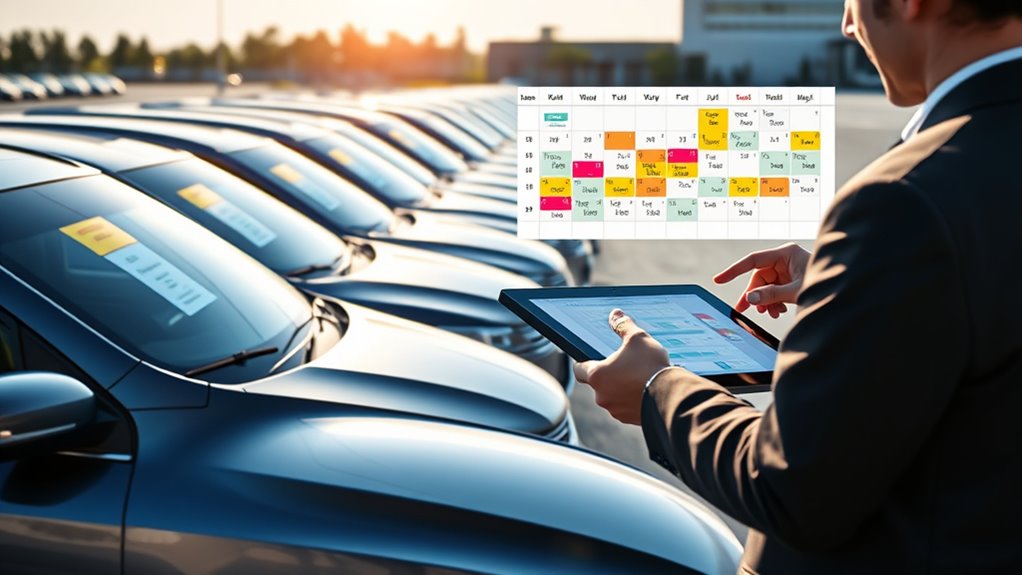
Understanding lease cycles is essential for managing your fleet effectively. When you grasp how leasing options work and how they align with your vehicle replacement schedule, you can optimize costs and keep your fleet running smoothly. Lease cycles typically span a fixed period, often 2 to 5 years, depending on the leasing agreement you select. Knowing the specifics of your lease terms allows you to plan ahead, guaranteeing you’re not caught off guard by end-of-lease obligations or unexpected costs. By coordinating these cycles with your operational needs, you can create a consistent replacement schedule that minimizes downtime and maximizes the lifespan of your vehicles.
Understanding lease cycles helps plan vehicle replacements and control costs effectively.
One of the key benefits of understanding lease cycles is the ability to synchronize vehicle replacements with your leasing options. Different leasing options—such as closed-end leases, open-end leases, or operating leases—offer various flexibility levels and financial implications. For example, with a closed-end lease, you typically return the vehicle at the end of the term and avoid residual value concerns, making it easier to plan your fleet refreshes. If you opt for an open-end lease, you’ll need to account for residual value assessments, which can influence your replacement timing. Choosing the right leasing option depends on your fleet’s usage patterns, financial goals, and maintenance planning strategies. When you align leasing options with your replacement cycle, you reduce the risk of over- or under-utilizing vehicles and keep your fleet current with the latest safety and efficiency standards.
Maintenance planning is another vital aspect that benefits from a clear understanding of lease cycles. Regular maintenance helps extend vehicle lifespan and ensures safety, but it also impacts your lease’s value and residuals. Scheduling maintenance according to lease timelines prevents unexpected repairs that could lead to lease violations or penalties. Additionally, some leasing agreements include maintenance packages, which can simplify planning and budgeting. When you time your vehicle replacements to coincide with lease end dates, you can evaluate whether to renew, purchase, or lease new vehicles based on their maintenance history and operational performance. Proper maintenance planning—aligned with lease cycles—helps you avoid unnecessary expenses, reduces vehicle downtime, and ensures your fleet remains reliable and compliant with regulations.
In essence, understanding and coordinating lease cycles for your fleet isn’t just about adhering to contractual timelines; it’s about strategic planning. It allows you to select suitable leasing options, optimize maintenance schedules, and ensure a seamless transition from old to new vehicles. This proactive approach minimizes costs, maximizes vehicle uptime, and supports your overall operational goals. Staying informed about cybersecurity vulnerabilities and implementing best practices helps protect your fleet data and assets from emerging threats. By staying attentive to lease terms and maintenance needs, you can create a well-oiled process that keeps your fleet efficient and your business moving forward.
fleet vehicle lease management software
As an affiliate, we earn on qualifying purchases.
As an affiliate, we earn on qualifying purchases.
Frequently Asked Questions
How Do I Determine the Optimal Lease Cycle Length for My Fleet?
To determine the ideal lease cycle length, you should analyze your fleet’s leasing policies and monitor vehicle depreciation rates. Consider how long vehicles remain cost-effective and reliable, balancing maintenance costs and residual value. By evaluating these factors, you can set a lease term that maximizes value, minimizes downtime, and aligns with your budget and operational needs, ensuring your fleet stays efficient and up-to-date.
What Factors Influence Vehicle Replacement Timing in Lease Cycles?
Did you know that over 60% of fleet managers say vehicle depreciation and usage patterns are key in deciding replacement timing? You should consider how quickly your vehicles lose value and how often they’re used, as high depreciation and intense usage can mean sooner replacements. These factors directly influence when you should plan to replace vehicles, ensuring you optimize costs and maintain reliable operations.
How Can I Synchronize Lease End Dates Across Different Vehicle Types?
To synchronize lease end dates across different vehicle types, you should align lease renewal or termination dates by analyzing your fleet’s usage patterns. Incorporate vehicle branding to guarantee consistent presentation and consider driver scheduling to optimize replacement timing. Adjust lease negotiations to match the desired end dates, and plan maintenance schedules accordingly. This approach helps streamline fleet management, reduces costs, and maintains a cohesive vehicle appearance.
What Are the Financial Implications of Adjusting Lease Renewal Dates?
Adjusting lease renewal dates can impact your fleet’s finances considerably, with up to a 15% change in costs. You’ll want to weigh lease extension strategies carefully, as they can offer flexibility but might also affect residual value considerations. Extending leases could reduce upfront costs but might lower vehicle value at the end of the term. Balancing these factors ensures you optimize your fleet’s financial health.
How Do Lease Cycles Impact Fleet Maintenance and Operational Costs?
Lease cycles directly impact your fleet’s maintenance scheduling and operational costs. When leases align with maintenance incentives, you can optimize service intervals, reducing downtime and repair costs. Properly coordinated cycles also guarantee that vehicles are replaced before major repairs become necessary, lowering unexpected expenses. By managing lease timing effectively, you streamline costs, maximize leasing incentives, and keep your fleet operating efficiently with minimal disruptions and expenses.
Conclusion
By carefully coordinating your fleet’s lease cycles, you keep your vehicle replacements running smoothly, like a well-oiled machine. Planning ahead prevents unexpected breakdowns and costly surprises, ensuring your fleet stays ahead of the curve. Think of it as orchestrating a symphony—every note must be timed just right. When you master this rhythm, your fleet runs seamlessly, driving your business toward efficiency and success with confidence and clarity.
Halloween Picks
halloween
As an affiliate, we earn on qualifying purchases.