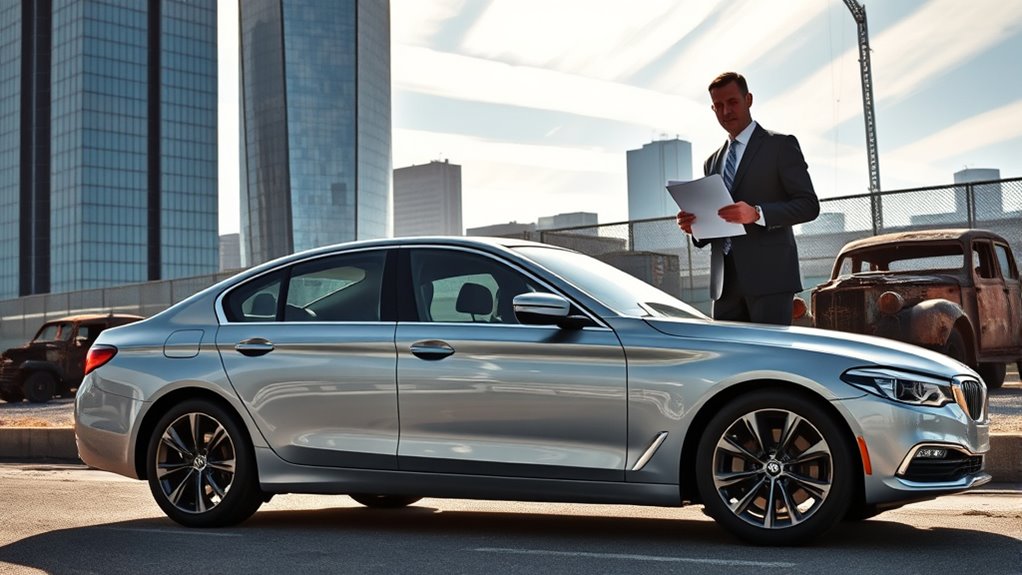

Leasing protects you from a car’s rapid depreciation by transferring the risk to the leasing company. Instead of worrying about losing value when the vehicle drops in worth, you pay a fixed monthly fee based on an estimated residual value. If the car depreciates faster than expected, the leasing company absorbs the loss, saving you from financial surprises. Keep exploring to discover how this approach can keep your budget more secure.

Get business pricing on garage and car supplies
- Business-only prices and quantity discounts
- Tax-exempt purchasing
- Multiple users, one account, clear invoices
Key Takeaways
- Leasing transfers depreciation risk from the lessee to the leasing company, protecting you from sudden vehicle value drops.
- Lease agreements set a realistic residual value, preventing overestimations that could lead to unexpected costs.
- Leasing companies use market assessments and performance metrics to accurately predict vehicle depreciation.
- End-of-lease returns avoid the financial impact of rapid depreciation, reducing potential losses for lessees.
- Leasing offers lower monthly payments and flexibility, shielding you from the financial strain of a vehicle’s rapid value decline.
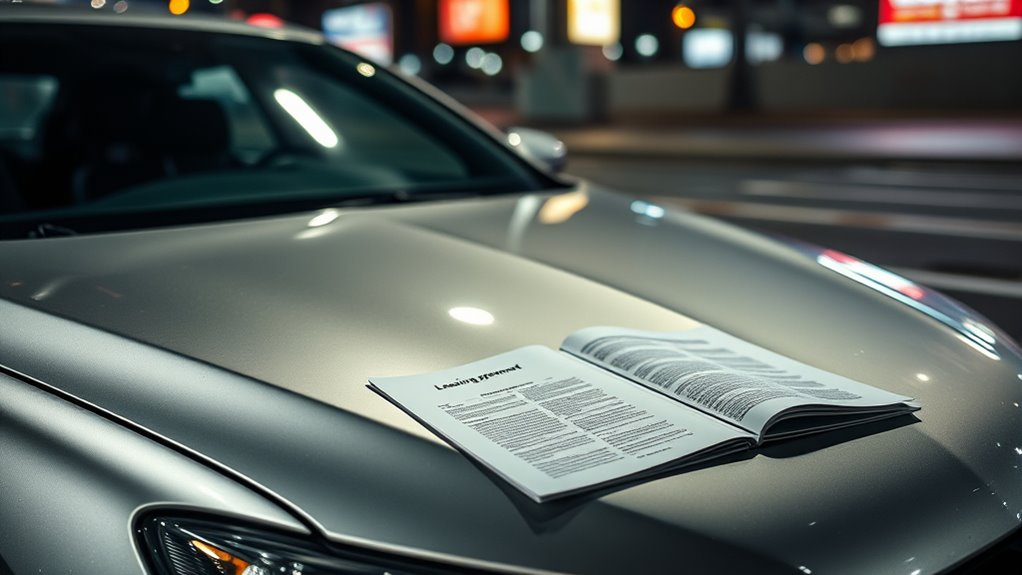
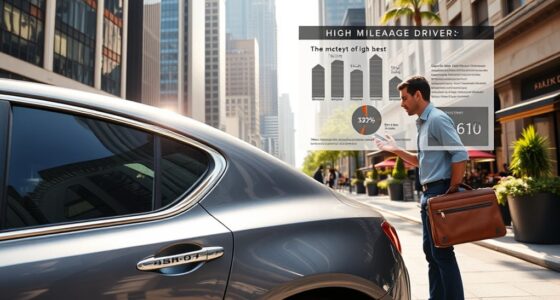
Have you ever wondered how a simple accounting mistake can turn into a financial catastrophe? When it comes to your vehicle expenses, misjudging depreciation can lead to significant losses. That’s where leasing comes into play, offering clear lease benefits that protect your finances from the unpredictable drops in a car’s value. Unlike purchasing a vehicle outright, leasing allows you to avoid the hefty hit when a car’s residual value declines faster than expected. Residual value, which is what a vehicle is expected to be worth at the end of a lease, plays a vital role. If the residual value is overestimated at the start, you might end up paying more than the car’s actual worth over time. But leasing agreements typically set a residual value based on thorough market assessments, helping you avoid the trap of overestimating your car’s worth. This way, you’re not burdened with the financial fallout if the vehicle’s value plummets unexpectedly. Additionally, leasing companies often utilize performance metrics to forecast depreciation more accurately, further reducing your risk. Leasing shifts the risk from you to the leasing company, as they assume the responsibility for the car’s depreciation. When a vehicle depreciates faster than predicted, it doesn’t impact your payments or overall budget as much. You simply return the car at the end of the lease, and any loss in value becomes the leasing company’s concern—not yours. This structure offers peace of mind, especially if you’re worried about market fluctuations or rapid depreciation in certain models. Plus, lease benefits often include lower monthly payments compared to buying, which can free up cash flow for other priorities. Better still, since you’re not locked into the vehicle for the long haul, you can upgrade to a newer model more frequently without worrying about selling or trading in a car that has lost considerable value.
leasing car with low depreciation
As an affiliate, we earn on qualifying purchases.
As an affiliate, we earn on qualifying purchases.
Frequently Asked Questions
How Does Leasing Impact Long-Term Vehicle Ownership Costs?
Leasing impacts your long-term vehicle ownership costs by offering predictable payments through lease incentives, which can lower monthly expenses. You don’t have to worry about the residual value, as that’s handled by the leasing company. This means you’re protected from the car’s depreciation, saving you from the big drop in value over time. Overall, leasing keeps your costs stable and manageable, especially if you prefer driving new cars regularly.
Can Leasing Help in Avoiding Unexpected Depreciation Losses?
You can avoid unexpected depreciation losses by leasing, because your payments are based on the vehicle’s residual value and leasing terms. When you lease, you fundamentally pay for the car’s depreciation during the lease period, not the entire value. This setup protects you from the car’s market fluctuations, as you’re only responsible for the depreciation projected at the start, not the actual market value at the end.
What Are the Hidden Fees Associated With Leasing Versus Buying?
When you lease, you’ll face hidden charges like excessive mileage fees and wear-and-tear costs, which aren’t always clear upfront. Unlike buying, where residual value impacts your ownership costs, leasing companies often set a residual value to determine your payments. Be aware of hidden charges tied to the residual value and potential end-of-lease fees. Always read the fine print to avoid surprises and understand the true cost of leasing versus buying.
How Does Lease Mileage Limit Affect Vehicle Value?
You’re walking a tightrope when it comes to lease mileage limits, and it’s easy to get caught off guard. Excessive mileage can hurt your vehicle’s residual value, leading to costly penalties. By staying within the agreed-upon miles, you protect the residual value and avoid hefty mileage penalties. Think of it as a safeguard—keeping your car’s worth intact and your wallet happy, so you won’t be left holding the bag later.
Are There Tax Advantages to Leasing Instead of Purchasing?
You can enjoy tax benefits and leasing incentives when you choose to lease instead of buying. Leasing often allows you to deduct monthly payments as business expenses, potentially reducing your taxable income. Additionally, leasing incentives like lower upfront costs and special offers make leasing more affordable. These advantages make leasing an attractive option, especially if you want to maximize tax savings and enjoy the latest vehicle models without the long-term commitment.
Conclusion
So, while leasing might seem like a quick fix to avoid depreciation woes, remember it’s only delaying the inevitable. You never truly own the car, and in the end, you’re still paying for its rapid decline. Ironically, by trying to escape depreciation, you might just be fueling a cycle where you constantly chase newer cars, never building any real value. Sometimes, facing depreciation head-on is the smarter choice—you just have to be brave enough to own it.
Evergreen bestsellers Picks
bestsellers
As an affiliate, we earn on qualifying purchases.