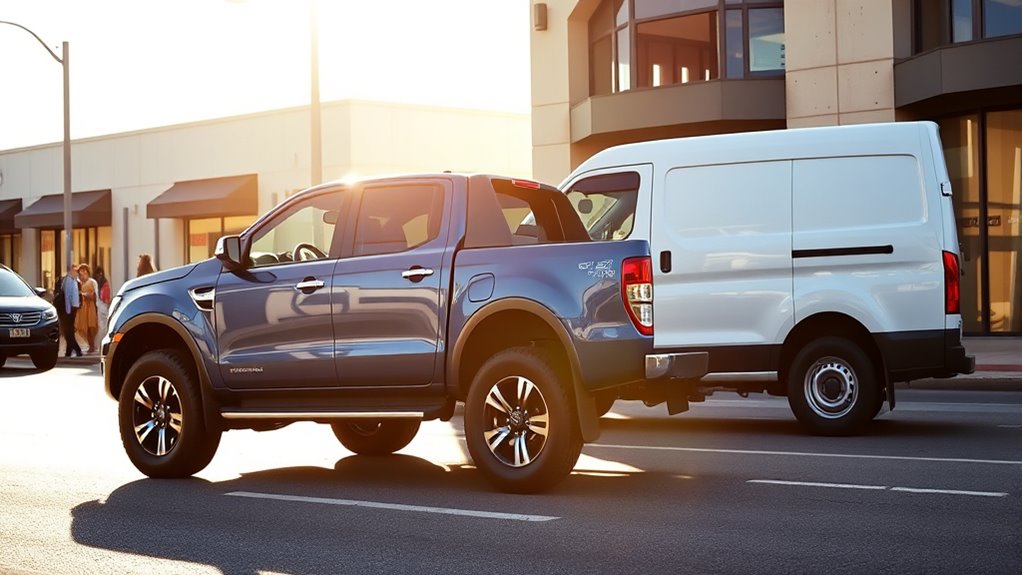

When choosing the right pickup or van for business leasing, focus on payload capacity, cargo space, fuel efficiency, and safety features to match your operational needs. Consider driver comfort to keep operating costs manageable and pick a vehicle that can be customized or equipped with essential features. Flexible lease terms and maintenance options also help you stay adaptable as your business grows. Keep exploring to discover how to select the best leasing strategy for your fleet.
Key Takeaways
- Assess payload capacity and cargo space to meet specific transportation needs.
- Prioritize fuel efficiency and safety features for cost-effective operation.
- Consider vehicle durability and customization options for operational flexibility.
- Evaluate driver comfort features to enhance productivity and reduce fatigue.
- Test various models to ensure compatibility with your business requirements and workflow.

Leasing trucks for your business can be a smart way to expand your fleet without the hefty upfront costs of buying. When you choose to lease, you gain access to a variety of vehicles—pickups or vans—that can meet your operational needs without tying up large amounts of capital. This approach allows you to focus on your core business activities while the leasing company handles maintenance, repairs, and upgrades. Effective fleet management becomes more straightforward because leasing agreements often include options for regular vehicle replacements, keeping your fleet updated with the latest models and technology. This flexibility ensures that your business stays competitive and minimizes downtime caused by vehicle breakdowns.
Leasing trucks offers flexible fleet expansion with maintenance and upgrades handled by the leasing company.
When selecting a leasing agreement, it’s vital to weigh the terms carefully. Look for flexible lease lengths that align with your business cycles, whether you need short-term solutions for specific projects or long-term arrangements to support ongoing operations. Pay attention to mileage limits, as exceeding them can lead to hefty penalties at the end of your lease. You should also examine the maintenance provisions included in the agreement; some leases bundle maintenance costs, making your budgeting predictable and simple. Clear understanding of the terms helps you avoid surprises and guarantees that the leased vehicles continue to serve your business efficiently. Additionally, understanding fleet management strategies can help optimize your vehicle utilization and costs.
Choosing the right pickup or van depends heavily on your specific needs. If your business involves transporting heavy loads or equipment, a durable pickup truck with a high payload capacity might be your best bet. Conversely, if you need to shuttle employees or transport smaller cargo, a van with ample cargo space and customizable interiors could be more suitable. When evaluating options, consider fuel efficiency, safety features, and comfort, as these factors impact your operating costs and driver satisfaction. Leasing companies often provide a range of models, so it’s worth testing different vehicles to see which one best fits your operational demands.
Additionally, think about the end-of-lease options. Some agreements offer buyout choices if you decide to keep the vehicle longer, while others require you to return the truck or van in good condition. Knowing these details upfront helps you plan your fleet strategy more effectively. Leasing trucks for your business allows you to stay agile, upgrade your fleet regularly, and manage your expenses more predictably. By paying close attention to fleet management practices and leasing agreement specifics, you can select the ideal pickup or van that enhances your operational efficiency and supports your business growth.
Frequently Asked Questions
What Are the Tax Benefits of Leasing Trucks for My Business?
Leasing trucks offers you significant tax benefits, like tax deductions on your lease payments, which can lower your taxable income. You also gain depreciation benefits, allowing you to write off the vehicle’s value over time. This can improve your cash flow and reduce your overall tax burden. Keep detailed records, and consult a tax professional to maximize these advantages and guarantee compliance with tax laws.
How Does Leasing Impact My Business Credit Score?
Did you know that 68% of lenders consider leasing impact when evaluating your business credit? Leasing trucks can positively influence your business credit score if you make timely payments, showing lenders your reliability. However, missed payments may hurt your credit. Consistent leasing helps build a solid credit history, demonstrating stability. Ultimately, responsible leasing can boost your business credit, making future financing easier and more favorable.
Can I Customize Leased Trucks to Suit My Business Needs?
Yes, you can customize leased trucks to suit your business needs. Many leasing agreements offer lease flexibility, allowing you to add truck accessories like shelving, tool racks, or specialized equipment. Just check with your leasing provider about customization options upfront, so you can tailor the vehicle without violating your lease terms. This way, your leased truck works efficiently for your specific business operations.
What Are the End-Of-Lease Options if My Business Needs Change?
If your business needs change, you can make the most of end-of-lease options like a lease extension or a lease buyout—turning a potential headache into a smooth progression. You might extend the lease to keep using the truck or buy it outright if it still fits your needs. These options give you control, so you’re not stuck with a vehicle that no longer works for you.
How Does Leasing Compare to Purchasing in Total Cost Over Time?
When comparing lease vs purchase, leasing often has lower upfront costs and predictable monthly payments, but purchasing can be more cost-effective long-term if you keep the vehicle beyond the loan term. A total cost analysis shows leasing may save money initially, yet owning builds equity and eliminates ongoing payments. Consider your business needs, usage, and how long you plan to keep the vehicle to determine the best financial choice.
Conclusion
Leasing the right truck for your business can feel like steering through a labyrinth, but with careful choice, you’ll find your path to success. Whether you opt for a pickup or van, remember to think about your specific needs and budget. Don’t let the process turn into a quagmire; instead, approach it like a seasoned merchant of old, making informed decisions that propel your business forward. With the right vehicle, you’ll be ready to conquer any challenge that comes your way.