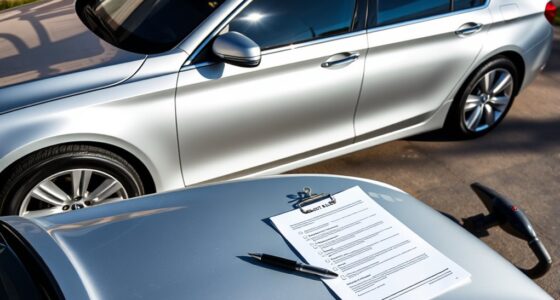
Timing your next lease wisely helps guarantee a smooth changeover between vehicles. Start planning a few months before your current lease ends by reviewing your driving habits, vehicle condition, and upcoming incentives. Consider whether to renew, extend, or switch to a new model. Staying informed about market trends and lease options allows you to make proactive decisions, reducing stress and maximizing value. Keep these tips in mind to smoothly roll into your next lease with confidence.
Key Takeaways
- Start researching vehicle options and incentives 3-6 months before your lease ends.
- Review your current lease agreement for mileage limits and condition requirements.
- Consider market trends and timing to lock in favorable financing or lease deals.
- Schedule vehicle maintenance and inspections early to avoid end-of-lease charges.
- Plan whether to renew, buy, or transfer your lease to ensure a smooth transition.

When your lease is coming to an end, it’s the perfect opportunity to review your options and plan your next move. This moment allows you to evaluate your current situation and consider whether leasing again, buying, or exploring other transportation options makes the most sense. Understanding your leasing options is key here. You might choose to renew your lease, extend it, or return the vehicle and look for a new one. Each choice depends on your driving habits, financial goals, and whether the vehicle still meets your needs. For example, if your current car has been reliable and suits your lifestyle, renewing or extending your lease could be the easiest route. If you’re ready for something different, returning the vehicle and leasing a newer model might be appealing. Keep in mind, your lease agreement usually specifies mileage limits and vehicle condition requirements, so you’ll want to review these details beforehand.
As you think about your next move, also consider the importance of vehicle maintenance. Proper upkeep during your lease term can influence your options at lease end. If you’ve maintained the vehicle well—regular oil changes, tire rotations, and addressing minor repairs—you can avoid extra charges and keep your options open. A well-maintained car is easier to return in good condition, which can help you negotiate better leasing terms or ensure you’re not hit with costly end-of-lease fees. Conversely, neglecting vehicle maintenance might lead to deductions from your security deposit or additional charges, which could complicate your decision-making process. Take the time now to review your vehicle’s maintenance records and address any outstanding issues before returning the car.
Timing is essential when planning your next lease. Many leases end around the same time each year, so early planning can give you an advantage. If you’re considering leasing a new vehicle, start researching models and dealer incentives well before your lease ends. This gives you leverage in negotiations and helps you secure the best deal. Additionally, consider the current market trends—interest rates, manufacturer incentives, and new model releases—all of which can influence the timing and cost of your next lease. If you’re happy with your vehicle and want to lease again, you might have the option to do a lease transfer or rollover, which can be a smart way to avoid lengthy gaps between vehicles. Being aware of the role of contrast ratio in projectors can also be relevant if you’re considering a new vehicle with advanced entertainment features.
Ultimately, when your lease approaches its end, being proactive makes all the difference. Review your leasing options thoroughly, ensure your vehicle is well-maintained, and plan ahead to make the transition smooth. Whether you decide to renew, upgrade, or switch to a different type of vehicle, your preparation will help you maximize value and minimize stress.
Frequently Asked Questions
Can I Extend My Current Lease Beyond the Original End Date?
Yes, you can often extend your current lease through a lease extension or lease renewal. Contact your leasing company before your lease ends to discuss your options. They might offer you a lease extension, allowing you to keep the vehicle longer, or a lease renewal to start a new lease agreement. Make sure to review the terms and any additional costs involved so you can make an informed decision.
What Are the Hidden Costs Involved in Ending a Lease Early?
When ending your lease early, you should be aware of lease termination fees and early return penalties. These costs can add up quickly, making it more expensive than you might expect. You could also face charges for excess wear and tear or unpaid mileage. To avoid surprises, review your lease agreement carefully and contact your leasing company to understand all potential hidden costs before deciding to end your lease early.
How Do I Negotiate Better Terms for My Next Lease?
To negotiate better terms for your next lease, start by researching current lease incentives offered by manufacturers. Use this information to strengthen your bargaining position during dealer negotiations, and don’t hesitate to ask for additional perks or lower rates. Be prepared to walk away if the terms don’t meet your needs, and stay flexible with options to get the best deal possible.
Are There Tax Benefits to Leasing Versus Buying?
You might find tax benefits in leasing versus buying, especially through tax deductions on lease payments. Leasing can also offer depreciation benefits since you don’t own the vehicle, potentially reducing taxable income. However, the specific advantages depend on your situation and local tax laws. You should consult a tax professional to determine how these benefits apply to you and maximize your savings when choosing between leasing and buying.
What Should I Do if I Notice Excessive Wear and Tear?
If you notice excessive wear and tear, you should schedule a vehicle inspection promptly. During the inspection, assess whether repair options are feasible or if damages are too extensive. Address minor issues early to avoid costly charges at lease-end, and keep documentation of repairs. Being proactive helps you maintain the vehicle’s condition and minimizes extra fees, ensuring a smoother progression when you’re ready to lease or purchase your next car.
Conclusion
When your lease ends, think of it like turning the page in a book—you get a fresh start and new opportunities. Planning ahead guarantees you don’t rush into the next ride or miss out on better deals. By timing your lease return just right, you’re steering yourself smoothly into your next vehicle. So, stay alert and proactive—before you know it, you’ll be behind the wheel of your perfect car, ready to hit the road with confidence.