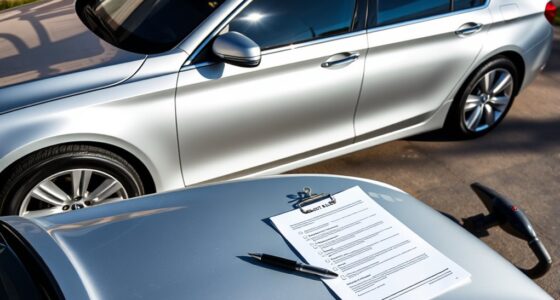

Before returning your leased vehicle, getting an accurate appraisal helps you understand its true market value. You should have it inspected by a professional, who will assess wear, damage, and mechanical condition. Knowing this information allows you to avoid unexpected charges for excessive wear and tear and decide whether repairs or upgrades are worthwhile. Staying informed about market trends can also influence your decision-making. Keep exploring to learn tips on how to get the most accurate appraisal and prepare for your lease turn-in.
Key Takeaways
- Schedule a professional vehicle inspection to assess exterior, interior, and mechanical condition before lease return.
- Review signs of wear, damage, and needed repairs to ensure accurate valuation and avoid excess charges.
- Stay informed on market trends and recent sales data for your vehicle’s make and model.
- Maintain or fix minor damages to maximize your vehicle’s appraisal value.
- Use appraisal results to decide whether to repair, upgrade, or simply return the vehicle at lease end.

Have you ever wondered how much your property is truly worth? When it comes to your vehicle, knowing its value before you turn in a lease can save you from unexpected charges and help you make informed decisions. Getting an appraisal isn’t just about a quick glance at your car; it’s a detailed process that considers various factors, including the current market trends and the vehicle inspection. By understanding these elements, you can better assess whether your car’s worth aligns with expectations and avoid surprises at lease-end.
Knowing your vehicle’s true value helps you avoid surprises at lease end and make informed decisions.
A key part of the appraisal process is a thorough vehicle inspection. During this inspection, a professional evaluates your car’s condition, looking for signs of wear and tear, damage, or needed repairs. They assess the exterior for dents, scratches, or rust, and the interior for cleanliness and functionality. Mechanical aspects, like brakes, tires, and engine performance, also come under scrutiny. This inspection provides a clear picture of your vehicle’s physical state, which directly impacts its value. Keep in mind that even minor damages or neglect can considerably reduce your car’s worth, so maintaining your vehicle and fixing minor issues beforehand can pay off during the appraisal.
Equally important is understanding the current market trends. The value of your vehicle isn’t determined in isolation; it’s heavily influenced by the broader automotive market. Factors like the popularity of your car’s make and model, recent sales data, and the overall demand for similar vehicles play a role. For example, if fuel-efficient SUVs are trending upward in value, your vehicle might be worth more than you think. Conversely, if a model is phasing out or facing increased depreciation, that could lower its value. Staying informed about these market trends allows you to anticipate how much your vehicle might be worth and gives you an edge when negotiating or preparing for lease turn-in.
Knowing your car’s value before returning it means you’re not caught off guard by excessive wear-and-tear charges or unexpected depreciation. It helps you decide whether to repair or upgrade certain features to boost your car’s worth, or simply to set realistic expectations. Getting an accurate appraisal combines a thorough vehicle inspection with a deep understanding of current market trends, providing you with the clarity needed to make the best decisions. Additionally, understanding the nutritional value of juices can help in maintaining your vehicle’s health by promoting overall well-being, which indirectly supports better vehicle maintenance habits. Ultimately, being proactive and informed ensures you’re in control of the lease-end process and can avoid unnecessary costs, making the transition smoother and more financially sound.
Frequently Asked Questions
How Can I Prepare My Car for the Appraisal?
To prepare your car for the appraisal, start with a thorough car cleaning to make it look its best. Follow a maintenance checklist to guarantee all essential repairs are done, like oil changes or tire checks. Fix minor dents or scratches, and remove personal items from the interior. A well-maintained, clean vehicle shows you’ve cared for it, which can positively influence the appraisal and help you get the best value.
What Damages Will Negatively Impact My Car’s Value?
Damaging your car’s value is like tearing pages from a cherished book. Paint scratches and interior stains can markedly decrease your vehicle’s worth. Deep scratches or multiple dents stand out, and stains on the upholstery or carpets signal neglect. Address these issues before your appraisal to maximize your car’s value. Keeping your vehicle well-maintained and clean shows you value it, helping you get the best possible appraisal.
Is It Necessary to Get Multiple Appraisals?
It’s wise to get multiple appraisals before turning in your lease, especially since market fluctuations and dealer policies can vary. By comparing offers, you’ll understand your car’s true value and avoid underestimating it. Different dealers may offer different terms, so shopping around ensures you guarantee you get the best deal. Don’t rely on just one appraisal—multiple evaluations help you make an informed decision and maximize your return.
How Long Does a Car Appraisal Typically Take?
Ever wonder how long a car appraisal takes? Typically, it lasts about 30 minutes to an hour. During this time, the appraiser conducts an inspection checklist, assesses your vehicle’s condition, and discusses repair estimates. To speed things up, guarantee your car is clean and ready. Do you have all maintenance records handy? Being prepared helps the process go smoothly and quickly.
Can I Negotiate the Appraisal Value With the Dealer?
Yes, you can negotiate the appraisal value with the dealer. During appraisal negotiation, you highlight any discrepancies or issues that might lower your car’s worth and ask for a fairer estimate. Keep in mind, dealer flexibility varies; some are open to adjustments, especially if you have supporting evidence like maintenance records or comparable appraisals. Being prepared and respectful can help you secure a better valuation.
Conclusion
So, now you know your car’s worth—who knew it’d be as easy as checking a few numbers? Remember, getting an appraisal is like revealing your car’s secret identity; it’s all about knowing your value before the lease police come knocking. So, flaunt that shiny, slightly-used treasure, and maybe, just maybe, you’ll walk away with more than just a pat on the back. Happy leasing—may your car’s value surprise even the most skeptical!