Before comparing home EV chargers, understand the importance of compatibility with your vehicle and home’s electrical system, as well as installation requirements. Consider charging speed, safety features, and warranty coverage to guarantee reliability. Also, look at installation complexity and costs—some setups need electrical upgrades or dedicated circuits, which can affect your budget. Staying informed helps you choose the right unit for your needs, and there’s more valuable insights ahead to guide your decision.
Key Takeaways
- Ensure compatibility with your vehicle’s power requirements and electrical system capacity.
- Consider installation complexity, costs, and whether upgrades are needed.
- Evaluate connectivity features for remote monitoring, scheduling, and troubleshooting.
- Prioritize safety features, weatherproofing, warranty, and customer reviews.
- Compare power levels to match your charging speed preferences and home electrical capabilities.
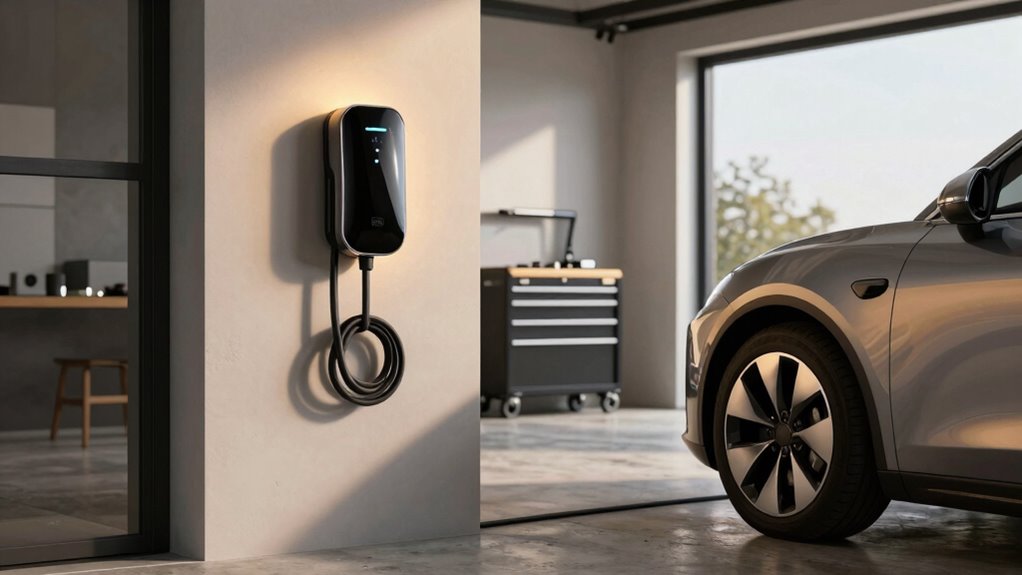
Charging your electric vehicle at home offers convenience and savings, making it an increasingly popular choice for EV owners. When you’re considering different home EV chargers, it’s essential to understand what features matter most to your lifestyle and budget. One of the key aspects to evaluate is wireless connectivity. Many modern chargers come equipped with Wi-Fi or Bluetooth, allowing you to monitor charging status remotely via a smartphone app. This feature can help you keep track of energy consumption, schedule charging during off-peak hours, and even troubleshoot issues without the need for a service call. If staying connected and managing your charging remotely is important to you, look for units that offer reliable wireless connectivity and user-friendly apps. Additionally, it’s important to consider the complexity of installation, as this can significantly impact the overall cost and setup process. Understanding the installation process can help you better plan your budget and timeline, especially if your home requires electrical upgrades. Being aware of electrical compatibility can also prevent potential issues with your existing system and ensure optimal charging performance. Furthermore, selecting a charger with flexible installation options can make the setup more adaptable to your home’s layout and electrical setup. A thorough understanding of home electrical capacity**** can help you determine whether your current system can support the charger you choose, potentially avoiding costly upgrades later.
Another vital factor to consider is installation costs. The upfront expense of installing a home EV charger can vary considerably based on your home’s existing electrical infrastructure, the charger’s power level, and whether you need additional wiring or upgrades. Some units are designed for simple plug-in installation, which can reduce labor costs, while others require a dedicated circuit and professional installation, adding to the overall expense. It’s wise to get detailed estimates from licensed electricians so you can compare these costs against the benefits of each unit.
Beyond wireless features and installation costs, you should also think about compatibility with your vehicle and your home’s electrical capacity. Not all chargers are universal, so confirming that your EV can handle the charger’s power output ensures you get the fastest and safest charge possible. Additionally, assess your home’s electrical system—if it’s older or has limited capacity, you might need an upgrade, which can influence the total installation cost.
When comparing units, pay attention to power levels, safety features, and warranty coverage. Higher-powered chargers typically charge your vehicle faster but may come with increased installation costs. Safety features like emergency shutoff, ground-fault protection, and weatherproofing are important for long-term reliability. Also, check reviews and customer feedback to gauge the real-world performance of the units you’re considering.

ChargePoint HomeFlex Level 2 EV Charger J1772 – Fast Smart Battery Power Charging at Home for Electric Automobile Vehicles
Charge With Confidence: ChargePoint builds reliable, flexible EV charging stations for home, business, and fleets. Get 24/7 support…
As an affiliate, we earn on qualifying purchases.
As an affiliate, we earn on qualifying purchases.
Frequently Asked Questions
How Long Does It Take to Install a Home EV Charger?
Charger installation typically takes a few hours to a full day, depending on your home’s electrical setup. If your current system is compatible, upgrades are quicker and smoother, reducing installation time. You should consider upgrade compatibility beforehand, as it can impact how long the installation takes. A licensed electrician assesses your electrical panel and wiring, ensuring a safe, efficient process tailored to your home’s needs.
Are There Any Government Incentives for Installing Home EV Chargers?
Yes, there are government incentives for installing home EV chargers. You might qualify for government rebates that reduce your overall costs, and some regions offer installation grants to support your setup. These incentives aim to encourage electric vehicle adoption and make charging infrastructure more accessible. Be sure to check your local or federal programs, as eligibility and benefits can vary, helping you save money while going green.
Can I Upgrade My Current Charger Later?
Yes, you can upgrade your current charger later, but you need to check its compatibility first. The upgrade process depends on your existing charger’s compatibility with newer units and your electrical system’s capacity. Some chargers are designed to be easily upgraded or replaced, while others may require professional installation. Always consult a qualified electrician to assess your current setup and guarantee a smooth upgrade process that meets safety standards.
What Maintenance Is Required for Home EV Chargers?
Ever wondered what it takes to keep your home EV charger in top shape? You’ll need to check charging safety regularly and perform maintenance about once a year or as recommended by the manufacturer. Keep an eye on connections, inspect for damage, and clean dust or debris. Routine maintenance guarantees your charger remains safe, efficient, and reliable, preventing unexpected issues and prolonging its lifespan.
How Do I Ensure Compatibility With My EV Model?
To guarantee compatibility with your EV model, check the charging standards supported by both your vehicle and the charger, like CHAdeMO or CCS. Also, verify that the charger has necessary safety certifications, such as UL or ETL, to ensure safety and reliability. Confirming these details guarantees your home EV charger will work seamlessly with your vehicle, providing efficient and safe charging every time.

AIMILER Level 2 Electric Vehicle (EV) Charger(WIFI APP/Plug-play), 32A, 25ft Cable ETL Certified, 220V-240V NEMA 14-50P Plug EVSE w/ J1772 Connector, Portable EV Car Charging Stations for Home Level 2
❤ [Equipped with Nema 14-50 plug 240V, Compatible with 110-120V Nema 5-15p to 14-50r EV Adapter(Not packaged) or…
As an affiliate, we earn on qualifying purchases.
As an affiliate, we earn on qualifying purchases.
Conclusion
Choosing the right home EV charger isn’t just about price or speed—it’s about fitting your lifestyle and future needs. Did you know that the average household with an EV charges about 30 miles of range per hour of charging? Understanding these details helps you make smarter decisions, ensuring your charger supports your driving habits comfortably and efficiently. Take the time to compare units carefully—your vehicle and wallet will thank you in the long run.
ChargePoint HomeFlex Level 2 EV Charger J1772 – Fast Smart Battery Power Charging at Home for Electric Automobile Vehicles
Charge With Confidence: ChargePoint builds reliable, flexible EV charging stations for home, business, and fleets. Get 24/7 support…
As an affiliate, we earn on qualifying purchases.
As an affiliate, we earn on qualifying purchases.

ELEGRP Level 1/2 EV Charger, 16 Amp, Portable J1772 Charger, 25FT Cable, NEMA 6-20 & 5-15 Adapter, Electric Car Charger 110V-240V for BEVs PHEVs, PBE & LRC Technology
【Reliable Safety with PBE & LRC Tech】Powered by ELEGRP's exclusive PBE technology, this level 2 EV charger provides…
As an affiliate, we earn on qualifying purchases.
As an affiliate, we earn on qualifying purchases.