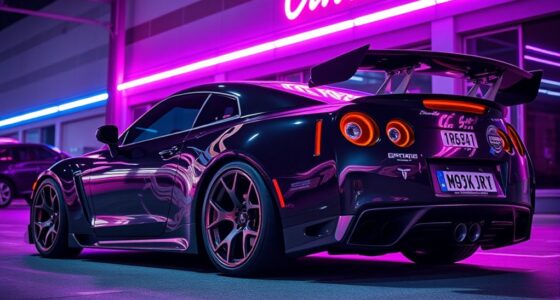
Deciding whether to lease a luxury car for prestige or buy one for keeps depends on your priorities. Leasing lets you enjoy the latest models with predictable costs and frequent upgrades, perfect if you value status and new technology. Buying offers long-term ownership, customization, and potentially better value over time. Your choice hinges on how much you prioritize prestige, long-term savings, or personal freedom, and understanding these factors can help you make an informed decision. Keep exploring to discover which option suits you best.
Key Takeaways
- Leasing offers the latest luxury models with fixed payments, ideal for maintaining prestige and experiencing new features regularly.
- Buying provides long-term ownership, customization options, and potential cost savings over time despite higher initial expenses.
- Brand loyalty influences costs; loyal owners may pay premium for maintenance but benefit from consistent quality and service.
- Leasing suits those valuing prestige, technology updates, and predictable expenses; buying appeals to those seeking permanence and equity.
- The decision depends on personal financial goals, desire for ownership, and preference for maintaining a prestigious vehicle long-term.

Have you ever wondered what sets luxury cars apart from regular vehicles? The answer often comes down to more than just sleek design or powerful engines; it’s about the experience and the prestige that come with owning one. When deciding whether to lease or buy a luxury car, it’s essential to contemplate how brand loyalty influences your choice. Many luxury brands cultivate a loyal following, meaning owners often stick with the same brand for years because of the exceptional service, status, and consistent quality they associate with it. This loyalty can make leasing attractive since you get to drive the latest models without worrying about long-term depreciation or resale value. However, it’s worth noting that brand loyalty also impacts maintenance costs. Luxury cars tend to have higher maintenance costs, and if you’re committed to a specific brand, you might face premium prices for repairs and parts, especially after the warranty expires. Buying a luxury car gives you the freedom to maintain it on your own schedule, but it also means bearing those costs yourself.
Brand loyalty influences luxury car choices, affecting costs, maintenance, and the desire to stay current with latest models.
When you lease, you typically pay a fixed monthly fee that covers depreciation and a portion of maintenance, making it easier to budget. Leasing also allows you to switch to a newer model every few years, which appeals if you’re drawn to staying current with the latest technology and features. On the other hand, if you prefer ownership and the idea of building equity, buying might be the better route. Although initial costs are higher and maintenance costs can be substantial, owning a luxury vehicle means you aren’t restricted by mileage limits and can customize your car to your liking. Additionally, understanding the clutter-free approach to managing your vehicle expenses can help you stay organized and make more informed financial decisions.
Furthermore, brand loyalty plays a different role depending on your choice. If you’re loyal to a brand, leasing might feel like a natural extension of that relationship—you get to experience the latest offerings without the long-term commitment. But if you’re planning to keep the car for many years, buying could be more economical in the long run, despite the higher maintenance expenses. It’s also worth considering that some brands have more costly maintenance than others, which can influence your total ownership costs over time.
Ultimately, your decision hinges on your personal preferences and financial situation. If you love the idea of always driving the newest model and prefer predictable expenses, leasing might suit you best. But if you value ownership, customization, and long-term savings, buying could be the smarter choice—even with the higher maintenance costs. Either way, understanding how brand loyalty influences your experience and costs will help you make a more informed decision about whether to lease for prestige or buy for keeps.
Frequently Asked Questions
What Are the Tax Implications of Leasing Versus Buying a Luxury Car?
When deciding between leasing and buying, consider the tax implications. Leasing often offers tax deductions on monthly lease payments, and you might benefit from lease incentives. Buying allows you to deduct depreciation and certain expenses, but the process is more complex. Your choice impacts your tax situation, so evaluate how each option aligns with your financial goals and consult a tax professional for personalized advice.
How Does Insurance Differ Between Leased and Purchased Luxury Vehicles?
Think of insurance like a suit of armor for your prized chariot. When you lease, your coverage might be more extensive to protect the lessor’s investment, often leading to higher premium costs. Buying, on the other hand, usually means you can customize your insurance coverage, potentially lowering premiums. Either way, you’d want to compare policies carefully to make certain your luxury vehicle remains as protected as a knight’s shield.
Are There Any Hidden Costs Associated With Leasing Luxury Cars?
Yes, there are hidden costs when leasing luxury cars. You might face lease end charges for excessive wear and tear and mileage penalties if you go over your allotted miles. These costs can add up quickly, so it’s essential to read your lease agreement carefully and plan your driving habits accordingly. Being aware of these potential expenses helps you avoid surprises and keeps your leasing experience smooth.
What Warranties or Maintenance Plans Are Typically Included in Leases?
Imagine yourself behind the wheel, feeling confident as you cruise smoothly. Most lease agreements include warranties covering repairs and maintenance packages that keep your luxury car in pristine condition. You often benefit from lease incentives like free oil changes or tire rotations, helping you enjoy worry-free driving. These plans guarantee your vehicle stays in top shape, so you can focus on the thrill of the road without unexpected costs.
How Does Depreciation Affect the Resale Value of a Purchased Luxury Car?
Depreciation considerably impacts the resale value of your luxury car, often reducing its worth by a substantial percentage within the first few years. As depreciation impacts, your car’s resale value drops, meaning you’ll recoup less when selling. To minimize this, choose models with strong resale value, keep up with maintenance, and avoid high mileage. Understanding depreciation impact helps you plan better financially and preserve your investment in a luxury vehicle.
Conclusion
Whether you choose to lease or buy your luxury car, remember that your decision reflects your style and priorities. Did you know that over 80% of luxury car owners prefer leasing to stay current with the latest models? This means you’re not alone in wanting prestige without long-term commitment. Ultimately, weigh your financial goals and lifestyle—because your drive should match your dreams, whether you keep it for keeps or lease for the latest allure.