Before returning a leased car, you should thoroughly photograph the interior and exterior, capturing detailed shots of seats, dashboards, tires, and body panels. Focus on any existing damage, scratches, or stains, and take close-ups of the treads and sidewalls of each tire. Make certain all images are timestamped and organized to avoid disputes. If you want to know more tips to protect yourself and ensure a smooth return, keep exploring.
Key Takeaways
- Capture detailed photos of the interior, including seats, dashboard, and carpets, to document cleanliness and condition.
- Take clear images of all tires, focusing on tread depth, wear patterns, and any damage or punctures.
- Photograph the entire exterior, highlighting paint condition, dents, scratches, and damage to body panels.
- Record the condition of exterior features like door handles, mirrors, lights, and reflectors for any damage or wear.
- Ensure all images are timestamped and organized for easy reference and dispute resolution.

When you’re preparing to return a leased car, taking photos beforehand might seem unnecessary, but it’s a smart move to protect yourself. Documenting the current condition of the vehicle ensures you have evidence in case the leasing company claims damages or excessive wear. Focusing on key areas like interior wear and tire condition can help create a clear record of the car’s state at the time of return.
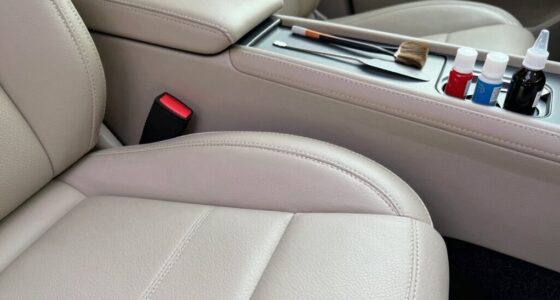
Start by capturing detailed photos of the interior. Look for signs of wear such as stains, tears, or fading on the seats, especially those that are heavily used. Take close-ups of the dashboard, steering wheel, and control panels, noting any scratches or scuffs. Don’t forget to photograph the condition of the carpets and floor mats, particularly if there are stains or significant dirt. These images serve as proof that the vehicle was in acceptable condition when you handed it back, so you won’t be unfairly charged for pre-existing issues. Proper vehicle documentation can help prevent disputes over damages or wear. Additionally, understanding the inspection process can help you better prepare for what the leasing company might look for during the return. Knowing how the inspection is conducted can also guide you in ensuring you’ve covered all relevant areas.
Capture detailed interior photos to document wear and prevent unfair charges at lease return.
Next, focus on the tires. Tire condition is a common point of inspection during lease returns, so document their state thoroughly. Take wide shots showing all four tires, making sure to include the tread depth and any uneven wear patterns. Capture close-ups of the tire treads, looking for bald spots or signs of damage like cuts or punctures. If the tires are nearing the end of their lifespan, having clear photos can help justify their condition and avoid unnecessary charges for replacement or repair. Additionally, understanding the importance of contrast ratio can help you appreciate how the vehicle’s lighting and paint condition might appear in photos, ensuring accurate documentation. Being aware of common inspection criteria can also help you focus on areas that are typically scrutinized during the return process.
While you’re at it, photograph other parts of the car that could be subject to inspection, such as the exterior body panels, paint condition, headlights, and taillights. Document any dents, scratches, or chips, especially if they’re minor or already present. This pre-return record can save you from being held responsible for damages that existed before you returned the vehicle. Keeping an organized record of all images will make it easier to reference specific issues if needed. Properly organized photos with timestamps can serve as proof of condition in case of any disputes.
Remember to date and timestamp your photos if possible, and keep them organized in a digital folder. This way, you can easily access and present them if any disputes arise. Taking these precautionary steps doesn’t take much time, but it can save you hundreds of dollars and a lot of hassle down the line. In the end, thorough documentation of interior wear, tire condition, and overall vehicle health gives you peace of mind and solid proof that you’re returning the car in good shape, as agreed upon in your lease agreement.

Teslong Two-Way Articulating Borescope with Light, Industrial Endoscope Inspection Camera with Articulated Probe, Flexible Mechanic Fiber Optic Snake Scope Cam for Wall Automotive Engine Inspect-5FT
- Flexible Articulating Probe: Easily navigates tight spaces
- High-Resolution Display: 4.5-inch IPS LCD for clear visuals
- Semi-Rigid Gooseneck Cable: 5FT flexible and stable inspection tool
As an affiliate, we earn on qualifying purchases.
As an affiliate, we earn on qualifying purchases.
Frequently Asked Questions
How Detailed Should My Photos Be of the Car’s Interior?
You should take detailed photos of the interior, focusing on cleanliness and any damage. Capture close-ups of seats, dashboard, and door panels to document the condition. Make sure to photograph any stains, tears, or scratches so you have proof if disputes arise. Clear, well-lit images help verify the interior’s condition, ensuring you’re not held responsible for pre-existing damage or cleanliness issues upon returning the leased car.
Should I Photograph the Car’s Odometer Reading?
You should photograph the odometer reading, like capturing the heartbeat of your journey, ensuring proof of the miles you’ve traveled. This snapshot acts as a mirror reflecting the car’s Car paint quality and Tire condition, documenting its true state. By doing so, you safeguard yourself from disputes, confirming the car’s condition aligns with your records, and leaving no room for the leasing company’s claims to distort your story.
What Lighting Conditions Are Best for Taking Photos?
You should aim for natural lighting when photographing your leased car, as it provides clear, even illumination that highlights details without harsh shadows. Avoid artificial lighting, especially if it creates glare or uneven brightness. Take photos during the day, preferably in the morning or late afternoon when sunlight is softer. This guarantees your images accurately capture the car’s condition, helping you avoid disputes when returning it.
How Many Photos Are Sufficient to Document the Vehicle?
Think of your vehicle as a storybook; you want enough pages to tell the full tale. Take at least 15-20 photos, capturing every angle, close-up of damages, and interior details. This guarantees thorough documentation for vehicle maintenance and insurance purposes. More photos offer better protection, leaving no room for dispute. Remember, a well-documented car is your best defense when returning the lease and settling insurance claims.
Should I Include Photos of the Vehicle’s License Plates?
You should include photos of the vehicle’s license plates for thorough documentation, but make sure you’re mindful of license plate privacy laws. Use clear shots that show the entire vehicle, including the plates, to protect yourself during the return process. Photo documentation tips suggest capturing multiple angles, including the front and rear license plates, to accurately record the car’s condition and prevent disputes, all while respecting privacy regulations.
Conclusion
Remember, capturing these photos isn’t just about avoiding charges; it’s about safeguarding your journey’s story, much like a captain documenting their voyage before setting sail again. These images serve as your proof, your anchor in the event of disputes—reminding you that every chapter, no matter how fleeting, deserves to be remembered and protected. So, go ahead, document well, and leave with confidence, knowing you’ve preserved your chapter in the ongoing story of your driving adventures.