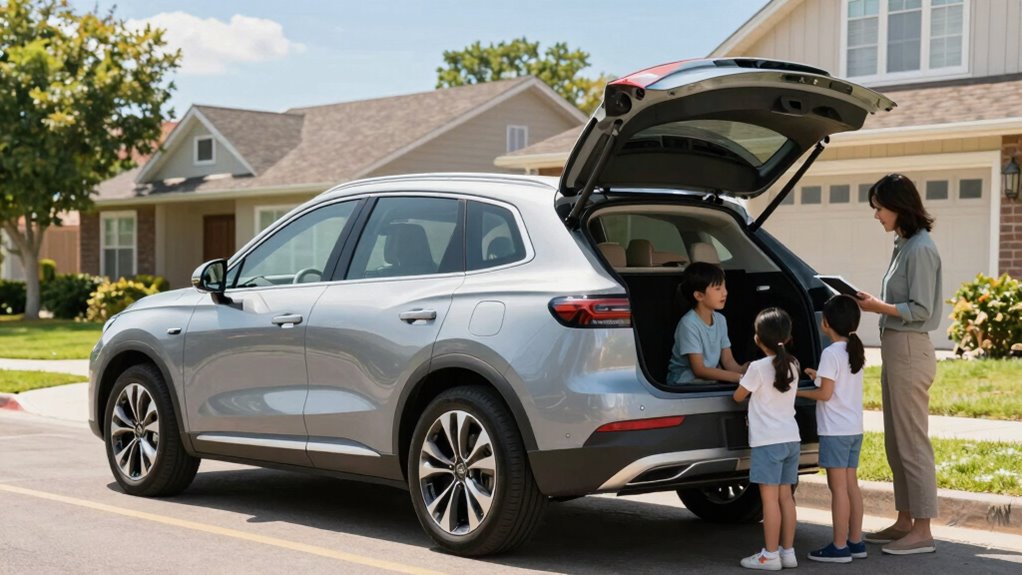

To choose a lease-friendly family vehicle without overbuying, focus on models that offer essential safety features like collision alerts and backup cameras, supported by high safety ratings from sources like IIHS and NHTSA. Prioritize size that fits your family’s needs and stick to core comfort features, avoiding unnecessary extras that could push up costs. Make sure the vehicle’s reliability and safety technology align with your budget. Keep exploring to learn more about making confident, smart lease choices.

Get business pricing on garage and car supplies
- Business-only prices and quantity discounts
- Tax-exempt purchasing
- Multiple users, one account, clear invoices
Key Takeaways
- Prioritize safety ratings and standard safety features to ensure protection without extra costly options.
- Choose a vehicle size that fits your family’s needs without exceeding lease limits or budget.
- Focus on essential luxury features like infotainment and climate control, avoiding unnecessary extras.
- Research vehicle safety records and reliability to select a dependable model within your lease terms.
- Match features and vehicle specifications to your family’s needs and budget for a balanced, cost-effective choice.
Choosing the right family vehicle for leasing can feel overwhelming, especially with so many options available. You want a car that’s practical, safe, and comfortable for everyone, but also one that fits within your budget and lease terms. To start, focus on models that offer a good balance of luxury features and safety ratings. Luxury features, such as advanced infotainment systems, leather upholstery, or automatic climate control, can make daily drives more enjoyable. However, it’s important to assess whether these features are essentials or just nice-to-haves, so you don’t end up overbuying or paying for extras you won’t use. When leasing, you typically want to stick to the core features that add value and comfort without pushing the vehicle’s price beyond what’s manageable in your lease agreement.
Focus on essential features, safety ratings, and size to find the perfect family lease vehicle.
Safety ratings should be at the top of your checklist. You’re responsible for your family’s safety, so look for vehicles with high safety scores from reputable sources like the National Highway Traffic Safety Administration (NHTSA) or the Insurance Institute for Highway Safety (IIHS). These ratings reflect the vehicle’s ability to protect occupants in the event of a crash, and choosing a model with top scores can give you peace of mind. Remember, safety features like collision avoidance systems, lane departure warnings, and backup cameras are often standard in newer models, but it’s worth verifying these are included before committing. A vehicle with solid safety ratings not only protects your loved ones but also helps retain its value during your lease term. Additionally, considering vehicles with up-to-date safety technology can further enhance your family’s protection. Incorporating vehicle safety records into your research can help you identify models with proven reliability and safety performance. It’s also beneficial to look into the vehicle’s history and maintenance records to ensure you’re choosing a reliable and secure option. Moreover, understanding how safety features operate in real-world scenarios can help you make more informed decisions about which models truly offer comprehensive protection. Being aware of the latest advancements in automotive safety can also guide you toward more modern, feature-rich options that prioritize your family’s security.
Products Worth Considering

Chemical Guys 14-Piece Arsenal Builder Car Wash Kit with Foam Blaster

Chemical Guys 16-Piece Arsenal Builder Car Wash Kit with Foam Cannon & Bucket

NOCO Boost GB150 3000A UltraSafe Jump Starter, 12V Lithium Battery Booster
As an affiliate, we earn on qualifying purchases.
Frequently Asked Questions
What Is the Average Lease Term for Family Vehicles?
The average lease term for a family vehicle usually spans 36 months, though it can range from 24 to 48 months. When considering lease terms, you want a duration that aligns with your family’s changing needs without overcommitting. Shorter lease terms might mean higher monthly payments but more flexibility, while longer ones could offer lower payments but less adaptability. Always review lease terms carefully before committing to make certain it suits your family’s lifestyle.
Are Hybrid or Electric Cars Better for Leasing?
Hybrid and electric cars can be great leasing options, especially as battery technology improves and charging infrastructure expands. Hybrids offer the benefit of fuel efficiency with less reliance on charging stations, making them more practical if charging options are limited. Electric vehicles, on the other hand, provide zero emissions and lower running costs, but consider your access to charging infrastructure to verify it fits your lifestyle. Both types are advancing quickly, making them smart choices.
How Does Mileage Affect Lease Payments?
Mileage restrictions directly impact your lease payments because exceeding them can lead to hefty lease penalties. If you plan to drive a lot, choose a lease with higher mileage limits to avoid costly penalties at the end. Staying within your mileage allowance keeps your payments predictable and prevents unexpected expenses. Always assess your driving habits beforehand, so you select a lease that fits your lifestyle and keeps costs manageable.
Can I Customize a Leased Family Vehicle?
You can usually customize a leased family vehicle, but you need to stay within the dealership’s restrictions. Interior options like seat covers or floor mats are often allowed, but major modifications are restricted due to customization restrictions in lease agreements. Always check with your leasing company beforehand to understand what’s permitted. This way, you can personalize your vehicle’s interior without risking penalties or violating your lease terms.
What Fees Are Involved in Ending a Lease Early?
When ending a lease early, you’ll face early termination fees and lease penalties. These fees cover the remaining lease payments, depreciation, and administrative costs. You might also owe extra charges if the vehicle has excess wear or mileage. To avoid surprises, review your lease agreement carefully, and consider negotiating with your leasing company. Being aware of these costs helps you decide if early termination is financially sensible.
Conclusion
Choosing a lease-friendly family vehicle is like planting a sturdy tree—you want it to grow strong and dependable without overextending its roots. Focus on practicality, fuel efficiency, and lease-friendly features, and you’ll cultivate a vehicle that fits your family’s needs without overburdening your budget. With thoughtful choices, you’ll watch your journey flourish, providing a reliable, stress-free ride that’s as steady as a tree standing tall against any storm.