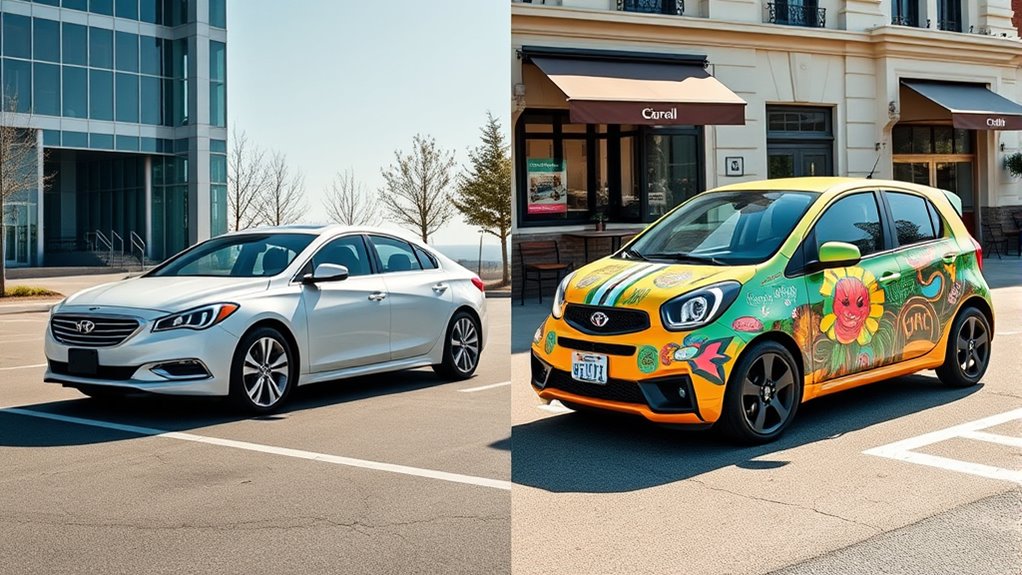

Choosing between a business and personal auto lease depends on your needs. A business lease is ideal if you manage multiple vehicles or want tax benefits and fleet management options. Personal leases suit individual drivers seeking simplicity and lower upfront costs. Business leases require stricter insurance and fleet oversight, while personal leases offer more flexibility. Understanding these differences helps you make the best choice for your financial and operational goals; keep exploring to get detailed insights.
Key Takeaways
- Business auto leases support fleet management and commercial activities, while personal leases are designed for individual use.
- Business leases often involve higher upfront costs but offer tax benefits and better cash flow management.
- Commercial auto insurance is required for business leases, whereas personal leases need standard auto insurance.
- Managing a business fleet includes maintenance, compliance, and insurance oversight; personal leases are simpler with one vehicle.
- The choice depends on whether the need is for multiple vehicles and professional purposes or individual driving convenience.
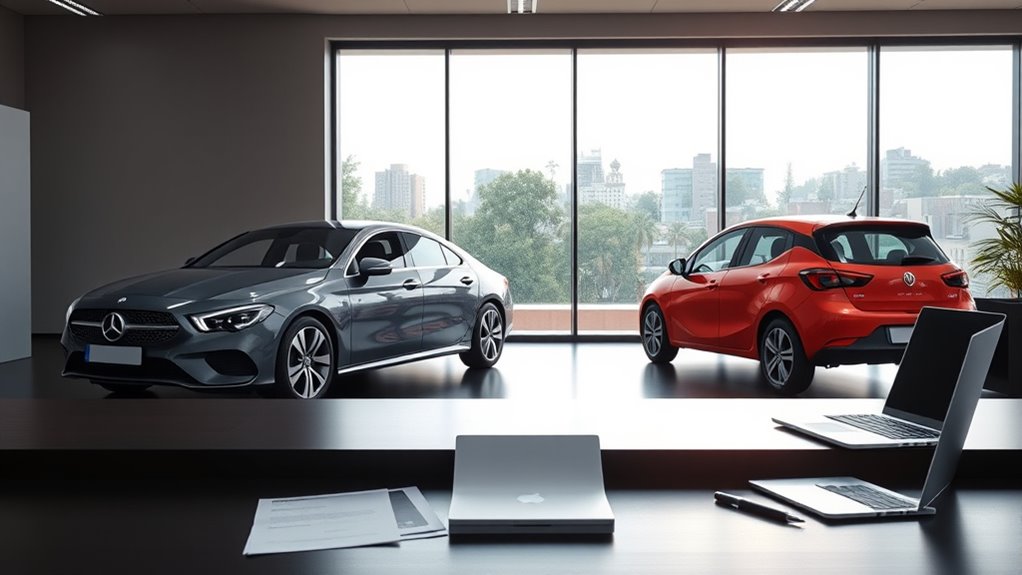
Are you unsure about whether to choose a business auto lease or a personal auto lease? Making this decision can considerably impact your finances and how you manage your vehicle. When considering a business auto lease, you need to think about how it fits into your overall fleet management strategy. Leasing vehicles for your business allows you to maintain a fleet of reliable, up-to-date cars without the hefty upfront costs of purchasing. It also offers the flexibility to upgrade vehicles regularly, which can be vital if your business relies on a professional image or needs specific features. On the other hand, a personal auto lease is typically simpler to manage and more straightforward in terms of paperwork. It’s designed for individual use, and the lease terms are generally less complex than those for business leases.
One of the key differences lies in insurance requirements. With a business auto lease, you usually have to meet stricter insurance standards. Commercial auto insurance is often more extensive and can be more costly than personal auto insurance. This coverage is necessary because the vehicle is used for business purposes, which might include transporting clients, making deliveries, or other commercial activities. You’ll need to make sure your insurance policy aligns with the lease provider’s requirements, and failure to do so could lead to penalties or lease violations. Conversely, personal auto leases typically require standard personal auto insurance, which is less complex and usually cheaper. Personal policies focus on individual coverage needs, and you generally have more flexibility in choosing your insurer.
When it comes to fleet management, leasing for business purposes involves overseeing multiple vehicles, tracking maintenance, and ensuring each car complies with insurance and safety standards. This can be a major responsibility but also offers advantages like tax deductions and improved cash flow management. You may also need to coordinate with insurance providers to secure fleet policies that cover multiple vehicles under a single plan, simplifying management and potentially reducing costs. For personal leases, fleet management isn’t a concern because you’re dealing with only one vehicle, making the process more straightforward. The focus is primarily on your personal driving needs and ensuring you meet the lease’s insurance requirements.
Ultimately, choosing between a business or personal auto lease hinges on your specific needs. If you’re running a company that requires multiple vehicles and benefits from strategic fleet management, a business lease might be the better fit, despite the added complexity of insurance requirements. If you just need a vehicle for personal use, a personal lease provides simplicity and less hassle. Carefully evaluate how each option aligns with your financial goals, insurance needs, and whether you’re prepared to handle fleet management responsibilities.
Frequently Asked Questions
How Does Lease Insurance Differ Between Business and Personal Auto Leases?
When it comes to lease insurance, business auto leases often require fleet coverage and meet stricter liability requirements, since multiple vehicles are involved. Personal auto leases typically need standard personal insurance with minimum liability limits. You might find that business policies are more extensive, covering more risks, while personal policies focus on individual protection. Always check your lease agreement to confirm you meet the specific insurance requirements for your lease type.
Can I Switch From a Personal to a Business Auto Lease Later?
Yes, you can switch from a personal to a business auto lease later. Typically, this involves a lease transfer or lease conversion process, where you work with your leasing company to transfer the lease to your business. Keep in mind, there might be fees and approval requirements. It is crucial to review your lease agreement and coordinate with the leasing company to guarantee a smooth transition.
Are There Tax Advantages Specific to Business Auto Leases?
Yes, business auto leases often offer tax advantages like tax deductions for lease payments and related expenses. You can also benefit from lease incentives, which reduce your overall costs. These deductions can decrease your taxable income, providing significant savings. Be sure to keep detailed records and consult a tax professional to maximize these benefits and ensure compliance with IRS guidelines.
What Are the Mileage Limits Typically Imposed on Each Lease Type?
You’ll typically face mileage restrictions of about 10,000 to 15,000 miles annually for both business and personal auto leases. Exceeding these limits can lead to hefty lease penalties, so it’s essential to contemplate your driving habits before signing. If you anticipate high mileage, negotiate higher limits upfront. Staying within the mileage restrictions helps avoid extra fees and keeps your lease costs predictable.
How Does Lease Termination Differ Between Business and Personal Auto Leases?
When you terminate a lease early, whether business or personal, you’ll face different lease penalties. Personal auto leases often have strict early termination fees, and you might owe the remaining payments or a buyout. Business leases may allow more flexibility with early termination, but you’ll still incur penalties. Always check your lease agreement, as penalties and conditions vary, and understanding these differences helps you avoid surprises.
Conclusion
Ultimately, choosing between a business and personal auto lease depends on your needs. While a personal lease offers simplicity and flexibility, a business lease can provide tax benefits and cost advantages. Think of it like driving for pleasure versus driving for profit—each has its own benefits. By understanding these key differences, you can make a smarter choice that drives your financial goals forward, whether you’re cruising for fun or steering your business ahead.