

Your mileage allowance directly affects your lease cost—higher limits typically increase your monthly payments upfront. However, choosing a larger allowance can help you avoid penalties if you drive more miles during the lease. Staying within the limit minimizes additional charges and preserves your vehicle’s residual value. If you want to understand how managing your mileage can save you money and simplify lease termination, there’s more to explore.

Get business pricing on garage and car supplies
- Business-only prices and quantity discounts
- Tax-exempt purchasing
- Multiple users, one account, clear invoices
Key Takeaways
- Higher mileage allowances increase upfront lease costs but reduce the risk of penalties at lease end.
- Exceeding the mileage limit results in per-mile penalties, raising total lease expenses.
- Driving fewer miles than allowed may lead to refunds or credits, lowering overall costs.
- Choosing a suitable mileage limit based on driving habits helps optimize lease affordability.
- Managing mileage effectively preserves residual value, minimizing additional fees when returning the vehicle.
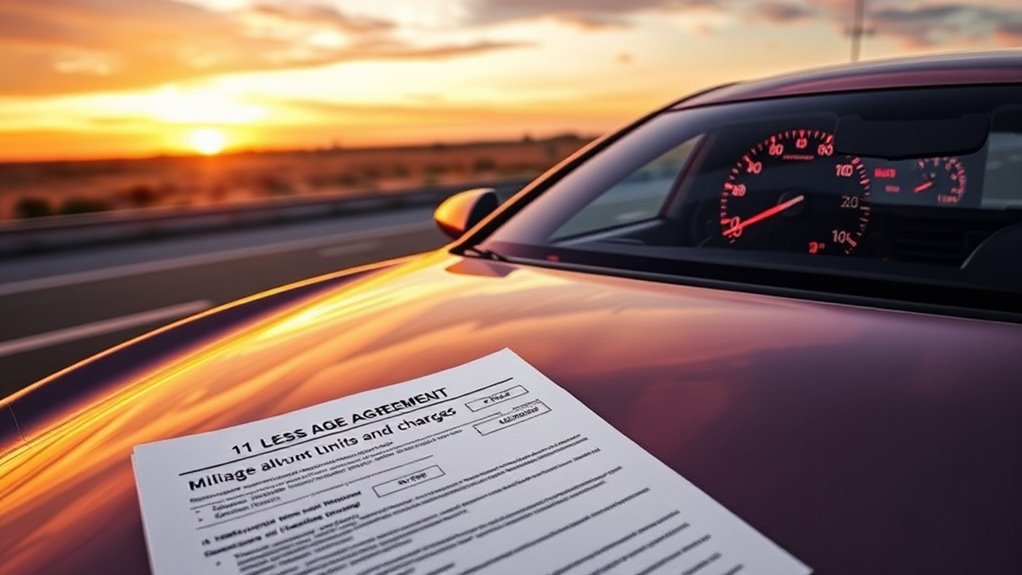
Understanding how mileage allowances and lease costs interact is vital for managing your vehicle expenses effectively. When you sign a lease, the number of miles you’re allowed to drive each year directly influences the overall cost of the agreement. If you plan to drive more than the allotted mileage, you could face considerable penalties at lease termination. Conversely, if you drive less, you might be paying for miles you never use. Knowing how these factors interplay helps you negotiate better terms and avoid unexpected charges.
Your lease agreement typically includes a mileage allowance, which is the maximum number of miles you can drive without incurring additional fees. This allowance is set based on your anticipated driving habits. If you exceed this limit, you’ll have to pay a per-mile fee during lease termination, which adds to your total costs. These extra charges are designed to compensate the leasing company for the depreciation and wear caused by higher mileage. Conversely, if you drive fewer miles than agreed, you’ll likely receive a credit or refund when you return the vehicle, since less wear and tear means less depreciation.
Lease mileage limits impact fees and residual value; exceeding them increases costs, while driving less can lead to refunds.
Residual value plays a key role in determining your lease costs. It refers to the estimated value of the vehicle at the end of your lease term. The higher the residual value, the lower your monthly payments generally are, since depreciation is spread over a higher future value. Your mileage allowance influences this residual value; driving more miles than the agreed limit can reduce the residual value, increasing your costs if you decide to buy the car at the end of the lease or when you return it. This is why understanding your expected driving habits is vital—if you anticipate exceeding the mileage limits, negotiating a higher allowance or a lease with a higher residual value can save you money.
When it comes to lease termination, the residual value becomes particularly important. If you return the vehicle with higher mileage than the allowance, you’ll face penalties that are often calculated based on the difference between actual miles driven and the pre-set limit. These penalties can greatly raise your total lease costs. Conversely, if you stay within your mileage allowance, the vehicle’s residual value remains intact, minimizing additional fees and making the lease termination process smoother. Thus, managing your mileage effectively not only helps you avoid penalties but also preserves the residual value of the car, which is beneficial whether you choose to buy the vehicle or lease anew. Additionally, understanding the concept of empowering seniors with personalized in-home care can serve as a reminder to plan your vehicle usage carefully, just as tailored care plans help optimize quality of life.
As an affiliate, we earn on qualifying purchases.
Frequently Asked Questions
How Does Exceeding My Mileage Allowance Affect My Lease End Costs?
Exceeding your mileage allowance leads to leasing penalties, increasing your lease end costs. When you go over the limit, you face mileage penalties that charge you per extra mile. These penalties can add up quickly, making your final payments higher than expected. To avoid surprises, track your miles carefully and consider negotiating a higher mileage allowance if you anticipate driving more than initially planned.
Can I Negotiate a Higher Mileage Allowance Before Signing the Lease?
Think of your lease as a customized suit—adding extra fabric for comfort. You can negotiate a higher mileage allowance before signing, especially if you anticipate more driving. Just ask about lease extensions or mileage upgrades upfront; dealers often accommodate these requests. By doing so, you avoid costly penalties later and keep your lease flexible, fitting your needs perfectly from the start.
What Are the Penalties for Going Over My Mileage Limit?
If you go over your mileage limit, you face mileage penalties, which typically mean paying extra per mile. These costs can add up quickly and increase your overall lease expense. To avoid hefty charges, consider lease extensions if you anticipate exceeding your limit, or negotiate a higher mileage allowance upfront. Staying within your agreed miles helps you save money and prevents unexpected expenses at the end of your lease term.
Is It Possible to Adjust My Mileage Allowance During the Lease Term?
Yes, you can usually get mileage flexibility with lease adjustments. Think of it like steering your car onto a different road—you just need to talk to your leasing company early. They often allow changes if you request them before your lease ends. By planning ahead, you can avoid penalties and keep your driving smooth, making your lease fit your needs without surprises along the way.
How Does Mileage Allowance Impact My Lease’s Residual Value?
A higher mileage allowance leads to less residual depreciation because the vehicle is expected to have less wear and tear. This increases your lease’s residual value, potentially lowering monthly payments. Your mileage estimation directly affects this, as overestimating can inflate residual value, while underestimating may reduce it. Accurate mileage estimations help maintain a realistic residual value, ensuring fair lease terms and minimizing unexpected costs at the end of your lease.
Conclusion
Understanding how your mileage allowance affects your lease cost helps you avoid surprises later. Even if you think you’ll stay within your limit, consider future trips or unexpected drives. Choosing the right allowance might seem costly upfront, but it can save you money in the long run by preventing hefty excess mileage charges. So, plan ahead and pick an allowance that suits your needs—you’ll thank yourself when you hit the road without worries.
Fall Picks
fall essentials
As an affiliate, we earn on qualifying purchases.