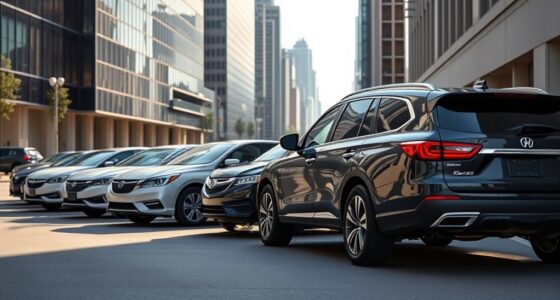
When choosing between car ownership and leasing, you gain full freedom to customize and drive your vehicle without restrictions if you own it. Ownership allows unlimited miles, modifications, and keeping the car as long as you want. Leasing, however, comes with limits on mileage and restrictions on customizing the vehicle, which can restrict your flexibility. If you’re curious about how these differences impact your driving lifestyle, there’s more to explore below.
Key Takeaways
- Ownership offers unlimited driving, customization, and long-term value, while leasing imposes mileage limits and restrictions on modifications.
- Leasing provides lower monthly payments and new cars, but restricts personalization and long-term vehicle control.
- Car owners can personalize their vehicle freely and keep it indefinitely, unlike lessees who face penalties for modifications.
- Leasing limits travel with mileage caps, whereas owners can drive as much as they want without penalties.
- The decision depends on balancing freedom and control versus flexibility and lower initial costs.
Have you ever wondered where the line should be drawn between freedom and restrictions? When it comes to car ownership versus leasing, that line becomes especially important. If you choose to buy a car, you gain the freedom to drive as much as you want, modify it to fit your style, and keep it for as long as you desire. However, with ownership, you’re also responsible for maintenance, insurance, and depreciation. Leasing, on the other hand, typically involves mileage limits that restrict how far you can go annually. These limits can feel like a restriction on your freedom, especially if you’re someone who enjoys long road trips or frequently travels for work. When leasing, exceeding the mileage allowance usually results in hefty fees, which can quickly diminish the financial advantages of leasing in the first place. Additionally, the legal and contractual aspects of leasing agreements often include clauses that limit certain actions, further impacting your freedom to customize.
Customization options are another key difference. As a car owner, you have the liberty to customize your vehicle—whether that’s adding new rims, installing a custom sound system, or even modifying the engine. This level of personalization appeals to those who want their vehicle to reflect their personality and preferences. Leasing, however, generally restricts modifications. Most lease agreements prohibit altering the vehicle, and doing so can lead to penalties or the requirement to undo changes before returning it. This limitation can feel like a loss of creative freedom, especially if you’re someone who enjoys tailoring your car to your tastes.
Choosing between ownership and leasing ultimately hinges on how much value you place on these freedoms versus restrictions. If you prioritize flexibility—driving without worry about mileage limits, customizing your vehicle, and holding onto it long-term—buying a car might be the better choice. Ownership grants you the liberty to make the vehicle truly your own, even if it means taking on additional responsibilities. Conversely, if you prefer lower monthly payments, don’t mind limited customization, and are comfortable with mileage restrictions, leasing can be an attractive option. It offers a sense of driving a new car every few years without the long-term commitment, but it comes with constraints that can feel limiting if you’re someone who values complete control over your vehicle.
Ultimately, understanding the balance between freedom and restrictions in each option helps you make an informed decision aligned with your lifestyle. Whether you want the unlimited freedom of ownership or the convenience of leasing with its set boundaries, weighing these factors carefully ensures you’ll find a solution that matches your driving habits and personal preferences.
Frequently Asked Questions
How Do Lease Penalties Compare Across Different Regions?
You’ll notice that lease penalties vary considerably across regions due to regional differences and local regulations. In some areas, penalties for early termination or excess wear are higher, while others impose minimal charges. These penalty variations depend on regional laws, market conditions, and leasing company policies. Always review your lease agreement carefully, as regional differences can impact your costs if you decide to end or modify your lease early.
Can I Customize a Leased Vehicle Extensively?
You generally can’t customize a leased vehicle extensively because of customization restrictions, which are part of your lease agreement. Most lease contracts prohibit major modifications or customizations, and attempting a lease modification without approval could lead to penalties or charges. If you’re interested in customizing your car, consider buying instead, as ownership offers the freedom to personalize your vehicle however you like without restrictions.
What Are the Hidden Costs in Leasing Agreements?
Think of leasing agreements as a garden with hidden thorns. You might overlook lease end fees, which appear as unexpected weeds, or face early termination penalties if your plans change. These costs can sneak up on you like shadows at dusk, turning your smooth ride into a financial headache. Always read the fine print, so you’re prepared to dodge these hidden costs and keep your journey smooth and stress-free.
How Does Vehicle Maintenance Differ Between Ownership and Leasing?
When you own a vehicle, you’re responsible for all maintenance costs and repair responsibilities, which can add up over time. In contrast, leasing often includes scheduled maintenance, reducing your out-of-pocket expenses. However, if you damage the car, you might face additional charges. So, while ownership gives you control, leasing typically offers more predictable maintenance costs, making it easier to budget for repairs.
Are There Options to Switch From Leasing to Ownership Mid-Term?
Yes, you can switch from leasing to ownership mid-term through a lease transfer or ownership changeover. A lease transfer allows you to pass your lease to someone else, freeing you from future payments. Alternatively, you might negotiate an ownership transition by buying out the lease at the end or even earlier, depending on your leasing agreement. Always check with your leasing company for specific options and procedures to guarantee a smooth transition.
Conclusion
So, which path will you choose? Will you enjoy the freedom of owning a car and the endless possibilities it offers, or will you accept the restrictions of leasing, with its limits and obligations? The decision isn’t just about today—it’s about your future journeys. Think carefully, because once you decide, your driving world will never be the same. Are you ready to take that leap, or will the unknown hold you back? The choice is yours.