
TL;DR

Get business pricing on garage and car supplies
- Business-only prices and quantity discounts
- Tax-exempt purchasing
- Multiple users, one account, clear invoices
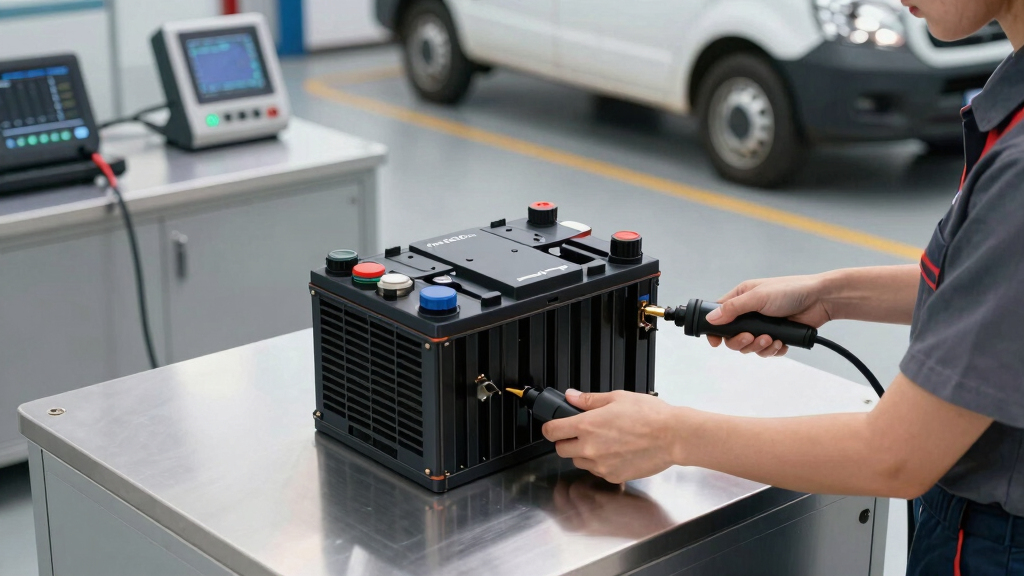
CATL has developed a new battery technology that allows delivery vans to recharge in only 7 minutes. This breakthrough could significantly reduce downtime for commercial fleets, but further validation and testing are needed.
CATL, a leading battery manufacturer, has announced a new battery technology for delivery vans that can be fully recharged in just 7 minutes. This development aims to address one of the key challenges in electric commercial vehicle adoption — long charging times — and could significantly impact fleet operations and logistics efficiency.
According to CATL, the new battery employs a proprietary fast-charging architecture that allows a full recharge within 7 minutes, comparable to refueling a conventional gasoline vehicle. The company states that this battery maintains high energy density and safety standards, although detailed technical specifications are not yet publicly available. The announcement was made at a recent industry event, with CATL emphasizing its focus on supporting electric commercial vehicles, especially delivery vans used in urban logistics.While CATL claims the battery’s rapid recharge capability is ready for commercial deployment, it is not yet clear when or if the technology will be available for mass production. Industry analysts note that such fast-charging batteries could reduce vehicle downtime, increase fleet utilization, and accelerate the transition to electric delivery vehicles. However, the company has not provided specific timelines or confirmed partnerships with vehicle manufacturers for integrating this new battery.Furthermore, the company highlighted ongoing testing to ensure durability over repeated fast charges, but detailed results are still pending. Major industry players are watching closely to see if this breakthrough can be reliably scaled for widespread use.
Potential Industry Impact of 7-Minute Charging
This new battery technology could transform the logistics sector by drastically reducing charging times for delivery vans, enabling longer operational hours and reducing fleet downtime. If scalable and reliable, it may accelerate the adoption of electric commercial vehicles, contributing to emissions reduction and operational cost savings. However, the actual impact depends on further testing, manufacturing scalability, and integration with existing vehicle models.electric delivery van fast charger
As an affiliate, we earn on qualifying purchases.
As an affiliate, we earn on qualifying purchases.
Advances in Fast Charging and Commercial EV Adoption
Battery technology has long been a limiting factor for electric vehicle adoption in commercial sectors, where downtime translates directly into increased costs. Existing fast-charging solutions typically require 30 minutes or more for a significant recharge, limiting their practicality for fleet operations. CATL, one of the world’s largest battery producers, has been investing heavily in next-generation batteries, with previous innovations focusing on energy density and safety. This announcement aligns with broader industry trends aiming to reduce charging times and improve the viability of electric commercial vehicles, especially in urban logistics and delivery services. The development follows other recent advances in fast-charging infrastructure and battery chemistry, but a 7-minute recharge for a full battery remains unprecedented at this scale.“Our new battery technology is a game-changer for electric delivery vans, enabling rapid charging that matches traditional refueling times, and supporting the shift to sustainable logistics.”
— CEO of CATL
Unconfirmed Details and Testing Outcomes
It is not yet clear when this battery will be available for commercial use or whether it will be adopted by major vehicle manufacturers. Details about the battery’s long-term durability, cost, and safety performance over repeated fast charges are still pending results from ongoing testing. Additionally, the scalability of manufacturing this advanced battery at a commercial level remains unconfirmed.Next Steps for Validation and Commercial Deployment
CATL is expected to continue rigorous testing of the battery’s performance and durability, with potential pilot programs in select delivery fleets. The company may also announce partnerships with vehicle makers to integrate this technology into upcoming models. Industry observers will be watching for detailed technical data and real-world testing results over the coming months to assess feasibility and readiness for mass deployment.Key Questions
When will this battery be available for commercial vehicles?
CATL has not yet announced a specific timeline for commercial availability. It is likely to undergo further testing and validation before mass production begins.
How does the 7-minute recharge compare to existing fast-charging options?
Most current fast-charging solutions typically require 30 minutes or more for a substantial charge. A 7-minute full recharge would be a significant reduction, nearly matching traditional fuel refueling times.
Will this technology be compatible with all delivery vans?
Compatibility depends on vehicle design and battery integration. CATL has not specified which vehicle models or manufacturers will adopt this battery yet.
What are the safety implications of such rapid charging?
CATL claims its battery maintains high safety standards, but detailed safety testing results are still pending. Ensuring safety during rapid charging remains a key focus of ongoing validation.
Could this breakthrough reduce overall electric vehicle costs?
Potentially, yes. Faster charging could reduce infrastructure costs and increase fleet utilization, but the impact on battery costs depends on manufacturing scale and technology maturity.
Source: rss
Columbus Day / Indigenous Peoples' Day Picks
long weekend sales
As an affiliate, we earn on qualifying purchases.