
TL;DR

Get business pricing on garage and car supplies
- Business-only prices and quantity discounts
- Tax-exempt purchasing
- Multiple users, one account, clear invoices
CATL has announced a new battery technology for delivery vans that can fully recharge in just 7 minutes. This breakthrough could significantly reduce downtime for electric delivery vehicles. The development is confirmed by CATL, but real-world performance and scalability remain to be seen.
CATL, a leading battery manufacturer, has announced a new battery technology that can fully recharge in just 7 minutes, specifically designed for delivery vans. This development aims to address one of the main challenges in electric commercial vehicle adoption—long charging times—potentially transforming logistics operations and reducing vehicle downtime.
According to CATL, the new battery employs advanced cell chemistry and cooling systems to achieve rapid charging without compromising safety or longevity. The company claims that this battery can deliver a full charge in 7 minutes, a significant improvement over current fast-charging solutions that typically take 30 minutes or more. CATL has demonstrated the battery in laboratory conditions, with plans to scale production and conduct real-world testing later this year.Industry experts note that such a breakthrough could dramatically increase the efficiency of electric delivery fleets, enabling quicker turnaround times and reducing the need for large on-site charging infrastructure. The battery is designed to be compatible with existing vehicle architectures, and CATL emphasizes that it is focused on safety and durability alongside rapid charging capabilities.While the announcement is promising, detailed technical specifications, long-term performance data, and mass production timelines have not yet been disclosed, and it is unclear when the battery will be commercially available at scale.Potential Impact on Commercial Electric Vehicle Operations
This new battery technology could revolutionize the logistics and delivery industry by significantly reducing charging times for electric vans. Faster recharging means less vehicle downtime, increased route flexibility, and lower operational costs, making electric delivery vans more competitive with traditional internal combustion engine vehicles. If scaled successfully, it could accelerate the adoption of electric commercial fleets globally, contributing to emissions reductions and cleaner urban air quality.
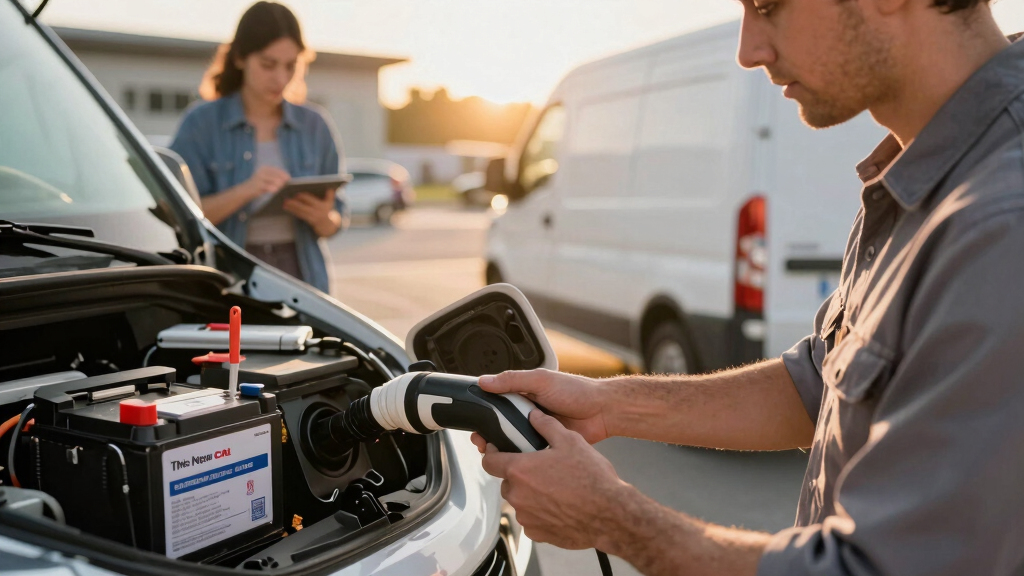
electric delivery van fast charger
As an affiliate, we earn on qualifying purchases.
As an affiliate, we earn on qualifying purchases.
Advances in Fast-Charging Battery Technologies
Battery technology has been progressing steadily, with current fast-charging solutions typically requiring 30 minutes to reach 80% capacity. Companies like CATL have been investing in research to push these limits further, aiming for sub-10-minute recharges. Previous efforts have focused on improving cell chemistry, cooling systems, and charging infrastructure. This announcement aligns with broader industry trends toward rapid charging for commercial vehicles, which face unique challenges due to their larger battery sizes and frequent duty cycles.
“Our new battery demonstrates that rapid charging for electric delivery vans is technically feasible without sacrificing safety or battery life. We are committed to making electric logistics more efficient.”
— Robin Zeng, CEO of CATL
Unanswered Questions About Long-Term Performance
While the battery’s rapid charging capability has been demonstrated in laboratory conditions, it remains unclear how the battery will perform over extended cycles, its lifespan, and safety in real-world usage. Details about manufacturing scalability, cost, and integration into existing vehicle models are also not yet available. Further testing and validation are required before commercial deployment can be confirmed.
Next Steps for Commercial Deployment and Testing
CATL plans to conduct real-world testing of the new battery in partnership with vehicle manufacturers later this year. The company aims to gather long-term performance data and address any safety or durability concerns. If successful, mass production could begin within the next 12 to 18 months, with the first commercial deployment targeted for late 2024 or early 2025.
Key Questions
How does the 7-minute recharge compare to current fast-charging solutions?
Current fast-charging solutions typically take around 30 minutes to reach 80% capacity. CATL’s new battery claims to fully recharge in just 7 minutes, representing a significant reduction in charging time.
Will this battery be compatible with existing delivery vans?
CATL states that the new battery is designed to be compatible with existing vehicle architectures, but specific models and integration details are still under development.
When will the battery be available for commercial use?
While initial testing is planned for later this year, mass production and commercial deployment are expected within 12 to 18 months, possibly by late 2024 or early 2025.
What are the potential safety concerns with such rapid charging?
Rapid charging can generate heat and stress on battery cells, raising safety and longevity concerns. CATL emphasizes that their new design incorporates advanced cooling and safety features, but comprehensive real-world testing is needed to confirm safety over long-term use.
Source: rss
Halloween Picks
halloween
As an affiliate, we earn on qualifying purchases.