
TL;DR

Get business pricing on garage and car supplies
- Business-only prices and quantity discounts
- Tax-exempt purchasing
- Multiple users, one account, clear invoices
GM says its next-generation central compute system is intended to expand over-the-air updates and reduce the number of issues that require a dealership visit. The system is planned to debut in the 2028 Cadillac Escalade IQ, with GM executive Jaclyn McQuaid saying it will support vehicles across the company’s gas and electric lineup. GM has not said which updates will be handled remotely or how many dealership visits the system could prevent.
General Motors says a new central compute system planned for its next-generation vehicles should let the company handle more software changes over the air, reducing some trips to dealerships. GM Senior Vice President of Vehicle Products Jaclyn McQuaid said the goal is to shift more work from service visits to remote updates, while stressing that not every issue will be fixable without physical work.
The system is the foundation of GM’s next-generation electrical architecture and is expected to debut in the 2028 Cadillac Escalade IQ. McQuaid described it as consolidating dozens of existing vehicle modules into one central unit. The company says the architecture will have 40 times more compute power than its current architecture, according to McQuaid.
GM vehicles already receive some over-the-air software updates, but the current capability varies because different modules have different limits. McQuaid said she had recently accepted an update in a new light-duty gas-powered truck, which took about 15 minutes. She said the new system should expand the range of functions that can be updated remotely.
McQuaid said GM plans to write more of the software in-house and use common software across a broader range of vehicles, including gas and electric models. She said that could mean engineering and validating software once for wider use, rather than developing and testing separate versions for multiple vehicle groups. The company has not published a list of functions that will qualify for remote updates.
How Remote Updates Could Cut Service Trips
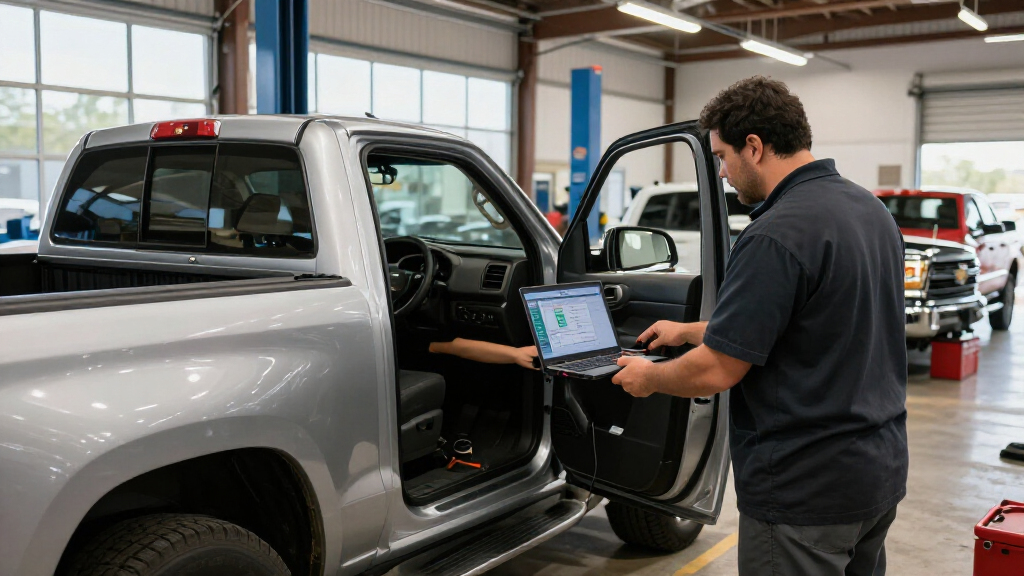
For owners, the intended benefit is fewer service appointments for problems that can be resolved with software. Updates to features such as headlight programming or Bluetooth operations are examples cited in the report; they are different from mechanical work that requires access to the vehicle. GM says the central system could also allow vehicles to gain software features over time, though it has not detailed which features or models will receive them.
For GM, a common software platform could reduce the number of separate systems engineers need to develop and validate. That may also simplify how the company responds to software problems: a shared update could potentially address an issue across more vehicles instead of requiring distinct fixes for different modules or models. Those are potential operational benefits described by McQuaid, not quantified savings or guaranteed outcomes.
The change does not mean dealerships will become unnecessary. Tires, worn shocks and other physical repairs still require hands-on service. The announcement concerns software capability and the balance between remote updates and visits, not a plan to eliminate dealership service departments.
Products Worth Considering

Autel MaxiCheck MX808S Bidirectional OBD2 Diagnostic Scanner

Autel MaxiCOM MK808S Bidirectional Automotive Diagnostic Scanner

NOCO Boost GB150 3000A UltraSafe Jump Starter, 12V Lithium Battery Booster
As an affiliate, we earn on qualifying purchases.
GM’s Shift to Centralized Vehicle Software
GM’s existing lineup already supports some over-the-air updates, but its vehicles use dozens of separate modules, and McQuaid said only some can receive updates remotely. The planned central computer is intended to bring more computing and software functions together, broadening what can be managed through an update without a workshop visit.
GM presented the architecture as part of a wider technology strategy that includes an AI-focused OnStar effort, next-generation electric vehicles and autonomy work for trucks and SUVs. The first stated application is the Escalade IQ. McQuaid contrasted GM’s single central compute approach with zonal architectures, saying each design has trade-offs: a central unit can reduce some fragmentation and latency, but it is large and creates packaging challenges.
“The goal is to significantly reduce what would need a dealership visit versus what can be done OTA.”
— Jaclyn McQuaid, GM senior vice president of vehicle products, speaking to The Drive
Which Repairs Will Remain In-Person
GM has not specified which software functions will be updateable remotely, how many dealership visits the architecture could prevent, or whether the same capabilities will arrive on every vehicle at the same time. It is also unclear how much of the planned software will be shared across brands and models, and how owners will be told when an update is available.
McQuaid’s comments describe a goal rather than a guarantee that all software issues can be fixed remotely. Physical repairs will still require service, and the company has not outlined how the new architecture will affect repair procedures, costs or service access for owners.
The Escalade IQ Sets the First Milestone
The next stated milestone is the system’s planned introduction in the 2028 Cadillac Escalade IQ. GM has not provided a full rollout schedule for other models or announced a detailed list of over-the-air functions. Further information about supported updates, model availability and how the system will work in day-to-day ownership will be needed to assess how much it changes service needs.
Until those details are released, owners should treat fewer dealership visits as GM’s stated aim, not a measured result. Routine mechanical maintenance and repairs will continue to require service when parts need inspection, replacement or physical adjustment.
Key Questions
What is GM’s new central compute system?
GM describes it as a central unit that consolidates computing functions currently spread across dozens of modules. It will underpin the company’s next-generation electrical architecture.
When will the system first appear?
GM says the system is planned to debut in the 2028 Cadillac Escalade IQ. The company has not announced a complete rollout schedule for other vehicles.
Will the system eliminate dealership visits?
No. GM’s stated goal is to reduce visits for some issues that can be handled with software updates. Mechanical work, including replacing tires or worn suspension parts, still requires physical service.
Can current GM vehicles already receive over-the-air updates?
Yes. McQuaid said GM vehicles already receive some remote software updates, but current capability differs by module. She said the central system should expand the range of functions that can be updated over the air.
Has GM said how many visits owners will avoid?
No. GM has described reducing dealership visits as a goal but has not provided a projected number, a list of eligible updates or measured results.
Source: thedrive.com