
If your leased car gets totaled, your insurance covers the vehicle’s current market value, not the remaining lease balance. Without GAP insurance, you could owe the difference out of pocket, which can be costly. GAP coverage bridges this gap, protecting you from unexpected expenses. Knowing how your insurance and GAP work together can save you from financial stress. Stay here to discover how to guarantee you’re fully protected in such situations.
Key Takeaways
- Insurance covers the vehicle’s current market value, not the remaining lease balance, potentially leaving a gap.
- GAP insurance covers the difference between the insurance payout and the lease balance, preventing out-of-pocket expenses.
- Without GAP insurance, you may owe thousands if the payout is less than your remaining lease payments.
- Full coverage insurance is typically required for leased vehicles to protect against damages and total loss.
- Having GAP insurance provides financial peace of mind and safeguards against unexpected costs after a total loss.
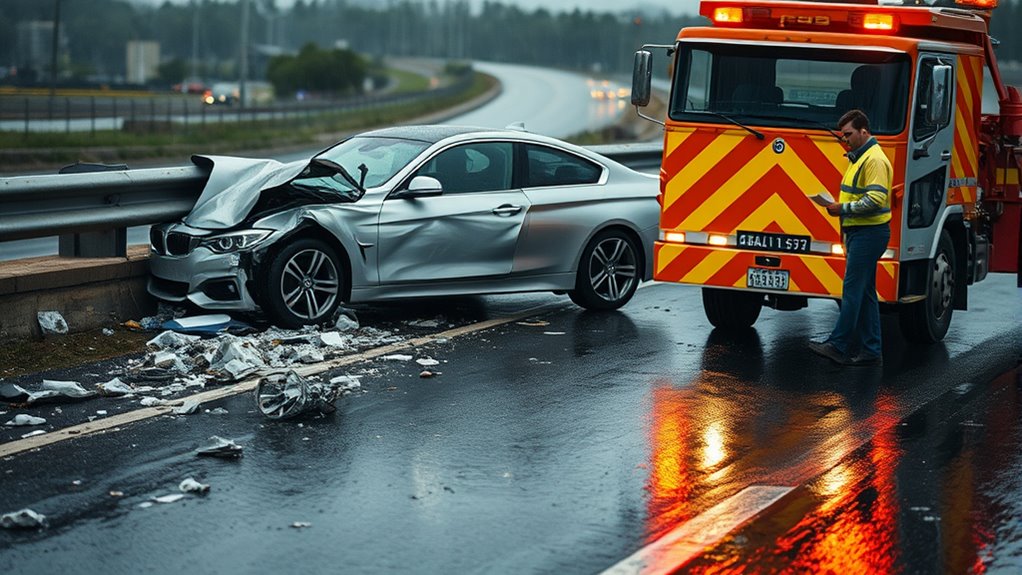
Have you ever wondered what happens if your leased car gets totaled in an accident? It’s a common concern, especially since leasing offers benefits like lower monthly payments and the chance to drive a new vehicle every few years. However, understanding what happens when the unexpected occurs is essential. When your leased car is declared a total loss, the insurance company steps in to cover the vehicle’s value, but that doesn’t always mean you’re fully protected from financial fallout. You might still be responsible for paying the difference between the insurance payout and what you owe on the lease, which can be a significant burden. That’s where GAP insurance comes into play.
If your leased car is totaled, GAP insurance covers the difference between insurance payout and lease balance.
GAP, or Guaranteed Asset Protection, covers this gap between the car’s actual cash value and the remaining lease balance. Without it, you could end up paying out of pocket for a vehicle you no longer have. It’s especially important because leasing benefits often include lower maintenance costs, which make leasing an attractive option for many. But these benefits don’t cover the financial risks associated with a total loss. If you don’t have GAP coverage, you could find yourself stuck paying a hefty amount that surpasses the insurance payout. That’s a scenario most leaseholders want to avoid.
When your leased vehicle is totaled, your insurance settlement typically covers the car’s current market value, not the remaining lease payments. If the vehicle’s value has depreciated faster than your lease balance, the difference becomes your responsibility. This is why GAP insurance is so valuable; it covers that difference and helps prevent unexpected expenses. Additionally, your lease agreement might require you to carry full coverage insurance, which includes comprehensive and collision coverage, ensuring you’re protected from damages caused by accidents, theft, or vandalism.
Furthermore, understanding the difference between actual cash value and residual value can help you better comprehend how your insurance and GAP coverage work together to protect your finances. Another benefit of understanding these protections is that they can help you avoid financial strain and preserve your credit. If you’re caught off guard and don’t have GAP insurance, you might face a large bill or even default on your lease payments, which could negatively impact your credit score. Knowing that GAP coverage exists and is often available through your leasing company or auto insurer can give you peace of mind. It’s a small investment that can save you from significant financial hardship if the worst happens. Overall, awareness of insurance and GAP protections ensures you’re prepared for the unexpected, allowing you to enjoy the leasing benefits without unnecessary worry.
Frequently Asked Questions
Can I Still Drive the Leased Car After It’s Been Totaled?
You can’t drive your leased car after it’s been totaled. Leasing restrictions prevent you from using a vehicle deemed a total loss, and insurance companies usually declare it a total loss to prevent further damage. Instead, you’ll need to explore repair options or return the vehicle. Your insurance payout typically covers the remaining lease balance, but you’re responsible for any difference, making it essential to understand your coverage and lease terms.
How Long Does It Take to Process a Totaled Lease Claim?
Processing a totaled lease claim typically takes between a few days to a few weeks, depending on your insurer. You’ll need to submit a thorough insurance claim and wait for the lease settlement to be finalized. During this time, your insurer reviews the damage, assesses the vehicle’s value, and coordinates with your leasing company. Staying in regular contact can help guarantee the process moves smoothly and efficiently.
What Happens if the Insurance Payout Exceeds My Remaining Lease Balance?
If your insurance settlement exceeds your remaining lease balance, you’ll typically receive the difference as a payout. This situation often occurs if the insurance payout is higher than your lease payoff amount. You should contact your leasing company to confirm the exact steps, but generally, the excess funds are yours to keep. Make sure your insurance settlement covers your lease payoff to avoid any financial surprises.
Are There Any Additional Costs if My Leased Car Is Totaled?
If your leased car is totaled, you might face additional costs like a lease termination fee or early termination charges. You could also need to cover the cost of rental replacement if your insurance doesn’t fully cover it. Review your lease agreement and insurance policy carefully to understand potential expenses. GAP insurance can help cover remaining balances, but you should be prepared for possible out-of-pocket costs related to the lease termination process.
Does GAP Coverage Cover Any Damages Beyond the Lease Balance?
Sure, gap coverage’s main gig is to cover your lease balance, but don’t expect it to pay for your new yacht or residual value surprise. It doesn’t cover damages beyond the lease termination, residual value, or any upgrades you fancied. Think of gap insurance as your financial superhero, swooping in to save you from owing more than your car’s worth, but it doesn’t extend to luxury upgrades or residual value excesses.
Conclusion
If your leased car gets totaled, understanding your insurance and GAP coverage is vital. Did you know that nearly 30% of leased vehicles are involved in accidents before the lease ends? With proper coverage, you can avoid hefty out-of-pocket costs and drive peace of mind. Stay informed, review your policies regularly, and make sure you’re protected—because being prepared makes all the difference when the unexpected happens.