

When deciding whether to buy out, trade, return, or extend your lease, consider your financial goals, vehicle satisfaction, and contractual terms. If the buyout price is fair and you love the car, buying might be best. If you want something new or different, trading or returning could work better. Extending offers flexibility with smaller payments. To make the right choice, weigh costs, benefits, and your long-term plans. If you keep exploring, you’ll find helpful insights to guide your decision.

Get business pricing on garage and car supplies
- Business-only prices and quantity discounts
- Tax-exempt purchasing
- Multiple users, one account, clear invoices
Key Takeaways
- Assess the buyout price against current market value to determine if purchasing is financially advantageous.
- Consider vehicle satisfaction, preferences for new models, or boredom to decide between trading or returning.
- Review lease contract terms, residual value, and end-of-lease conditions for informed decision-making.
- Align your choice with budget and financial goals, balancing lump-sum payments, ongoing costs, and savings.
- Weigh factors like vehicle condition, future plans, and comfort with debt to select the most suitable option.
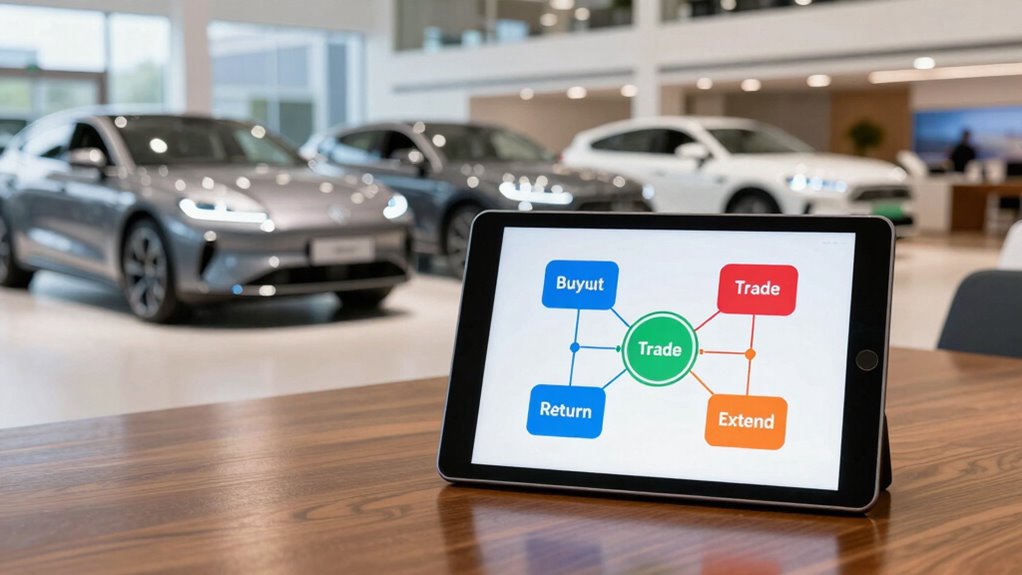
As your lease nears its end, you’re faced with a vital decision: should you buy out the vehicle, trade it in for a new one, return it, or extend the lease? This choice can feel overwhelming, but understanding the financial implications and your customer preferences can guide you toward the best option. Your financial situation plays a crucial role; if the buyout price is lower than the vehicle’s current market value, purchasing the car might make sense. It allows you to avoid the costs of leasing a new vehicle and could be a good investment if you’ve grown attached or the car has been reliable. On the other hand, if the buyout price is steep, returning the car and leasing or buying something new might be more economical. Extending the lease can also be a flexible choice, giving you extra time to make a final decision without immediate financial pressure.
Customer preferences matter just as much. If you love your current vehicle and want to keep it, a buyout could align with your desires. Conversely, if you’re eager to try the latest models or want a different style, trading in or returning the car makes sense. Extending the lease might suit you if you’re unsure about committing to a new purchase or lease right now but want to keep your options open. Consider how much you enjoy the vehicle’s features, comfort, and performance. If it’s still meeting your needs, buying out or extending could be satisfying options. But if you’re feeling cramped or bored, trading it in for something new might be more appealing. Additionally, lease-end options like buyouts and returns often involve specific contractual terms that can influence your decision.
The decision also hinges on your budget and financial goals. Buying out your lease involves a lump sum payment, which could impact your savings or credit if you’re not prepared. Returning the vehicle eliminates ongoing payments but requires you to find a new car if you need one. Extending the lease often involves a smaller monthly increase, giving you more time to plan financially. Think about how each option fits into your short- and long-term financial plans. For example, if you’re trying to minimize monthly expenses, returning or extending might be better than buying out. If you aim to build equity or have a vehicle you love, a buyout could be worth it.
Informed decision-making can also benefit from understanding the residual value of your vehicle, which plays a role in lease-end options and costs. Ultimately, this decision aligns with your personal preferences and financial situation. Carefully weigh the costs, benefits, and how each option matches your lifestyle. Take the time to compare figures, consider your comfort with debt, and think about what vehicle aligns best with your future plans. Whether you choose to buy, trade, return, or extend, making an informed decision ensures you’re satisfied and financially sound at the lease’s end.
As an affiliate, we earn on qualifying purchases.
Frequently Asked Questions
How Do Lease-End Options Impact My Credit Score?
Your lease-end options can affect your credit score because they influence your credit report and score factors like payment history and account status. If you buy out or extend your lease, timely payments can boost your score. Conversely, returning the vehicle late or missing payments can harm it. Making informed decisions helps you manage your credit impact and keep your score healthy during lease-end choices.
Are There Hidden Fees Associated With Each Lease-End Choice?
Think of your lease decision as steering through a maze—hidden fees and lease penalties lurk around corners. Yes, each choice may have hidden fees, like early termination or excessive wear charges, which can catch you off guard. It’s wise to review your lease agreement carefully and ask your lender about potential lease penalties before committing. Being aware helps you avoid surprises and keeps your financial journey smooth.
How Does Vehicle Condition Affect Buyout or Trade-In Value?
Vehicle condition directly impacts your buyout or trade-in value. If your vehicle has significant wear or damage, its value decreases, making buyout less appealing. Conversely, a well-maintained vehicle with a solid maintenance history retains higher value, increasing trade-in or buyout options’ worth. Regular maintenance and addressing wear early can boost your vehicle’s appeal, ensuring you get the best possible return when the lease ends.
Can I Negotiate Lease-End Terms After Signing the Original Agreement?
Yes, you can negotiate lease-end terms after signing the original agreement. During end of lease negotiations, you should explore lease extension options if you want more time with the vehicle. Contact your leasing company to discuss potential adjustments or extensions. Being proactive and clear about your needs can often lead to better terms, helping you avoid penalties or unnecessary charges, and making the lease process smoother.
What Are the Tax Implications of Buying or Trading a Leased Vehicle?
When you buy or trade a leased vehicle, you’ll want to contemplate tax benefits and depreciation rules. Buying might let you take advantage of depreciation deductions, reducing your tax burden over time. Trading can have different tax implications depending on whether you’re trading in for a new lease or purchase. Always consult a tax professional to understand how these options impact your specific tax situation and maximize your benefits.
Conclusion
As you navigate the lease-end crossroads, remember that each option is a different brushstroke on your financial canvas. Whether you buyout, trade, return, or extend, you’re the artist shaping your future. Trust your instincts, weigh the details, and don’t rush the masterpiece. With thoughtful decision-making, you’ll steer clear of stormy waters and sail smoothly into your next chapter—turning what seems like a minefield into a well-charted voyage.
Fall Picks
fall essentials
As an affiliate, we earn on qualifying purchases.