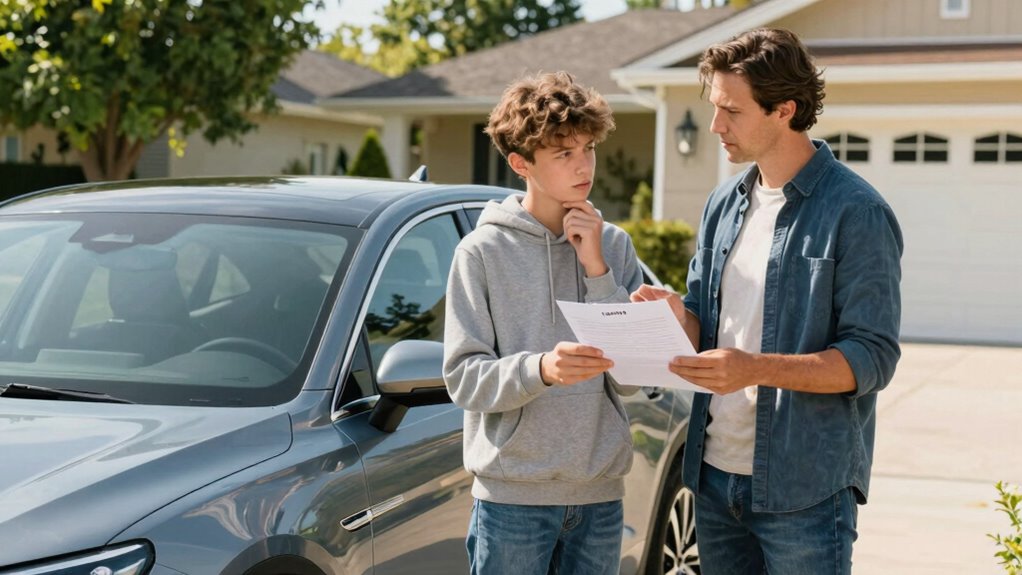

When deciding whether to buy out your lease for a teen driver, consider the vehicle’s condition, history, and ongoing costs like insurance and maintenance. If the car is reliable, well-maintained, and has a reasonable residual value, buying could be a good long-term option. However, if costs or repairs add up quickly, leasing again might be better. To make an informed choice and uncover key tips, explore the factors involved in this decision process.
Key Takeaways
- Assess the vehicle’s condition, history, and maintenance costs to determine long-term reliability and repair expenses.
- Compare residual value and purchase price with current market value for fairness and affordability.
- Consider your teen’s driving habits and the vehicle’s suitability for their needs and safety.
- Evaluate ongoing costs like insurance, maintenance, and repairs to ensure long-term affordability.
- Decide if buying aligns with your long-term ownership goals or if leasing remains a better option.

Deciding whether to buy out your lease for a teen driver involves weighing several important factors. First, you need to contemplate the financial implications. Buying the vehicle at the end of the lease might seem like a good deal if the residual value is reasonable, but you should also factor in ongoing costs. Insurance costs can considerably impact your budget, especially since teen drivers typically face higher premiums. If the vehicle is costly to insure, owning it might not be worthwhile, particularly if your teen is still gaining experience behind the wheel. It’s a good idea to get insurance quotes beforehand so you can compare the total cost of ownership versus leasing or buying a different vehicle.
Consider insurance costs and ongoing expenses before deciding to buy out a lease for your teen driver.
Vehicle maintenance is another critical aspect. Lease agreements often include routine maintenance, which helps keep costs predictable. Once you buy the vehicle, however, you become responsible for all repairs and upkeep. Teen drivers tend to be harder on cars, which could lead to more frequent repairs or early replacements. If the vehicle is known for high maintenance costs or if it’s an older model that may soon need significant repairs, buying might turn out to be more expensive in the long run. Conversely, if the car is relatively new and reliable, purchasing it could save money over time, especially if you plan to keep it for several years. Additionally, understanding the contrast ratio and other performance features can help you assess how well the vehicle will hold up under your teen’s driving conditions.
You also need to think about the vehicle’s condition and history. Inspect the car thoroughly and consider its mileage, accident history, and overall wear and tear. If it’s been well-maintained and shows minimal signs of abuse, buying it could be a smart move. On the other hand, if the car has a history of frequent repairs or accidents, it might not be worth the investment. Additionally, evaluate your teen’s driving habits. Are they responsible and cautious? Or do they tend to be reckless? The more confident you are in their driving skills, the more justified it might be to buy the vehicle for them, especially if it’s a dependable model. Considering the vehicle’s reliability can also help you make a more informed decision.
Finally, understanding the ownership costs involved in maintaining the vehicle can help you weigh the long-term benefits of buying versus leasing. It’s also beneficial to explore reputable market leaders, like those in the precious metals sector, to understand the importance of transparency and trusted support, as seen in Gold IRA markets. Think about your long-term plans. If you see the car as a temporary solution or if your teen might need a different type of vehicle soon, leasing again could make more sense. But if you’re comfortable with the idea of the car becoming their primary vehicle, buying it could provide better value and stability. Ultimately, the decision hinges on balancing upfront costs, ongoing expenses like insurance and maintenance, and how well the vehicle suits your teen’s driving needs and your financial goals.

Mcbazel Paint Thickness Tester Meter Gauge, Magnetic Car Paint Coating Tester, Car Body Damage Detector, Waterproof Crash Test Check Tool for Used Car Inspection
- Accurate Paint Thickness Measurement: Detects repairs and repainting
- Magnetic Tip, No Batteries Needed: Reliable outdoor use without batteries
- Micrometer-Level Precision: Easy reading with color-coded scale
As an affiliate, we earn on qualifying purchases.
As an affiliate, we earn on qualifying purchases.
Frequently Asked Questions
What Are the Hidden Costs of Leasing a Car for a Teen?
The hidden costs of leasing a car for a teen include exceeding mileage limits, which leads to hefty penalties, and potential charges for excessive wear and tear, especially if your teen’s driving style is rough. Additionally, you might face early termination fees if you decide to end the lease early. Be sure to review the lease term closely and stick to the mileage limits to avoid unexpected expenses.
How Does Leasing Affect My Teen’s Insurance Premiums?
Leasing a car can increase your teen’s insurance premiums because insurance coverage tends to be higher for leased vehicles, considering their value and depreciation. This affects your financial planning, as you’ll need to budget for these increased costs. Make sure to compare insurance quotes before leasing, and discuss the coverage details with your provider to find the best options. Understanding these costs helps you make informed decisions and manage your overall expenses effectively.
Can I Customize or Add Features to a Leased Vehicle?
Did you know that nearly 60% of drivers customize their vehicles? With a lease, you can generally add feature upgrades or make vehicle customizations, but it’s crucial to check your lease agreement first. Some leases allow minor modifications like new rims or tech upgrades, while others prohibit changes. Always get approval from the leasing company to avoid potential penalties and guarantee your teen’s vehicle remains compliant and protected.
What Happens if My Teen Returns the Car Early?
If your teen returns the car early, you’ll face lease termination, which might include early termination fees. You’ll need to coordinate with the leasing company to return the vehicle and settle any remaining payments or charges. Keep in mind, early return could also affect your lease-end conditions and potential penalties. It’s best to review your lease agreement beforehand and communicate promptly with the leasing company to avoid surprises.
How Does Leasing Compare to Buying a Used Car for Teens?
Leasing a car for your teen often offers better fuel efficiency and lower maintenance costs compared to buying a used car. With leasing, newer models tend to be more fuel-efficient, saving money on gas. Maintenance costs are typically lower because leases usually include warranty coverage. However, buying a used car might be more cost-effective long-term if you prefer ownership and no mileage restrictions. Consider your teen’s driving habits and budget to decide.
Conclusion
Deciding whether to buy your lease for your teen driver is like choosing between a predictable comfort and a thrilling gamble. On one hand, you gain peace of mind and certainty; on the other, you face the unknowns of maintenance costs and depreciation. Weigh the stability of ownership against the freedom of leasing. Ultimately, your choice shapes not just the car, but your teen’s driving journey—whether it’s a safe harbor or an open road full of surprises.