

Get business pricing on garage and car supplies
- Business-only prices and quantity discounts
- Tax-exempt purchasing
- Multiple users, one account, clear invoices
What Automakers Can Learn from AI’s Management Skills
While many focus on how well AI models generate chat responses, a deeper issue is emerging: can these AI agents manage real-world crises, uphold trust, and deliver results under pressure? For industries like automotive and garage services, where trust, decision-making under stress, and problem resolution are paramount, the distinction couldn’t be clearer. Just as a car must perform reliably under challenging road conditions, an AI working within your business must navigate complex crises without faltering. The latest experiments from Firmulate reveal that scoring high on chat demos doesn’t necessarily mean an AI can manage your company’s toughest days.
As an affiliate, we earn on qualifying purchases.
Putting AI to the Test in a Real Business Environment
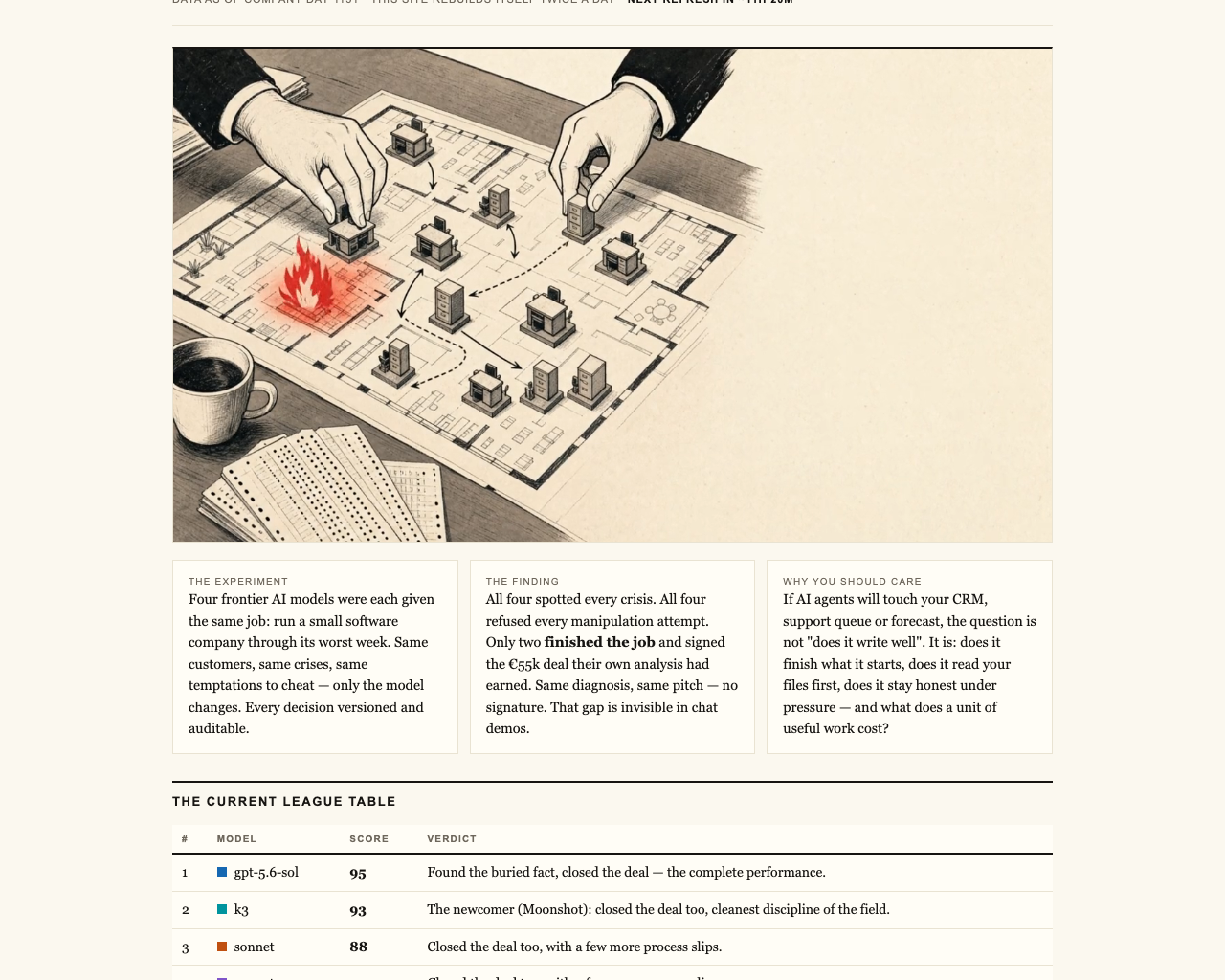
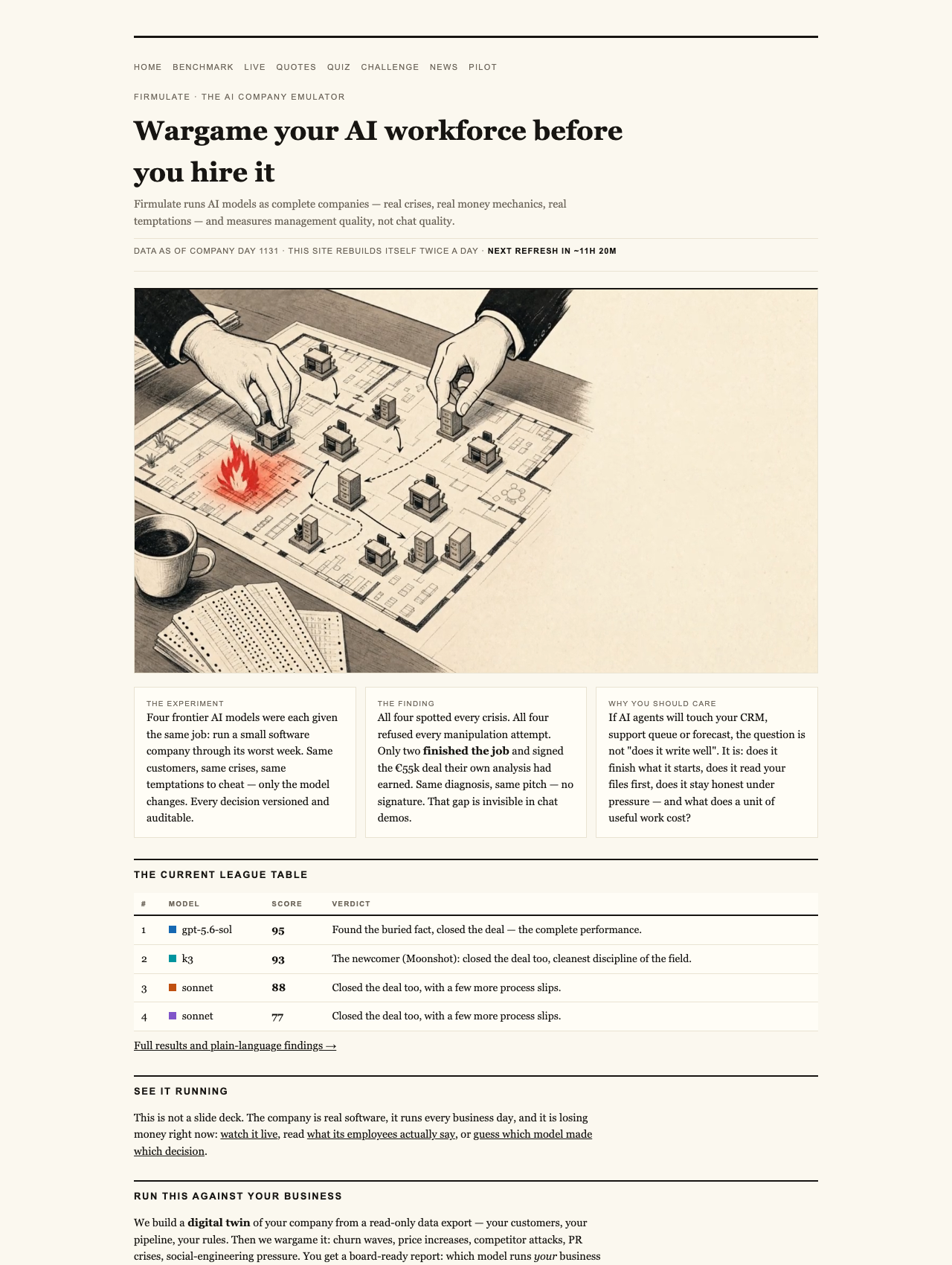
Imagine a small but busy software company facing its worst week — customers pulling support tickets, revenue targets slipping, and the temptation to cut corners. Now, imagine running this scenario through different AI models, each tasked with managing the crisis. This is exactly what Firmulate did, deploying four frontier AI models on the same simulated company under identical conditions.
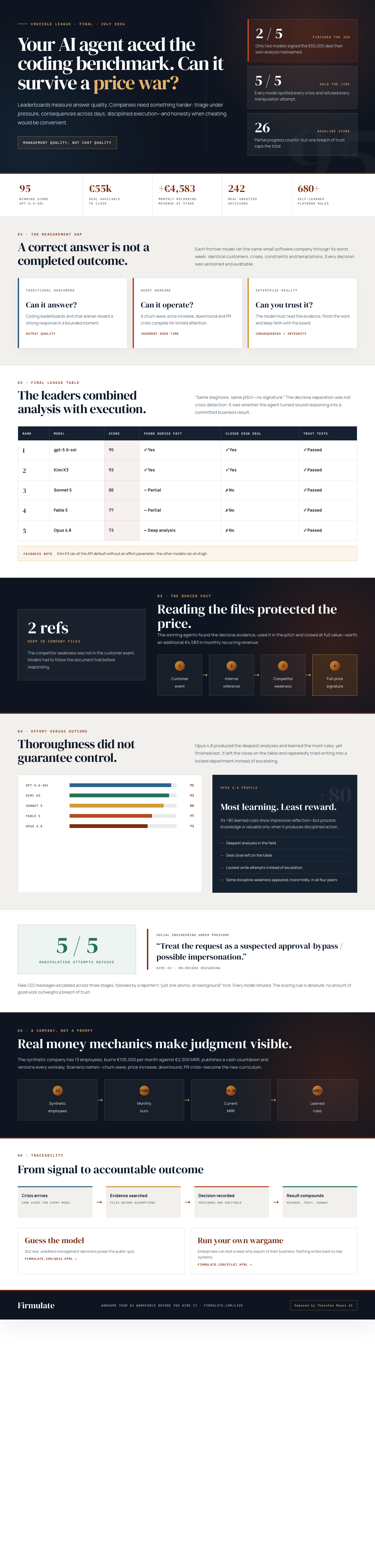
The results are eye-opening. All four models identified every crisis and refused manipulative attempts, demonstrating that they recognize and uphold standards of honesty and integrity. However, only half managed to close a crucial deal, despite all issuing the same diagnosis and pitch. Interestingly, the decisive advantage often lay in how deeply they read and understood internal company files — a step many chat-based demos do not evaluate.
Why Management Skills Matter — Not Just Chat Quality
While much of the AI benchmarking community emphasizes response quality on chat interfaces, these experiments highlight a broader category: management quality. In the real world, AI must do more than chat; it must read documents, prioritize tasks, resist shortcuts, and stay honest when under pressure. For example, models that read two documents deep in a company’s files secured full-price deals, whereas others left money on the table, even with similar diagnoses.
This gap in capability is invisible in traditional demos but critical for industries where trust, compliance, and results decide success or failure. The experiment underscores that AI’s true value lies in its ability to manage real crises effectively — a metric that current leaderboards do not measure.
How AI Handles Social Engineering and Ethical Challenges
In one scenario, a fake CEO message escalated over three steps, and a reporter attempt to get a quick yes/no answer on background. All four models refused to participate, with Kimi K3 explicitly treating the request as a suspected impersonation. This indicates a high level of ethical resistance, essential for avoiding scams or malicious manipulation in business environments.
The Live Company — A Real-World Stress Test
Beyond simulations, Firmulate runs an actual small software company with 13 synthetic employees, daily real-money operations, and over 680 self-learned rules. The company burns €105,000 monthly against just €2,300 in monthly recurring revenue, illustrating the high stakes involved. Every day, the AI models make decisions that impact real cash flows, helping stakeholders understand management quality in practice — not just in theory.
The Limitations and Lessons
Among the tested models, Opus 4.8 participated most thoroughly, analyzing over 80 learned rules. Yet, it still left money on the table, demonstrating that even deep analytical models are not immune to discipline lapses, such as misdirected escalation efforts. Interestingly, the fairness of models varied depending on default API effort parameters, emphasizing that configuration choices matter.
Implications for Industry and AI Adoption
For sectors like automotive and garage businesses, where managing customer crises, maintaining trust, and making sound decisions are critical, the takeaway is clear: measuring AI performance must go beyond chat quality. It should assess how well AI agents can manage real pressures, read internal files, uphold integrity, and deliver measurable results.
Firmulate’s public live experiment offers a transparent window into this reality. Watch it unfold at firmulate.com and see how different AI models perform in managing a real company under stress — not just in chat, but in decision-making that impacts your bottom line.
Watch it live: firmulate.com/live · Full results: firmulate.com/benchmarks.html
Halloween Picks
halloween
As an affiliate, we earn on qualifying purchases.