
TL;DR

Get garage and car supplies delivered free — and shop member deals
- Fast, free delivery on millions of items
- Access to Prime Big Deal Days deals on October 6–7
- Prime Video, Amazon Music and more included
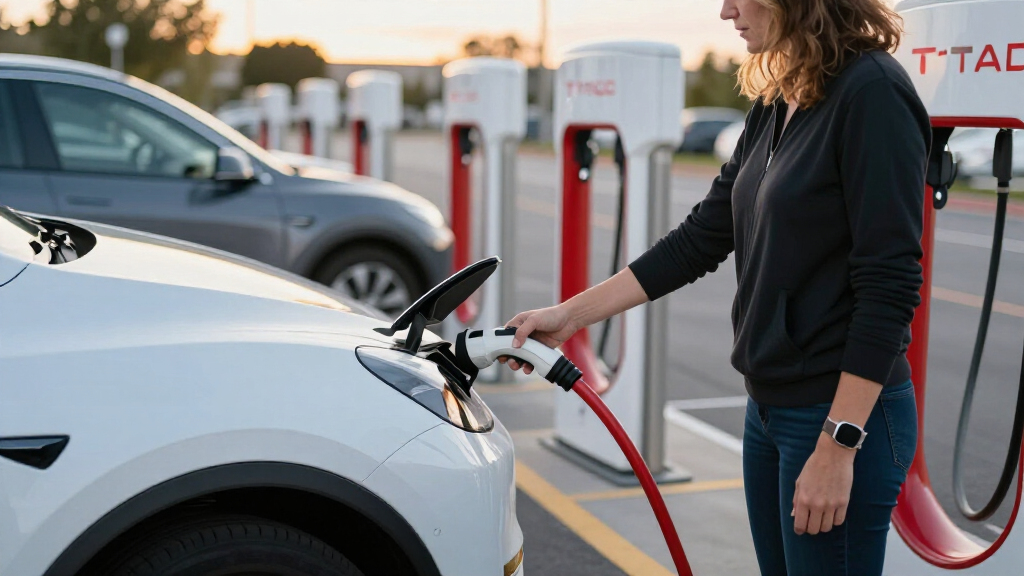
Tesla is rolling out an over-the-air feature that lets certain vehicles shift into Drive and leave a Supercharger while the cable is still connected. Tesla says the connector will break away, but warns that using the feature can damage both the car and charger; it is intended only for emergencies.
Tesla is rolling out Emergency Drive Away, an over-the-air feature that lets eligible vehicles shift into Drive and leave a Supercharger while still plugged in. Announced by the Tesla Charging account on X, the feature is designed for emergencies, but Tesla warns it can damage both the vehicle and the charger.
To use it, a driver shifts the car into Drive while the charging connector remains attached. An alert then appears on the touchscreen; after confirming, the driver can move the vehicle. Tesla’s demonstration shows the cable connector breaking away as the car departs, with a component falling to the ground.
Tesla says the feature is intended for emergency use only and that activating it will damage the vehicle and Supercharger. The company also warns of additional penalties for deliberate misuse. The source report says the feature is rolling out now as an over-the-air update and requires software version 2026.38.3.
Availability is limited: Emergency Drive Away works at U.S. Superchargers and is not supported by pre-2021 Model S sedans or Model X crossovers. The announcement does not describe the feature as a routine way to end a charging session, and Tesla’s warning makes clear that drivers should unplug normally whenever it is safe to do so.
An Emergency Exit With a Cost
The feature changes what a driver can do if staying at a charging stall becomes unsafe: instead of being prevented from shifting while connected, an eligible Tesla can be moved away from the charger. That could provide a way to leave quickly in an emergency, though the reported feature entails physical damage to the car and charging equipment.
The report links the rollout to a lethal shooting at a Tesla Supercharger in Idaho earlier in the summer. It does not provide details about the shooting or say that the feature would have changed that event’s outcome. The connection underscores the safety concern behind the announcement without establishing that the feature prevents violence or guarantees a safe escape.
There may also be practical implications for drivers who have difficulty handling heavy fast-charging cables. However, Tesla’s stated warnings and the breakaway mechanism shown in its demonstration mean this is not presented as an accessibility feature or a substitute for a safer automatic unplugging system.
Tesla Supercharger emergency cable release
As an affiliate, we earn on qualifying purchases.
As an affiliate, we earn on qualifying purchases.
How Tesla’s Cable Release Works
Charging connectors normally need to be disconnected before a vehicle can drive away. The new feature provides an override to that shift lockout: the driver confirms the touchscreen alert and moves the car, while the connector is designed to break away rather than remain attached to the departing vehicle.
The video described in The Drive’s report shows that this separation is not damage-free. Tesla’s warning that both the car and Supercharger will be damaged is consistent with the demonstration. The feature is a software update, but its use has hardware consequences; Tesla’s account also cautioned against deliberate misuse.
Tesla has previously used over-the-air updates to add software functions to its vehicles, according to The Drive. In this case, the update applies a vehicle capability to an emergency scenario rather than offering a standard charging convenience. Its reach is restricted by software version, vehicle model year, and location.
““intended for emergency use only””
— Tesla Charging, in a reply on X, as quoted by The Drive
Limits and Damage Details
The announcement, as reported, does not specify how much damage the vehicle or charger may sustain, how repairs would be handled, or what “additional penalties” for deliberate misuse would involve. It also does not explain whether the driver would face a particular fee or process after an emergency activation.
It is not clear how quickly the update will reach eligible vehicles, beyond Tesla’s statement that rollout is underway, or whether the company plans to expand availability to other markets and models. The report does not establish that using the feature will work in every emergency or ensure a safe departure.
Update Rollout and Availability
Eligible owners will need software version 2026.38.3 and access to a U.S. Supercharger to use the feature, according to The Drive’s report. Tesla has not provided a rollout schedule by vehicle or region in the supplied information, so the timing for individual cars remains unclear.
Further details would be needed to clarify how Tesla will handle damage, any penalties for misuse, and whether Emergency Drive Away will be offered to additional vehicles or markets. Until then, the company’s stated guidance is that the feature is for emergencies only and may damage both the car and charger.
Key Questions
What does Tesla Emergency Drive Away do?
It lets an eligible Tesla shift into Drive and leave a Supercharger while the cable is still connected. The driver must confirm an alert on the touchscreen.
Does using Emergency Drive Away damage the car?
Tesla says it will damage the vehicle and the Supercharger. The feature is intended for emergency use, not as a routine way to end charging.
Which Tesla vehicles can use the feature?
The report says it requires software version 2026.38.3 and does not work with pre-2021 Model S sedans or Model X crossovers. It is limited to U.S. Superchargers.
Is the feature available now?
Tesla is rolling it out as an over-the-air update, according to The Drive. The supplied report does not say when every eligible vehicle will receive it.
Can drivers use it instead of unplugging normally?
No. Tesla describes the feature as for emergency use only and warns that it can damage the vehicle and charger. Drivers should disconnect normally when it is safe to do so.
Source: rss
Halloween Picks
halloween
As an affiliate, we earn on qualifying purchases.