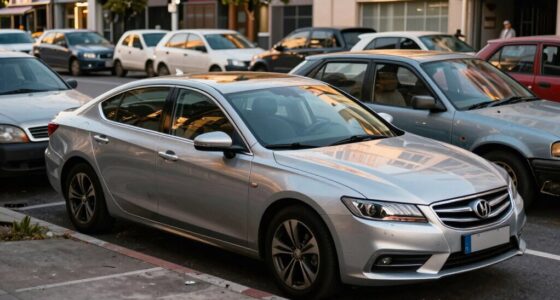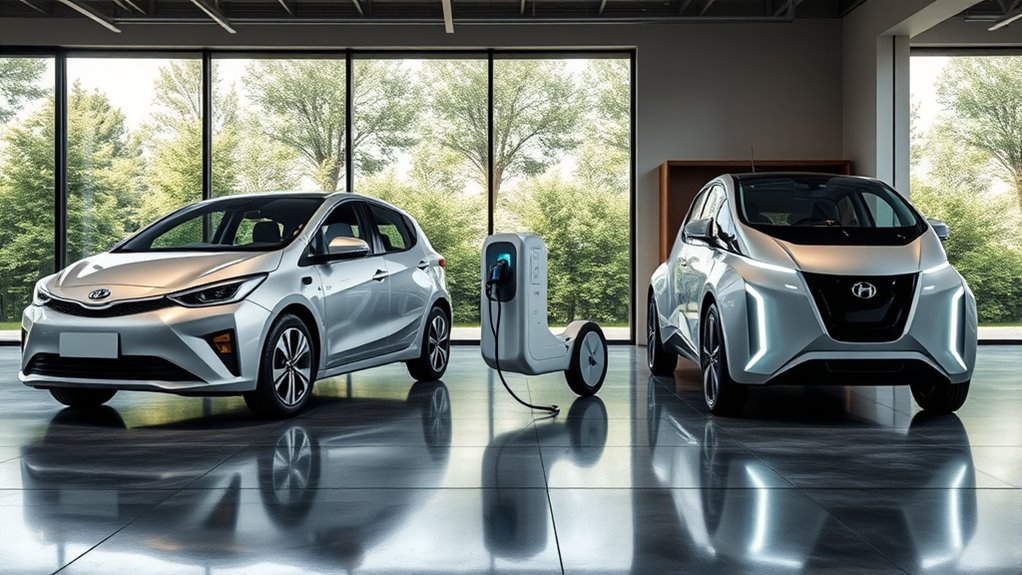

Choosing the right green car depends on your driving patterns and priorities. Hybrids are ideal if you want better fuel economy without charging, while plug-in hybrids offer some electric driving capabilities for short trips. Fully electric cars provide zero emissions and longer-range options thanks to advanced battery tech, but they need access to charging stations. If you want to find the best fit for your lifestyle, you’ll discover more details below.
Key Takeaways
- Consider your driving habits: daily range needs favor EVs; mixed usage may suit hybrids or plug-ins.
- Evaluate total costs: incentives, fuel savings, and initial price influence affordability for each option.
- Assess charging infrastructure: access to charging stations makes EVs more practical; hybrids require less charging.
- Determine environmental goals: full EVs offer zero emissions; plug-ins and hybrids have lower emissions than conventional cars.
- Match vehicle features with preferences: hybrids are seamless; plug-ins combine electric and gas; EVs offer pure electric driving.
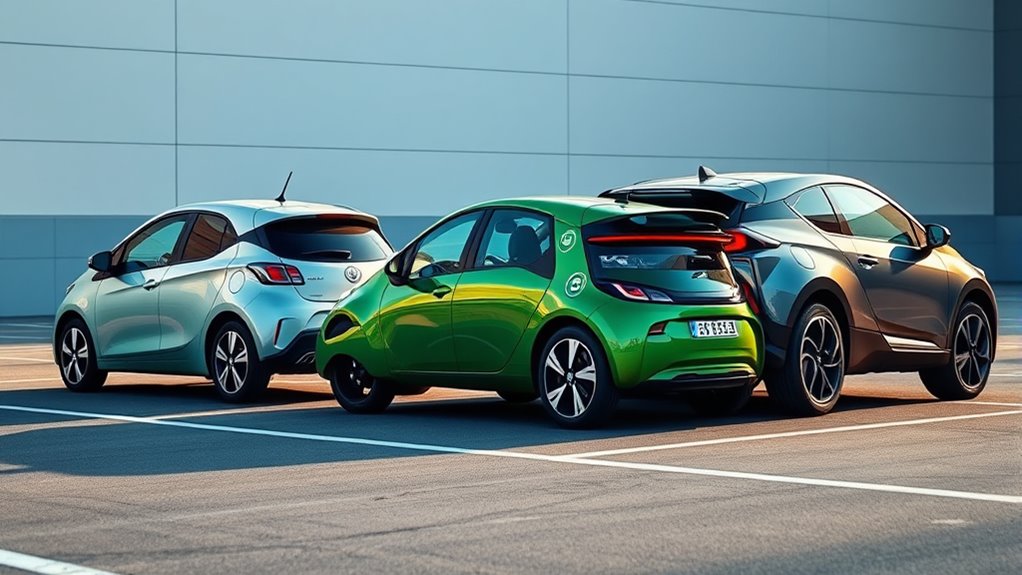
Deciding between hybrid, plug-in hybrid, and fully electric cars can be challenging, especially as more eco-friendly options become available. Your choice depends on your driving habits, budget, and what you value most in a vehicle. One of the key factors to contemplate is battery technology. Advances in battery tech have made electric vehicles (EVs) more efficient, with longer ranges and faster charging times. Modern batteries are lighter, more durable, and hold more charge than earlier versions, making EVs increasingly practical for everyday use. As battery technology improves, you’ll find that fully electric cars can cover more miles on a single charge, reducing the need for frequent stops. This progress is supported by government incentives, which aim to encourage consumers to switch to cleaner vehicles. Many governments offer rebates, tax credits, and other financial incentives to lower the upfront costs of EVs, making them more accessible. These incentives can considerably reduce the total cost of leasing or buying a fully electric vehicle, making it a compelling option if you’re looking to maximize savings and environmental benefits. Additionally, high-performance batteries play a crucial role in enhancing both range and safety features in modern EVs, further encouraging adoption.

Car Confidential: Insider Secrets About Automobile Ownership, Car Maintenance and Road Safety
As an affiliate, we earn on qualifying purchases.
As an affiliate, we earn on qualifying purchases.
Frequently Asked Questions
How Do Maintenance Costs Compare Across Hybrid, Plug-In, and Electric Vehicles?
You’ll find that electric vehicles generally have lower maintenance costs because they have fewer moving parts and no oil changes. Hybrids tend to have moderate costs, mainly related to battery longevity and occasional repairs. Plug-in hybrids fall in between, with added costs for charging equipment. Repair costs for all models can vary, but electric vehicles usually require less frequent repairs, making them more budget-friendly over time.
What Are the Best Leasing Options for Different Types of Green Cars?
Choosing the right green car lease is like planting a seed—your decision grows over time. For hybrids, look for flexible lease plans with low mileage options; for plug-ins, consider packages with access to charging infrastructure and battery technology upgrades; for electric vehicles, prioritize leases with free charging stations and long-term warranty. Each offers unique benefits, so match your driving habits and access to charging infrastructure to maximize savings and sustainability.
Are There Tax Incentives Specific to Each Green Vehicle Type?
You can benefit from tax credits and incentive programs tailored to each green vehicle type. Hybrid cars often qualify for moderate incentives, while plug-in hybrids and electric vehicles usually receive more substantial tax credits. These incentives vary by state and country, so it’s smart to check local programs. By choosing the right vehicle, you maximize savings and support eco-friendly driving, making your leasing decision even more cost-effective.
How Does Driving Range Impact Daily Usability of Each Green Car?
Think of driving range as your vehicle’s stamina. A hybrid’s battery capacity lets you go further without charging, making it perfect for daily errands. Plug-ins and electric cars depend heavily on charging infrastructure; if it’s limited, you might find your range feels like a shot glass rather than a bucket. For urban commuting, a shorter range isn’t a big deal, but for longer trips, consider how often you can access charging stations.
What Are the Long-Term Environmental Impacts of Each Vehicle Type?
You’ll find that hybrids produce fewer emissions over their lifespan, especially if powered by renewable energy. Plug-in and electric cars benefit from advances in battery recycling, reducing waste and environmental impact. Electric vehicles, with no tailpipe emissions, offer the cleanest option long-term, especially when charged using renewable energy. Consider how recycling batteries and clean energy sources can markedly lower your carbon footprint, making your choice more sustainable over time.

Carbon Fiber Level 1&2 Portable EV Charger, 8-16A Adjustable Current/Timer/Smart Display, NEMA 6-20 & 5-15 Plug, 21FT Charging Cable, Electric Car Charger, J1772 Connector for All SEA J1772 EVs/PHEVs
Universal J1772 EV Charger: Compatible with all J1772-equipped EVs and PHEVs, this portable EV charger seamlessly powers brands…
As an affiliate, we earn on qualifying purchases.
As an affiliate, we earn on qualifying purchases.
Conclusion
Ultimately, choosing the right green car depends on your driving habits and priorities. Whether you opt for a hybrid, plug-in, or full electric, each has its perks and pitfalls. Don’t put all your eggs in one basket—consider how far you travel, charging options, and budget. By doing your homework, you’ll find the perfect fit. Remember, a little research now saves a lot of hassle later—so don’t rush, and pick what truly works for you.

Level 1&2 EV Charger -16Amp Adjustable Current Home Charging Station with 110V-240V NEMA 6-20 Plug & 5-15 Adapter, 25FT Cable Portable Electric Vehicle Car Charger, SAE J1772 Charging Station for Home
【16A Dual Voltage Charger – Power and Flexibility】- The Level 1 & 2 vehicle charger supports 110V–240V power…
As an affiliate, we earn on qualifying purchases.
As an affiliate, we earn on qualifying purchases.

2026 Upgraded Level 1&2 Portable EV Charger, 8-16Amp Adjustable Current & Timer, 110V–240V, NEMA 5-15 & 6-20 Plug, 21Ft EV Charging Cable, J1772 Electric Car Charger for All PHEV/EV Charging Cord
[2026 INTELLIGENT CHARGING UPGRADE — PRECISION CONTROL MEETS SMART SCHEDULING] After surveying 100K+ U.S. EV owners, the Raylix…
As an affiliate, we earn on qualifying purchases.
As an affiliate, we earn on qualifying purchases.