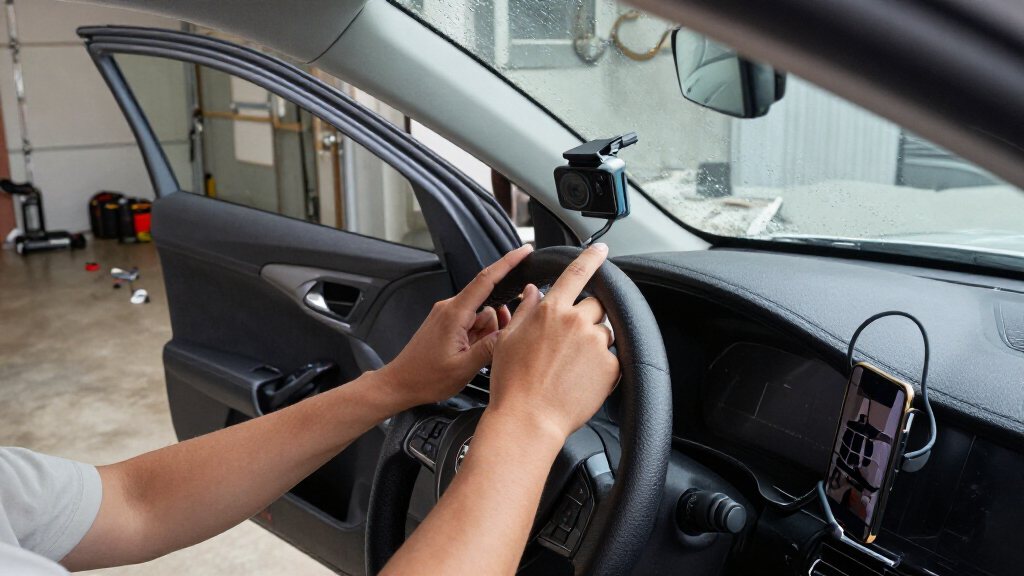

Wireless dash cameras make it easier to view and manage footage from a phone, but wireless connectivity does not mean the camera runs without power or cables. I’d choose the Vantrue N4S as the best overall fit for drivers who want three-camera coverage and STARVIS 2 night vision; the 70mai A810 Lite stands out for 4G LTE connectivity, while the ROVE R2-4K is a simpler front-and-rear option with a 128GB card. The main tradeoff is between broader coverage and a less complicated setup, with image detail, storage, and app connectivity also shaping the choice. Read on for how the 15 models differ and which one fits your driving, parking, and installation needs.

Get business pricing on garage and car supplies
- Business-only prices and quantity discounts
- Tax-exempt purchasing
- Multiple users, one account, clear invoices
Complete the kit


Key Takeaways
Coverage is the clearest dividing line: the Vantrue N4S records three views, while several alternatives, including the BOTSLAB and ICESKY S03, offer four-channel coverage for drivers who want more angles.
More cameras do not automatically mean sharper footage: the VIOFO A229 Plus uses dual 2K recording, while many multi-channel models trade resolution across several cameras.
Wireless features vary by connection type: 5GHz Wi-Fi, Wi-Fi 6, and 4G LTE serve different needs; cellular access is not the same as a local phone connection and may involve separate service requirements.
Included storage can reduce setup friction: several picks include memory cards, with listed capacities ranging from 32GB on the Galphi to 128GB on models such as the ROVE R2-4K and REDTIGER F7NP.
Interior recording calls for a different priority: models with infrared night vision or a cabin camera, including the IIWEY N6 and 70mai T800E, suit rideshare and family-use needs better than a basic front-and-rear setup.
| Vantrue N4S 3-Channel Dash Cam with Triple STARVIS 2 Night Vision |  | Best for Three-Way Night Coverage | Channels: 3 | Video resolution: 1944P front, 1440P interior, 1440P rear | Frame rate: 30 FPS | VIEW LATEST PRICE | See Our Full Breakdown |
| Galphi 4K Front Dash Cam with 5GHz Wi-Fi and 32GB Memory Card |  | Best Compact Single-Camera Pick | Camera position: Front | Video resolution: 4K (2160p) | Frame rate: 30 fps | VIEW LATEST PRICE | See Our Full Breakdown |
| BOTSLAB 4-Channel Dash Cam with 128GB Card, Voice and App Control |  | Best for Flexible Four-Channel Control | Channels: 4 | Four-channel resolution: 3K front plus three 1080P views | Field of view: 560° combined; 170° front, 120° each side, 150° rear | VIEW LATEST PRICE | See Our Full Breakdown |
| ICESKY S03 4K 4-Channel Dash Cam with GPS and Wi-Fi 6 |  | Best Four-Channel Bundle | Camera channels: 4 | Video resolution: 4K front; 1080p rear, interior, and side | Field of view: 360° coverage | VIEW LATEST PRICE | See Our Full Breakdown |
| 70mai A810 Lite 4K Front and Rear Dash Cam with 4G LTE, Wi-Fi 6, GPS, and HDR Night Vision |  | Best for Connected Front-and-Rear Recording | Front video resolution: 4K (3840 × 2160) | Rear video resolution: 1080p | Field of view: 140° | VIEW LATEST PRICE | See Our Full Breakdown |
| XYGCACO 4-Channel 360° Dash Cam, 4K Front and Three 1080P Cameras |  | Best for Four-Side Coverage | Camera channels: 4 | Video resolution: 4K front; 1080P for three additional cameras | Coverage: Front, rear, left, and right | VIEW LATEST PRICE | See Our Full Breakdown |
| IIWEY N5 4-Channel 360° Dash Cam with 2K Front Recording |  | Best for Interior Recording | Camera channels: 4: front, rear, sides, and interior | Video modes: 1080P on all channels or 2.5K front with three 1080P channels | Display: 3-inch IPS | VIEW LATEST PRICE | See Our Full Breakdown |
| ROVE R2-4K Dual Dash Cam with Front and Rear Cameras, STARVIS 2 Sensor, and 128GB Card |  | Best for Low-Light Front-and-Rear Recording | Camera configuration: Front and rear | Video resolution: Front: upscaled 4K from 2.5K capture; rear: 1080p | Image sensor: Sony STARVIS 2 IMX675, 5MP | VIEW LATEST PRICE | See Our Full Breakdown |
| YUINWEN W5N 4-Channel 360° Dash Cam with 2K Front and 1080p Rear, Side, and Interior Cameras |  | Best for Touchscreen Four-Channel Control | Camera channels: 4: front, rear, sides, and interior | Video resolution: 2K front; 1080p rear, side, and interior | Front field of view: 170° | VIEW LATEST PRICE | See Our Full Breakdown |
| IIWEY N6 4-Channel 360° Dash Cam with 128GB Card and Infrared Night Vision |  | Best Four-Channel Pick with GPS | Camera channels: 4 | Video resolution: 1440p front; 1080p rear and sides | Field of view: 170° front and rear; 150° sides | VIEW LATEST PRICE | See Our Full Breakdown |
| REDTIGER F7NP 4K Front and Rear Dash Cam with STARVIS 2 Sensor and 128GB Memory Card |  | Best for High-Detail Front and Rear Recording | Front resolution: 4K (2160p) | Rear resolution: 1080p | Front and rear fields of view: 170° front; 140° rear | VIEW LATEST PRICE | See Our Full Breakdown |
| Affver 5-Channel 4K Dash Cam with GPS, Wi-Fi, and 128GB Card |  | Best for Five-Direction Coverage | Camera channels: 5 | Video resolution: 4K front; 1080p inside, rear, left, and right | Field of view: 160° | VIEW LATEST PRICE | See Our Full Breakdown |
| VIOFO A229 Plus Front and Rear Dash Cam with Dual 2K Recording |  | Best for Balanced 2K Front and Rear Video | Camera configuration: 2-channel front and rear | Resolution: 1440p front and rear | Image sensors: Dual Sony STARVIS 2 IMX675 | VIEW LATEST PRICE | See Our Full Breakdown |
| Four-Channel 1080p Dash Cam with 360° Coverage and 128GB Card |  | Best for Simple Four-Side Coverage | Camera channels: 4 | Video resolution: 1080p | Coverage: Front, rear, left, and right | VIEW LATEST PRICE | See Our Full Breakdown |
| 70mai T800E 3-Channel Dash Cam with 4K Front, 1080P Interior and Rear Cameras |  | Best for Three-View Recording with Modern Connectivity | Camera channels: 3 | Video resolution: 4K front; 1080p interior and rear | Frame rate: 30 fps | VIEW LATEST PRICE | See Our Full Breakdown |
| wireless dash camera | Display | Connectivity | Video resolution | Field of view |
|---|---|---|---|---|
| Vantrue N4S 3-Channel Dash Cam | — | USB and 5 GHz Wi-Fi | 1944P front, 1440P interior, 1440P rear | 158° front, 165° interior, 160° rear |
| Galphi 4K Front Dash Cam with | None | 5 GHz Wi-Fi | 4K (2160p) | 160° |
| BOTSLAB 4-Channel Dash Cam wit | 3.18-inch IPS touchscreen | 5.8 GHz Wi-Fi | — | 560° combined; 170° front, 120° each side, 150° rear |
| ICESKY S03 4K 4-Channel Dash C | 3-inch built-in display | 5.8 GHz Wi-Fi 6 and USB | 4K front; 1080p rear, interior, and side | 360° coverage |
| 70mai A810 Lite 4K Front and R | — | 5 GHz Wi-Fi 6, 4G LTE support, and USB | — | 140° |
| XYGCACO 4-Channel 360° Dash Ca | 3-inch LCD | — | 4K front; 1080P for three additional cameras | — |
| IIWEY N5 4-Channel 360° Dash C | 3-inch IPS | 2.4GHz and 5GHz Wi-Fi with app control | — | — |
| ROVE R2-4K Dual Dash Cam with | 3-inch IPS | 5.8GHz and 2.4GHz Wi-Fi; USB | Front: upscaled 4K from 2.5K capture; rear: 1080p | — |
| YUINWEN W5N 4-Channel 360° Das | 3-inch IPS touchscreen | 5.8GHz Wi-Fi with app control | 2K front; 1080p rear, side, and interior | — |
| IIWEY N6 4-Channel 360° Dash C | 3.18-inch IPS | 5.8GHz and 2.4GHz Wi-Fi | 1440p front; 1080p rear and sides | 170° front and rear; 150° sides |
| REDTIGER F7NP 4K Front and Rea | 3.16-inch LCD | — | — | — |
| Affver 5-Channel 4K Dash Cam w | 1.5-inch IPS | — | 4K front; 1080p inside, rear, left, and right | 160° |
| VIOFO A229 Plus Front and Rear | — | 5GHz Wi-Fi | — | — |
| Four-Channel 1080p Dash Cam wi | 3 inches | USB and 5GHz Wi-Fi | 1080p | 360° stated coverage; 160° real angle of view |
| 70mai T800E 3-Channel Dash Cam | 1.9-inch IPS | — | 4K front; 1080p interior and rear | 402° stated |
More Details on Our Top Picks
Vantrue N4S 3-Channel Dash Cam with Triple STARVIS 2 Night Vision
The Vantrue N4S is my pick for drivers who want the cabin and rear of the vehicle recorded alongside the road ahead. Its three STARVIS 2 cameras, HDR, and PlatePix processing are aimed at preserving detail across changing light, while the 360-degree rotating rear camera can be pointed toward the cabin when that view matters more than the road behind. Compared with the four-channel BOTSLAB and ICESKY S03, the N4S gives up side-camera coverage but has higher specified resolution for its interior and rear channels. It also offers four parking modes and a supercapacitor designed for a broad operating-temperature range. The tradeoffs are a separately purchased memory card and rear-camera wiring that needs a careful installation; this is less plug-and-play than a single-camera option.
Pros:- Records front, cabin, and rear views, with 1440P interior and rear video.
- Triple STARVIS 2, HDR, and PlatePix are designed to improve detail in varied lighting.
- Rotating rear camera can be aimed toward the cabin or traffic behind.
- Four parking modes, GPS, and support for microSD cards up to 1 TB.
Cons:- MicroSD card is not included.
- Rear-camera wiring must be connected correctly to avoid malfunctions.
- Three channels do not provide the side coverage offered by the BOTSLAB or ICESKY S03.
Best for: Rideshare drivers and families who want front, cabin, and rear footage with enhanced low-light recording.
Not ideal for: Drivers who need side-window coverage or want a simple installation without routing a rear-camera cable.
- Channels:3
- Video resolution:1944P front, 1440P interior, 1440P rear
- Frame rate:30 FPS
- Field of view:158° front, 165° interior, 160° rear
- Connectivity:USB and 5 GHz Wi-Fi
- GPS:Quad-mode GPS and BeiDou
- Parking modes:4
- Maximum memory card:1 TB microSD
- Power design:Supercapacitor; operating range -4°F to 140°F
Our verdict“Choose the Vantrue N4S if three-channel low-light recording matters more than side cameras or the simplest installation.”
Galphi 4K Front Dash Cam with 5GHz Wi-Fi and 32GB Memory Card
The Galphi 4K keeps the setup focused: one front-facing camera, no built-in screen, and phone-app access over 5 GHz Wi-Fi. Its 4K recording and 160-degree view suit drivers who mainly want a clear record of the road without adding rear or cabin wiring. Unlike the Vantrue N4S, it cannot capture what happens inside or behind the vehicle, but it is a simpler fit for a commuter who values a compact, less distracting windshield setup. The included 32GB card means it can record without an immediate storage purchase, and the G-sensor locks footage after a detected impact. The main compromise is parking coverage: time-lapse parking mode needs a separately purchased Type-C hardwire kit. With no display, setup and playback depend on the phone app rather than on-camera controls.
Pros:- Records front video at 4K and 30 fps through a 160-degree lens.
- Includes a pre-installed 32GB microSD card and supports cards up to 256GB.
- Compact screen-free design limits windshield distraction.
- G-sensor can lock footage when sudden movement or a collision is detected.
Cons:- Records only the front view, unlike the multi-camera Vantrue N4S and BOTSLAB.
- Time-lapse parking mode requires a separately purchased Type-C hardwire kit.
- No built-in display; controls and viewing rely on the smartphone app.
Best for: Commuters seeking a compact front-only camera, phone-based playback, and included starter storage.
Not ideal for: Rideshare drivers or owners who need rear or cabin footage, or drivers who want parking mode without a separate hardwire kit.
- Camera position:Front
- Video resolution:4K (2160p)
- Frame rate:30 fps
- Field of view:160°
- Connectivity:5 GHz Wi-Fi
- Display:None
- Included memory card:32GB microSD
- Maximum supported memory:256GB
- Parking mode:Time-lapse; Type-C hardwire kit required and not included
Our verdict“Pick the Galphi if you want a compact 4K front camera with included storage and do not need multi-angle recording.”
BOTSLAB 4-Channel Dash Cam with 128GB Card, Voice and App Control
The BOTSLAB stands out for combining four-camera coverage with several ways to manage recordings: an IPS touchscreen, voice commands, and app control. It can record front, side, and rear views simultaneously, and its detachable magnetic side cameras offer a different installation approach from the fixed multi-view setup of the ICESKY S03. The supplied 128GB card and built-in GPS also make this a more ready-to-use package than the Vantrue N4S, which does not include a card. Resolution changes with the selected channel layout: four-channel recording is 3K plus three 1080P views, while 4K is available in reduced-channel modes. That flexibility is useful, but buyers should not assume every camera records at 4K at once. Parking modes need a separate hardwire kit, and Wi-Fi works only at short range rather than remotely.
Pros:- Four-channel mode records front, side, and rear views simultaneously.
- Includes a 128GB card and supports storage up to 512GB.
- Touchscreen, voice, and app controls provide multiple ways to review footage.
- Built-in GPS logs location, speed, and route information.
Cons:- Four-channel recording is 3K front plus three 1080P views; 4K requires fewer active channels.
- Parking modes require a separate hardwire kit.
- Wi-Fi range is limited to about 3–5 meters, with no remote access.
Best for: Drivers who want front, side, and rear coverage, on-camera touch controls, and included storage.
Not ideal for: Buyers who require four simultaneous high-resolution streams, remote access, or parking monitoring without hardwiring.
- Channels:4
- Four-channel resolution:3K front plus three 1080P views
- Field of view:560° combined; 170° front, 120° each side, 150° rear
- Display:3.18-inch IPS touchscreen
- Connectivity:5.8 GHz Wi-Fi
- Controls:App, touch, and voice
- GPS:Built-in
- Included storage:128GB SD card
- Parking modes:Time-lapse, sentry, and collision detection; hardwire kit required
Our verdict“Choose the BOTSLAB if flexible four-view coverage and direct touchscreen controls matter more than remote access or 4K on every channel.”
ICESKY S03 4K 4-Channel Dash Cam with GPS and Wi-Fi 6
The ICESKY S03 is a strong fit for buyers who want four views and useful setup essentials in the box: a 128GB microSD card, built-in GPS, and a three-inch display. Its front camera records at 4K, while the rear, interior, and side cameras record at 1080p. That makes it a more direct four-camera package than the Galphi, which only records forward, and a more storage-ready alternative to the Vantrue N4S. Wi-Fi 6 app control supports previewing and downloading clips, while infrared lights on the side cameras are intended to help in low-light settings. The resolution split is the key compromise: the extra angles do not match the front camera’s detail. Also, the advertised 24-hour parking mode requires a hardwire kit that is not included, so parked-vehicle monitoring adds an installation step.
Pros:- Four-channel coverage records front, rear, interior, and side views.
- Includes a 128GB microSD card and supports cards up to 512GB.
- Built-in GPS records speed, route, location, and time.
- Wi-Fi 6 app control and a three-inch screen support phone and on-camera review.
Cons:- Only the front camera records in 4K; the other three record at 1080p.
- The hardwire kit required for 24-hour parking mode is not included.
- Side-camera infrared lighting does not change the 1080p resolution of those views.
Best for: Drivers who want front, rear, cabin, and side recording with GPS and a memory card included.
Not ideal for: Buyers who want matching high resolution across all cameras or a ready-to-use 24-hour parking setup without extra wiring.
- Camera channels:4
- Video resolution:4K front; 1080p rear, interior, and side
- Field of view:360° coverage
- Display:3-inch built-in display
- Connectivity:5.8 GHz Wi-Fi 6 and USB
- GPS:Built-in; records speed, route, location, and time
- Included storage:128GB microSD card
- Maximum supported storage:512GB U3 microSD
- Parking mode:24-hour mode requires a hardwire kit, not included
Our verdict“Pick the ICESKY S03 if you want a four-view system with included storage and GPS, and accept lower resolution on three cameras.”
70mai A810 Lite 4K Front and Rear Dash Cam with 4G LTE, Wi-Fi 6, GPS, and HDR Night Vision
The 70mai A810 Lite pairs 4K front recording with a 1080p rear camera, making it a practical choice for drivers who want two-way road coverage without the cabin and side cameras found on the BOTSLAB or ICESKY S03. Its Wi-Fi 6, GPS, voice control, and app access add useful ways to manage clips, while optional 4G LTE remote access can extend monitoring beyond the local Wi-Fi connection. HDR and an f/1.55 aperture are intended to help in low light, and a supercapacitor replaces a conventional battery. The tradeoff is that the connected and parked-vehicle features depend on compatible hardwire kits: 4G LTE requires the UP05, while parking mode supports specified UP03, UP05, or UP06 kits. Its 140-degree field of view is also narrower than the wide-angle coverage specified for several multi-camera alternatives.
Pros:- Records 4K front and 1080p rear video with HDR night vision.
- Includes GPS, voice control, app connectivity, and Wi-Fi 6.
- Supports impact-triggered and time-lapse parking recording with the required hardwire kit.
- Includes a 64GB microSD card and supports cards up to 512GB.
Cons:- 4G LTE remote access requires the separately purchased UP05 hardwire kit and LTE connectivity.
- Parking mode requires a compatible hardwire kit, sold separately.
- Two cameras do not provide the cabin and side coverage of the BOTSLAB or ICESKY S03.
Best for: Drivers who want 4K front and rear recording, app-based management, and the option of cellular remote access.
Not ideal for: Owners who need cabin or side views, or who want LTE access and parking monitoring without a compatible hardwire kit.
- Front video resolution:4K (3840 × 2160)
- Rear video resolution:1080p
- Field of view:140°
- Connectivity:5 GHz Wi-Fi 6, 4G LTE support, and USB
- GPS:GPS, GLONASS, and BDS
- Included memory card:64GB microSD
- Maximum supported memory:512GB
- Parking modes:G-sensor impact detection and time-lapse; compatible hardwire kit required
- Power component:Supercapacitor
Our verdict“Choose the 70mai A810 Lite if front-and-rear footage and optional cellular access are more useful to you than four-way vehicle coverage.”
XYGCACO 4-Channel 360° Dash Cam, 4K Front and Three 1080P Cameras
The XYGCACO’s main advantage over the ROVE R2-4K Dual is coverage from four directions: it records front, rear, left, and right at once, rather than concentrating on front and rear views. The front camera captures 4K, while the three adjustable companion cameras record at 1080P, giving buyers a useful spread of evidence without treating every angle as equally detailed. A 64GB card is included, and GPS, 5GHz Wi-Fi, and app control support route tagging and phone-based clip access. Night vision and WDR add help in dim conditions, though they don’t change the resolution gap between cameras. Parking monitoring needs a separate hardwire kit, and the suction-cup windshield mount may not suit drivers seeking a more integrated installation.
Pros:- Records front, rear, and both sides simultaneously.
- 4K front camera is paired with three adjustable 1080P cameras.
- Includes a 64GB card and supports storage up to 256GB.
- Built-in GPS, 5GHz Wi-Fi, and app control support route and clip access.
Cons:- The three additional cameras record at lower resolution than the front camera.
- Parking monitoring requires a separately purchased hardwire kit.
- Uses a suction-cup windshield mount.
Best for: Drivers who want simultaneous front, rear, and side recording, plus GPS and app access without buying a separate memory card.
Not ideal for: Buyers who need equally sharp footage from every camera or want parking monitoring without purchasing and installing a hardwire kit.
- Camera channels:4
- Video resolution:4K front; 1080P for three additional cameras
- Coverage:Front, rear, left, and right
- Display:3-inch LCD
- Connectivity and app:5GHz Wi-Fi; Viidure app for iOS and Android
- GPS:Built-in
- Storage:64GB card included; supports up to 256GB
- Parking mode:24-hour monitoring; separate hardwire kit required
Our verdict“Choose the XYGCACO if coverage from all four directions matters more than matching high resolution across every view.”
IIWEY N5 4-Channel 360° Dash Cam with 2K Front Recording
Unlike the XYGCACO, which assigns its extra views to the two sides, the IIWEY N5’s four-channel layout includes the vehicle interior alongside front, rear, and side coverage. That makes it a more fitting choice for rideshare drivers or anyone who needs a cabin record, while the selectable 2.5K front mode offers more detail up front than its 1080P setting. The 128GB card is included, and dual-band Wi-Fi supports previewing and transferring clips by app. The tradeoff is a more dependent setup: the rear camera must be wired to the front unit, and the camera needs its included cigarette-lighter charger rather than USB or Type-C power. It also lacks GPS, so unlike the XYGCACO and IIWEY N6, it won’t record route data.
Pros:- Four-channel recording includes the cabin as well as front, rear, and side views.
- Selectable 2.5K front mode provides a higher-resolution option than 1080P.
- Includes a 128GB microSD card and supports up to 256GB.
- Dual-band Wi-Fi supports app-based video preview, download, and sharing.
Cons:- No built-in GPS or route recording.
- Rear camera requires a wired connection to the front unit.
- Requires the included cigarette-lighter charger and does not support USB or Type-C power.
Best for: Rideshare drivers and owners who need the cabin recorded along with front, rear, and side views, and value a generous included card.
Not ideal for: Drivers who want GPS route records, a wireless rear-camera connection, or flexible USB power.
- Camera channels:4: front, rear, sides, and interior
- Video modes:1080P on all channels or 2.5K front with three 1080P channels
- Display:3-inch IPS
- Included storage:128GB microSD; supports up to 256GB
- Connectivity:2.4GHz and 5GHz Wi-Fi with app control
- Power:Included cigarette-lighter charger; supercapacitor, no battery
- GPS:Not included
- Parking modes:Time-lapse and impact detection; separate hardwire kit required
Our verdict“Pick the N5 when cabin footage is a priority and you can work with its wired camera connections and lack of GPS.”
ROVE R2-4K Dual Dash Cam with Front and Rear Cameras, STARVIS 2 Sensor, and 128GB Card
The ROVE R2-4K Dual is the lineup’s focused alternative to four-channel models such as the XYGCACO and IIWEY N6: it records front and rear, not side or cabin views, but puts more of its imaging emphasis into those two directions. Its Sony STARVIS 2 sensor, HDR, and wide apertures are intended to help capture usable detail in low light. One specification needs careful reading: the front image is upscaled to 4K from 2.5K capture, while the rear camera records 1080p. Built-in GPS adds route, location, and speed data that the IIWEY N5 lacks, and the included 128GB card supports a much higher stated capacity of up to 1TB. Parking features still require a separate hardwire kit, so this is less self-contained for parked-car monitoring.
Pros:- Front and rear recording covers the two main directions without adding extra camera views to manage.
- STARVIS 2 sensor, HDR, and wide apertures are designed for low-light recording.
- Built-in GPS records route, location, and speed data.
- Includes a 128GB card and supports microSD cards up to 1TB.
Cons:- Front footage is upscaled to 4K from 2.5K capture rather than recorded in native 4K.
- Does not record side or interior views.
- Parking mode requires a separately purchased hardwire kit.
Best for: Drivers who prioritize front-and-rear footage, low-light capture features, route data, and room to expand storage.
Not ideal for: Drivers who need side or interior coverage, native 4K front capture, or parking monitoring without a separate hardwire kit.
- Camera configuration:Front and rear
- Video resolution:Front: upscaled 4K from 2.5K capture; rear: 1080p
- Image sensor:Sony STARVIS 2 IMX675, 5MP
- Display:3-inch IPS
- Connectivity:5.8GHz and 2.4GHz Wi-Fi; USB
- GPS:Built-in; records route, location, and speed
- Storage:128GB card included; supports up to 1TB
- Parking modes:Time-lapse, motion detection, and collision detection; separate hardwire kit required
Our verdict“Choose the ROVE if front-and-rear low-light recording and GPS matter more to you than four-direction coverage.”
YUINWEN W5N 4-Channel 360° Dash Cam with 2K Front and 1080p Rear, Side, and Interior Cameras
The YUINWEN W5N gives drivers four-channel coverage including the interior, putting it closer to the IIWEY N5 than to the XYGCACO, whose four views face front, rear, and both sides. Its 2K front camera is paired with 1080p rear, side, and cabin cameras, and the 3-inch IPS touchscreen offers direct on-device control alongside 5.8GHz app connectivity. Infrared LEDs and WDR support low-light recording, while G-sensor locking protects incident clips from normal loop recording. Compared with the N5, the W5N specifies a 64GB card rather than 128GB, but adds built-in motion detection and a stated 24-hour parking mode. That parked monitoring still depends on a separate hardwire kit, and the 2K front resolution trails the ROVE’s advertised upscaled 4K front output.
Pros:- Four cameras record front, rear, sides, and interior.
- 3-inch IPS touchscreen provides on-device controls.
- 5.8GHz Wi-Fi supports app-based viewing and transfers.
- Infrared LEDs, WDR, and G-sensor event locking support night recording and clip protection.
Cons:- Front camera records at 2K while the other cameras record at 1080p.
- Includes a 64GB card and supports a maximum of 256GB.
- Parking monitoring requires a separately purchased hardwire kit.
Best for: Drivers who want front, rear, side, and cabin recording with touchscreen controls and phone-based clip access.
Not ideal for: Buyers who want a larger included memory card, native high-resolution front recording, or parking mode without a hardwire installation.
- Camera channels:4: front, rear, sides, and interior
- Video resolution:2K front; 1080p rear, side, and interior
- Front field of view:170°
- Display:3-inch IPS touchscreen
- Connectivity:5.8GHz Wi-Fi with app control
- Storage:64GB card included; supports up to 256GB
- Night recording:8 infrared LEDs and WDR
- Parking mode:24-hour monitoring; separate hardwire kit required
Our verdict“Choose the W5N for four-direction and cabin coverage with touchscreen control, accepting modest storage and a hardwire requirement for parking mode.”
IIWEY N6 4-Channel 360° Dash Cam with 128GB Card and Infrared Night Vision
The IIWEY N6 is the more balanced four-camera choice for drivers who want GPS alongside front, rear, and side recording. It captures 1440p at the front and 1080p from the rear and side cameras, while the XYGCACO raises front resolution to 4K and the YUINWEN W5N adds an interior view. That leaves the N6 between those approaches: useful multi-angle coverage, but no cabin channel and less front detail than the XYGCACO. Built-in GPS and dual-band Wi-Fi support route playback and file transfers, and the 128GB card is included. Infrared LEDs target low-light use, while loop recording and G-sensor locking preserve incident clips. The unit needs wired vehicle power, and parking surveillance requires a separate hardwire kit, so it isn’t a battery-powered or ready-to-install parked-monitoring solution.
Pros:- Four cameras cover front, rear, and both sides.
- Built-in GPS supports route playback.
- Includes a 128GB microSD card and supports up to 256GB.
- Infrared LEDs and G-sensor clip locking support night recording and incident preservation.
Cons:- Front recording is 1440p, below the XYGCACO’s 4K front resolution.
- Does not include an interior camera.
- Requires wired vehicle power, and parking mode needs a separate hardwire kit.
Best for: Drivers who want front, rear, and side footage with GPS route playback and a larger included memory card.
Not ideal for: Rideshare drivers needing interior footage, buyers seeking battery operation, or owners who want parking surveillance without adding a hardwire kit.
- Camera channels:4
- Video resolution:1440p front; 1080p rear and sides
- Field of view:170° front and rear; 150° sides
- Display:3.18-inch IPS
- Connectivity:5.8GHz and 2.4GHz Wi-Fi
- GPS:Built-in
- Storage:128GB card included; supports up to 256GB
- Parking mode:Time-lapse and impact detection; separate hardwire kit required
Our verdict“Pick the N6 if you want GPS and four-direction recording with a 128GB card, but do not need cabin footage or battery operation.”
REDTIGER F7NP 4K Front and Rear Dash Cam with STARVIS 2 Sensor and 128GB Memory Card
I’d choose the REDTIGER F7NP for drivers who want sharper front footage without giving up rear coverage. Its 4K front and 1080p rear setup, STARVIS 2 sensor, and F1.5 aperture are geared toward retaining detail across changing light. Compared with the 70mai T800E, it trades away cabin recording but provides a larger included 128GB card; the 70mai instead adds interior coverage and Wi-Fi 6. Built-in GPS and 5.8GHz Wi-Fi support trip data and phone transfers, while the 3.16-inch display gives more room for basic on-camera checks than the Affver’s small screen. The tradeoffs are a separately sold hardwire kit for parking monitoring and less coverage of activity inside the vehicle. It also supports up to 512GB, so the included card can be expanded if longer recording time matters.
Pros:- Records 4K front and 1080p rear footage
- STARVIS 2, WDR, HDR, and an F1.5 aperture support recording in varied lighting
- Includes a 128GB card and supports up to 512GB
- Built-in GPS and 5.8GHz Wi-Fi provide trip data and phone access to clips
Cons:- Parking monitoring requires a separately purchased hardwire kit
- Two-camera coverage does not record the cabin or side views
Best for: Drivers who want detailed 4K road footage, rear coverage, built-in GPS, and an included memory card without needing cabin monitoring
Not ideal for: Rideshare drivers or owners who need to record the cabin, and buyers who want parking surveillance without adding a hardwire kit
- Front resolution:4K (2160p)
- Rear resolution:1080p
- Front and rear fields of view:170° front; 140° rear
- Image sensor:STARVIS 2 CMOS
- Aperture:F1.5
- Connectivity and GPS:Built-in 5.8GHz Wi-Fi; built-in GPS
- Display:3.16-inch LCD
- Storage:128GB card included; supports up to 512GB
- Parking monitoring:Time-lapse mode; hardwire kit required
Our verdict“Pick the REDTIGER F7NP if front detail and included storage matter more to you than cabin or side-camera coverage.”
Affver 5-Channel 4K Dash Cam with GPS, Wi-Fi, and 128GB Card
The Affver five-channel camera is the coverage-first choice here: it records the road in 4K and captures rear, cabin, left, and right views in 1080p. That makes it more suitable for rideshare drivers or vehicles where events beside the car matter than the REDTIGER F7NP, which records only front and rear. Infrared cabin lighting helps retain interior footage in low light, and built-in GPS and 5.8GHz Wi-Fi support location-tagged clips and phone transfers. The compromise is that all five views share a small 1.5-inch screen, so the display is better for status checks than close review; the app is the more practical place to inspect footage. It includes a 128GB card, but parking monitoring requires a separately sold hardwire kit. Choose it for broader evidence, not for a simple, uncluttered two-camera setup.
Pros:- Five simultaneous views include front, rear, cabin, left, and right coverage
- Records 4K front video and 1080p from the other four cameras
- Infrared lighting supports cabin recording in low light
- Includes a 128GB card with support for up to 512GB
Cons:- The 1.5-inch screen is cramped for reviewing footage on the camera
- 24-hour parking monitoring requires a separately sold hardwire kit
- Five-camera coverage adds complexity compared with a front-and-rear setup
Best for: Rideshare drivers, fleet operators, and owners who want front, rear, cabin, and both side views recorded together
Not ideal for: Drivers seeking a simple front-and-rear installation or a larger screen for checking clips in the vehicle
- Camera channels:5
- Video resolution:4K front; 1080p inside, rear, left, and right
- Field of view:160°
- Frame rate:30 fps
- Connectivity and GPS:Built-in 5.8GHz Wi-Fi; built-in GPS
- Display:1.5-inch IPS
- Storage:128GB microSD card included; supports up to 512GB
- Parking monitoring:24-hour monitoring with separately sold hardwire kit
- Warranty:24 months
Our verdict“Choose the Affver if documenting activity around and inside the vehicle matters more than a larger display or simpler setup.”
VIOFO A229 Plus Front and Rear Dash Cam with Dual 2K Recording
The VIOFO A229 Plus suits drivers who value matched front-and-rear image quality over a 4K front camera. Both channels record at 1440p, with dual Sony STARVIS 2 sensors and HDR intended to retain useful detail in challenging light. Compared with the REDTIGER F7NP, it gives the rear camera higher resolution, while the REDTIGER delivers 4K footage up front and includes a memory card. VIOFO adds voice commands, 5GHz Wi-Fi, multi-system GPS, and three parking modes, giving buyers more ways to manage recordings. Those parking modes need the separately sold HK4 hardwire cable, and a microSD card is not included, so setup calls for extra accessories. There is also a recording tradeoff: front video at 1440p cannot run at 60 fps with HDR enabled. This is a focused two-channel option, not an all-around cabin or side-view system.
Pros:- Records 1440p from both front and rear cameras
- Dual STARVIS 2 sensors and front-and-rear HDR target challenging lighting
- Voice control and 5GHz Wi-Fi offer hands-free commands and phone access
- Three parking modes include buffered event recording, time lapse, and low bitrate
Cons:- MicroSD card is not included
- Parking-mode operation requires a separately sold HK4 hardwire cable
- 1440p front recording at 60 fps is unavailable when HDR is enabled
Best for: Drivers who want matching 1440p front and rear footage, HDR, and hands-free controls
Not ideal for: Buyers who need a memory card in the box, want 4K front recording, or expect parking modes to work without a hardwire cable
- Camera configuration:2-channel front and rear
- Resolution:1440p front and rear
- Image sensors:Dual Sony STARVIS 2 IMX675
- HDR:Front and rear
- Front frame rate:Up to 60 fps; 1440p at 60 fps unavailable with HDR enabled
- Connectivity:5GHz Wi-Fi
- GPS:GPS, BeiDou, Galileo, and GLONASS
- Voice control:12 commands
- Parking modes:Buffered event detection, time lapse, and low bitrate; HK4 hardwire cable required
Our verdict“Choose the VIOFO A229 Plus if balanced 1440p front-and-rear footage matters more to you than included storage or 4K front resolution.”
Four-Channel 1080p Dash Cam with 360° Coverage and 128GB Card
I’d shortlist this four-channel 1080p camera for drivers who want front, rear, left, and right recordings in one system, plus a screen large enough for basic checks. Its 3-inch LCD is roomier than the Affver’s 1.5-inch display, although the Affver offers 4K front video and adds a dedicated cabin view. This model instead keeps all four views at 1080p and includes a 128GB card, making it a more straightforward choice for broad coverage without prioritizing front-camera resolution. Night vision, WDR, loop recording, and incident locking address routine recording needs, but the listing’s 360° coverage claim should not be mistaken for a 360° real viewing angle: the stated real angle is 160°. GPS tracking and parking mode also require separate accessories. It’s a practical fit for drivers who want four directions recorded, but not for those seeking built-in GPS or the sharper front video of the REDTIGER F7NP.
Pros:- Records front, rear, left, and right views simultaneously
- Includes a 128GB microSD card and supports up to 256GB
- A 3-inch LCD offers more viewing area than the Affver’s 1.5-inch screen
- Night vision, WDR, loop recording, and incident locking support varied recording conditions
Cons:- All camera channels record at 1080p rather than offering 4K or 2K detail
- GPS requires a separately purchased logger
- Parking mode requires an optional ACC hardwire kit
Best for: Drivers of cars, RVs, or work vehicles who want front, rear, and side recordings with an included memory card
Not ideal for: Buyers who need built-in GPS, included parking monitoring, 4K footage, or a true 360° viewing angle
- Camera channels:4
- Video resolution:1080p
- Coverage:Front, rear, left, and right
- Field of view:360° stated coverage; 160° real angle of view
- Frame rate:30 fps
- Display:3 inches
- Connectivity:USB and 5GHz Wi-Fi
- Storage:128GB microSD card included; supports up to 256GB
- GPS and parking:Separate GPS logger and optional ACC hardwire kit required
Our verdict“Pick this model for four-direction 1080p recording and an included card, but skip it if built-in GPS or higher-resolution footage is a priority.”
70mai T800E 3-Channel Dash Cam with 4K Front, 1080P Interior and Rear Cameras
The 70mai T800E brings together 4K front video and 1080p interior and rear recording, a useful middle ground between a basic dual-camera setup and the Affver’s five-channel layout. Compared with the REDTIGER F7NP, it adds a cabin camera and Wi-Fi 6, while the REDTIGER includes a larger 128GB card and has a larger display. The T800E’s switchable interior infrared, HDR, and 3D noise reduction are aimed at keeping cabin footage useful in dim conditions; built-in GPS, voice control, and G-sensor event locking add practical ways to manage recordings. Its included 64GB card is smaller than the cards supplied with the REDTIGER and Affver, though capacity can reach 512GB. Continuous parking monitoring needs a compatible hardwire kit, and there’s no 4G connectivity. This is a strong fit for drivers who need front, cabin, and rear evidence, not side coverage.
Pros:- Three-channel layout records the front, interior, and rear
- 4K front video is paired with 1080p interior and rear cameras
- HDR, 3D noise reduction, and switchable interior infrared support dim-light recording
- Includes Wi-Fi 6, GPS, voice control, and a 64GB card
Cons:- Continuous parking monitoring requires a compatible hardwire kit sold separately
- Included 64GB card is smaller than the 128GB cards bundled with the REDTIGER and Affver
- Three cameras do not provide the side coverage available from four- and five-channel options
Best for: Rideshare drivers and vehicle owners who want 4K front footage plus cabin and rear recording, with GPS and voice control
Not ideal for: Drivers needing side-camera coverage, 4G connectivity, or a larger included memory card
- Camera channels:3
- Video resolution:4K front; 1080p interior and rear
- Frame rate:30 fps
- Field of view:402° stated
- Aperture:F1.55
- Connectivity and GPS:Wi-Fi 6; built-in 5-mode GPS
- Display:1.9-inch IPS
- Storage:64GB microSD card included; supports up to 512GB
- Parking monitoring:24/7 monitoring with compatible hardwire kit
Our verdict“Choose the T800E if you need cabin and rear evidence alongside 4K front video, but look to a four- or five-channel model for side views.”
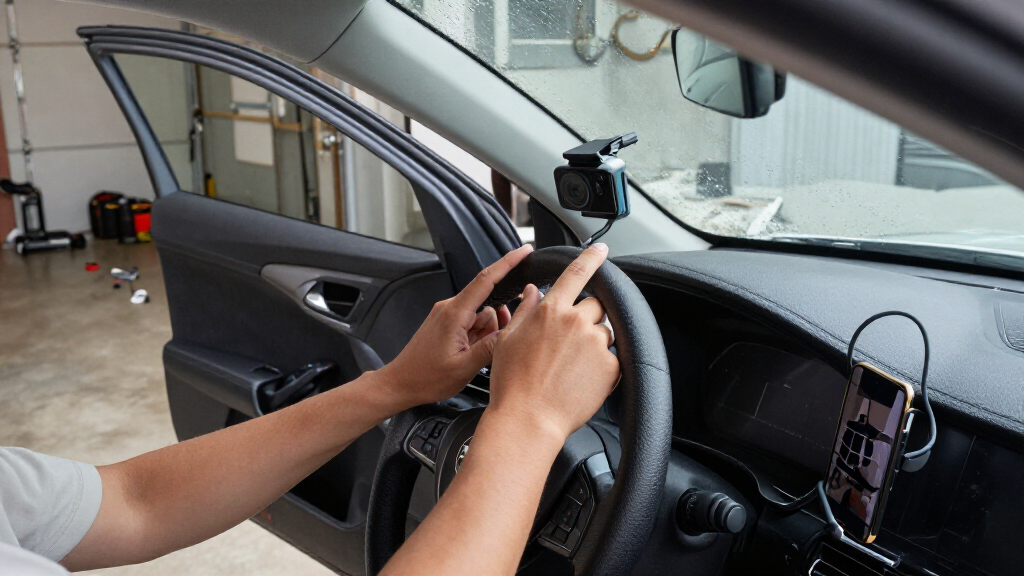
How We Picked
I compared these cameras by the choices that change day-to-day usefulness: camera coverage, stated resolution, night-recording features, wireless connectivity, included storage, and setup complexity. A wireless connection can make footage easier to access, but it does not remove the need to plan for power, memory, or mounting. I also separated local Wi-Fi features from cellular connectivity, since they address different ways of accessing footage.
The ranking favors models with a useful balance of coverage, recording features, and practical setup rather than simply giving the highest-channel-count cameras the top spots. The Vantrue N4S leads for its three-camera approach and STARVIS 2 night vision; models with broader 360-degree or four-channel coverage follow for drivers who need more viewpoints. Dual-camera options rank well for buyers who value a more straightforward front-and-rear arrangement, while the picks with specialized connectivity or extra cameras suit narrower needs. Product details here are based on the supplied specifications, not hands-on testing, and features can vary by configuration.
Factors to Consider When Choosing Wireless Dash Cameras
Choosing a wireless dash camera starts with the footage you need to capture, not the number of wireless features on the box. I’d settle the coverage and installation questions first, then check how you will access, store, and protect recordings.
Choose camera coverage around the incidents you need to document
A front camera records the road ahead, while a rear camera can help document a collision behind you; cabin and side views address different situations. Rideshare drivers may benefit from interior footage, while most commuters may find front-and-rear coverage easier to install and manage. A four-channel setup can add viewpoints, but each extra camera brings another mount, cable route, and recording stream to check. Don’t assume a model labeled 360° captures every direction equally well; camera placement and lens angles determine what is actually visible. Before buying, map the intended cameras to your windshield, rear glass, cabin, or side windows. If a view would be blocked or difficult to mount, extra channels may add complexity without giving you usable evidence.
Separate wireless phone access from cellular connectivity
Many dash cams use Wi-Fi to connect directly to a phone for viewing or transferring clips, which is handy when you are near the vehicle. Wi-Fi generations and frequency bands can affect connection behavior, but a newer label alone does not promise a better app experience. 4G LTE can support remote access in ways local Wi-Fi cannot, yet cellular features may depend on a compatible accessory, data plan, or network coverage. Check what the camera can do without a subscription and whether remote alerts or live viewing require extra service. A wireless transfer also does not mean the camera is cable-free: power still has to reach the unit and any separate cameras. Choose the connection type based on when and where you expect to retrieve footage.
Match resolution to the number of cameras
A stated 4K front view can preserve more detail than a lower-resolution recording, but it does not tell the whole story. Multi-camera systems may record each angle at a different resolution, so check the specifications for every channel rather than focusing on the front-camera headline. At night, sensor and image-processing features can matter alongside resolution, and a clear cabin view may need infrared illumination. Higher-resolution and multi-channel recording can also use storage faster. Think about whether you need fine detail from one direction or usable context from several directions. That tradeoff is often more practical than choosing a camera by its biggest resolution number.
Plan storage and footage retention before installation
An included memory card helps you start recording sooner, but its capacity affects how much footage can remain available before older files are overwritten. More cameras and higher recording resolutions can increase storage use, so a capacity that works for a simple front camera may not suit a four-channel setup. Confirm the camera’s supported card type and maximum capacity before buying a replacement or expansion card. Loop recording is useful for routine driving, but important clips should be saved or exported before they disappear from the recording cycle. If you need longer parked coverage, storage is only one part of the plan: power use and parking-mode settings matter too. Treat the bundled card as a starting point, not proof that the system will retain footage for a specific number of hours.
Account for power, parking mode, and installation effort
Wireless describes data access, not how the camera is powered. A basic setup may use a vehicle power outlet, while parking surveillance can require a hardwire kit or another compatible power solution. Hardwiring adds installation work and can affect the vehicle battery, so check the camera’s parking-mode requirements and any battery-protection settings. Every rear, cabin, or side camera adds cable routing that can be tricky around trim and airbags. Decide whether you are comfortable installing the system yourself or would rather pay for professional fitting. A less elaborate camera that can be mounted correctly may serve you better than a wider-coverage system left poorly positioned.
Check app behavior, compatibility, and ongoing requirements
A dash cam’s app is part of its everyday usefulness: it can affect how quickly you find a clip, change settings, or share footage. Before choosing, check phone compatibility, whether the app connects locally or through an account, and what functions work without an internet connection. Some features may depend on firmware, accessories, or a subscription, even when basic recording remains available. Verify that the camera’s mounting position will not block the driver’s view or interfere with sensors. Also check warranty terms and how the maker handles replacement mounts, cables, and memory-card issues. These details can matter more over time than a wireless specification that you rarely use.
Frequently Asked Questions
Does a wireless dash camera work without an internet connection?
Usually, a camera can record to its memory card without the car having internet access, but remote viewing and other connected features may need a network or cellular service. Phone-to-camera Wi-Fi is often a local connection, so it can be useful near the vehicle even when there is no home Wi-Fi. A model with 4G LTE may offer remote functions, but those can depend on an accessory, data plan, and coverage. Check which functions remain available offline before treating connectivity as a core feature. Recording reliability still depends on power, card compatibility, and correct setup.
Is a four-channel camera worth choosing over a front-and-rear model?
It depends on whether you need cabin or side views as well as road footage. Four-channel models can document more surroundings, which may suit rideshare work or drivers seeking broad coverage, but they also add cameras and cable runs. A front-and-rear system is simpler to mount and may leave more room in your budget and setup time for image quality or storage. Think through where each lens would sit and whether the resulting footage would answer a real concern. If you cannot install or use the additional angles well, extra channels may not justify the added complexity.
Do I need 4G LTE, or is Wi-Fi enough to retrieve footage?
For most drivers who only need to view clips while parked near the car, local Wi-Fi may be enough. LTE is more relevant if you want remote access when you are away, though the feature may require paid data service or compatible hardware. Neither connection type replaces the memory card or guarantees that a clip has been saved. Consider how often you would truly need footage remotely before paying for a cellular-capable system. Also check whether the camera offers the specific remote features you want rather than assuming LTE provides them all.
How much memory should I look for in a wireless dash camera?
There is no single capacity that suits every setup: recording resolution, camera count, and how often you drive all affect how quickly the card fills. A multi-channel camera can write several streams at once, so it may need more space than a front-only model. Check the manufacturer’s supported card specifications and maximum capacity, then confirm that the included card is compatible. Loop recording can overwrite older footage, so save important files promptly. If you need longer retention, compare the camera’s storage limits with your expected recording schedule rather than relying on a general capacity rule.
Can I use parking surveillance without risking my car battery?
Parking recording usually needs the camera to receive power while the engine is off, which can require hardwiring or a separate power source. A compatible hardwire kit may include battery-voltage protection, but the exact behavior depends on the kit and camera settings. Check the model’s parking-mode requirements and how it handles low voltage before installation. Drivers who rarely park in high-risk areas may prefer to skip continuous parking recording and avoid the extra power setup. If you choose it, follow the maker’s instructions or use a qualified installer to reduce the chance of wiring or battery problems.
Conclusion
For the strongest balance of multi-angle recording and night-oriented features, I’d start with the Vantrue N4S as the best overall. The Galphi 4K is my best value-oriented choice for a simpler front-camera setup with 5GHz Wi-Fi and an included 32GB card, while the 70mai A810 Lite is the best premium fit for drivers who specifically want 4G LTE alongside front-and-rear recording. Beginners who want a straightforward two-camera arrangement can start with the ROVE R2-4K; its included 128GB card makes the storage setup easier to understand. For rideshare or cabin monitoring, I’d look at the IIWEY N6 for infrared night vision or the 70mai T800E for three-channel recording. Choose based on the views you will actually install and the connection features you will use, rather than buying the highest channel count by default.