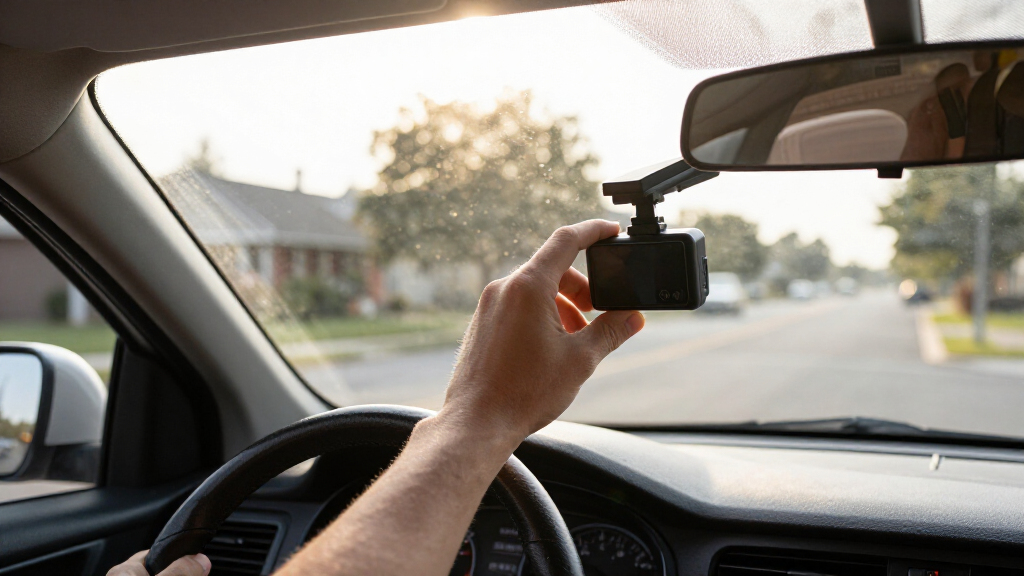

The best dash cam for most drivers is the ROVE R2-4K Dual Dash Cam, which pairs sharp 4K front recording with a rear camera and built-in Wi-Fi and GPS at a mid-range price. If full vehicle coverage matters more to you, the 3-Channel 4K Dash Cam adds a cabin view, while the Garmin Dash Cam X110 stands out for drivers who want a compact, low-profile camera with a trusted brand behind it. The main tradeoffs in this category come down to coverage versus simplicity — multi-channel rigs capture more evidence but demand more wiring and windshield space — and resolution versus storage, since 4K footage eats memory cards quickly. Budget models in this lineup also cut corners on night vision and mount build quality, which matters when most incidents happen in low light. Keep reading for the full breakdown of all 15 models and which one fits your car, budget, and tolerance for installation work.

Get business pricing on garage and car supplies
- Business-only prices and quantity discounts
- Tax-exempt purchasing
- Multiple users, one account, clear invoices
Complete the kit


Key Takeaways
- Multi-channel coverage was the biggest differentiator in this lineup: nine of the 15 models offer three or more cameras, but only the 4K-front variants (like the REDTIGER F7NP and ICESKY S03) keep rear and side footage sharp enough to read plates reliably.
- Night vision quality, driven by STARVIS-class sensors, separated the premium picks from the crowd more than daytime resolution did — the REDTIGER F7NP with its STARVIS 2 sensor and the Starlight night vision dual 4K model outperformed cheaper 4K cameras after dark.
- Included storage became a real cost factor: several picks (Terunsoul, REDTIGER F7NP, the dual 4K model) bundle 128GB cards, while bare units like the Garmin X110 and ROVE R2-4K require a separate purchase that can add meaningfully to the total.
- 360-degree coverage models (the IIWEY N5 and the two dedicated 4-channel 360° cams) trade maximum detail for maximum coverage — their side and interior cameras top out at 1080P, so they suit rideshare and parking-protection users more than evidence-focused commuters.
- Single-channel simplicity still has a place: the Garmin X110 and Galphi 4K prove that a well-built front-only cam beats a poorly executed multi-camera rig for drivers who want quick installation and an unobstructed view.
| ROVE R2-4K Dual Dash Cam with Front and Rear Cameras |  | Best Overall for Front-and-Rear Coverage | Front video: 2.5K QHD upscaled to 4K (2160p) | Rear video: 1080p Full HD | Front sensor: Sony STARVIS 2 IMX675, 5MP | VIEW LATEST PRICE | See Our Full Breakdown |
| 3-Channel 4K Dash Cam with Front, Rear, and Cabin Cameras |  | Best for Rideshare Drivers | Channels: 3: front, rear, and cabin | Video resolution: 4K + 1080p | Field of view: 170° front, 150° cabin, 160° rear | VIEW LATEST PRICE | See Our Full Breakdown |
| IIWEY N5 4-Channel Dash Cam with 360° View, 2.5K Front and 1080P Rear/Side/Interior Cameras |  | Best for All-Around Coverage | Channels: 4: front, rear, sides, and interior | Recording modes: 2.5K front + 1080p ×3, or 1080p ×4 | Viewing angles: 170° front and rear; 150° side cameras | VIEW LATEST PRICE | See Our Full Breakdown |
| Garmin Dash Cam X110 Compact 1080p HD Dash Camera |  | Best Compact Pick | Resolution: 1440p HD | Field of view: 140° | Display: 2.4-inch LCD | VIEW LATEST PRICE | See Our Full Breakdown |
| REDTIGER F7N TOUCH 4K Front and 1080P Rear Dash Cam |  | Best for Native 4K Front Recording | Front recording: 4K UHD | Rear recording: 1080p FHD | Viewing angles: 170° front, 140° rear | VIEW LATEST PRICE | See Our Full Breakdown |
| Ecomoment GT801 4K+1080P Front and Rear Dash Cam with Built-in WiFi and GPS |  | Best Basic Two-Channel Setup | Front Resolution: 4K Ultra HD (3840×2160) | Rear Resolution: FHD 1080P | Front Wide Angle: 170 degrees | VIEW LATEST PRICE | See Our Full Breakdown |
| 4-Channel 360° Dash Cam with Front, Rear, Left, and Right Cameras for Cars |  | Best All-Around Coverage Value | Channels: 4 (front, rear, left, right) | Resolution: 1080P Full HD per camera | Viewing Angle: 160° wide angle | VIEW LATEST PRICE | See Our Full Breakdown |
| 4-Channel 360° Dash Cam with 4K Front and Three 1080P Cameras |  | Best Premium 360° Coverage | Channels: 4 | Front Resolution: 4K (2160p) | Other Cameras: 1080P x3 (rear, left, right) | VIEW LATEST PRICE | See Our Full Breakdown |
| Terunsoul 3-Channel 4K Dash Cam with 128GB Card |  | Best for Rideshare and Taxi Drivers | Channels: 3 (front, rear, cabin) | Front Resolution: 4K UHD | Rear Resolution: 4K | VIEW LATEST PRICE | See Our Full Breakdown |
| REDTIGER F7NP 4K Front and Rear Dash Cam with STARVIS 2 Sensor and 128GB Memory Card |  | Best Low-Light Performer | Front Resolution: 4K (2160p) | Rear Resolution: 1080p | Front Field of View: 170° | VIEW LATEST PRICE | See Our Full Breakdown |
| 4K+4K Dual Dash Cam Front and Rear with Starlight Night Vision, Free 128GB Card |  | Best Premium Dual-Channel | Front Resolution: 3840×2160 (4K) | Rear Resolution: 3840×2160 (4K) | Field of View: 170° front, 150° rear | VIEW LATEST PRICE | See Our Full Breakdown |
| ICESKY S03 4K 4-Channel Dash Cam with GPS and Wi-Fi 6 |  | Best for Total 360° Coverage | Channels: 4 (front, rear, interior, left/right side) | Front Resolution: 4K (2160p) | Other Channels: 1080p | VIEW LATEST PRICE | See Our Full Breakdown |
| Galphi 4K Front Dash Cam with 5GHz Wi-Fi and 32GB Memory Card |  | Best Compact Screen-Free Design | Resolution: 4K UHD (2160P) | Field of View: 160° | Aperture: f/1.6 | VIEW LATEST PRICE | See Our Full Breakdown |
| Dash Cam Front and Rear Inside, 4K Full HD 3-Channel Dash Camera with Built-in 32GB Card |  | Best for Rideshare and Cabin Monitoring | Channels: 3 (front, interior, rear) | Front Resolution: 4K HD | Interior/Rear Resolution: 1080p | VIEW LATEST PRICE | See Our Full Breakdown |
| 3-Channel Dash Cam Front and Rear, 1296P Car Camera with 32GB Card |  | Best Budget Triple-Channel | Resolution: 1296P | Channels: 3 (front, interior, rear) | Field of View: 170° front, 150° cabin, 150° rear | VIEW LATEST PRICE | See Our Full Breakdown |
| dash cams for car | Connectivity | Included storage | Field of view | Channels |
|---|---|---|---|---|
| ROVE R2-4K Dual Dash Cam with | — | 128GB microSD card | 150° front, 140° rear | — |
| 3-Channel 4K Dash Cam with Fro | Wi-Fi | 32GB memory card | 170° front, 150° cabin, 160° rear | 3: front, rear, and cabin |
| IIWEY N5 4-Channel Dash Cam wi | — | 128GB microSD; supports up to 256GB | — | 4: front, rear, sides, and interior |
| Garmin Dash Cam X110 Compact 1 | Wi-Fi and Garmin Drive app | — | 140° | — |
| REDTIGER F7N TOUCH 4K Front an | — | 128GB card | — | — |
| Ecomoment GT801 4K+1080P Front | Built-in WiFi | — | — | — |
| 4-Channel 360° Dash Cam with F | 5GHz Wi-Fi, iOS and Android app | — | — | 4 (front, rear, left, right) |
| 4-Channel 360° Dash Cam with 4 | 5GHz Wi-Fi | — | 360 degrees | 4 |
| Terunsoul 3-Channel 4K Dash Ca | Dual-band Wi-Fi 6 (5.8 GHz / 2.4 GHz) | — | — | 3 (front, rear, cabin) |
| REDTIGER F7NP 4K Front and Rea | 5.8GHz Wi-Fi | — | — | — |
| 4K+4K Dual Dash Cam Front and | USB, dual-band Wi-Fi (5GHz/2.4GHz) | 128GB microSD | 170° front, 150° rear | — |
| ICESKY S03 4K 4-Channel Dash C | Wi-Fi 6 (5.8GHz), USB | 128GB microSD | — | 4 (front, rear, interior, left/right side) |
| Galphi 4K Front Dash Cam with | — | 32GB | 160° | — |
| Dash Cam Front and Rear Inside | Wi-Fi | 32GB | 170° front, 150° interior, 160° rear | 3 (front, interior, rear) |
| 3-Channel Dash Cam Front and R | — | 32GB SD card | 170° front, 150° cabin, 150° rear | 3 (front, interior, rear) |
More Details on Our Top Picks
ROVE R2-4K Dual Dash Cam with Front and Rear Cameras
The ROVE R2-4K is a balanced choice for drivers who want both road views, built-in route data, and useful storage in the box. Its front-and-rear recording gives it a broader incident record than the single-camera Garmin Dash Cam X110, while GPS adds location and speed stamps to saved clips. A 128GB card means there is room to start recording without buying storage separately. The main tradeoff is the headline front resolution: 4K is upscaled from 2.5K, so buyers seeking native 4K should compare it with the REDTIGER F7N TOUCH. Parking recording also needs a separately purchased hardwire kit. I’d choose this for everyday coverage and documentation, rather than for drivers who prioritize native 4K or ready-to-use parking surveillance.
Pros:- Records front and rear views for broader incident coverage than a front-only camera
- Includes a 128GB microSD card
- Built-in GPS records route, location, and speed data
- Dual-band Wi-Fi supports wireless downloads and firmware updates
Cons:- Front 4K output is upscaled from 2.5K
- Parking mode requires a separately purchased hardwire kit
Best for: Drivers who want front-and-rear footage, GPS-tagged clips, and included storage in one daily-use setup
Not ideal for: Buyers who require native 4K front recording or want parking mode without purchasing a hardwire kit
- Front video:2.5K QHD upscaled to 4K (2160p)
- Rear video:1080p Full HD
- Front sensor:Sony STARVIS 2 IMX675, 5MP
- Field of view:150° front, 140° rear
- Wi-Fi:Dual-band 5.8GHz and 2.4GHz
- GPS:Built-in; records routes, locations, and speed stamps
- Display:3-inch IPS
- Included storage:128GB microSD card
- Parking mode:Time-lapse, motion detection, and collision detection; hardwire kit required
Our verdict“Choose the ROVE R2-4K for a well-equipped front-and-rear setup with GPS and included storage, provided upscaled front 4K suits your needs.”
3-Channel 4K Dash Cam with Front, Rear, and Cabin Cameras
For rideshare and family drivers, the strongest reason to pick this camera is its three-point coverage: front, rear, and cabin views can document what happens inside as well as around the car. That makes it a more focused choice for passenger-facing needs than the IIWEY N5, which adds side cameras for broader exterior coverage. The 170° front and 150° cabin angles cover wide areas, and Wi-Fi app control gives access to footage without relying on the small 2-inch display. The compromises are uneven resolution across the cameras and just 32GB of included storage, which may mean managing clips more often than with the ROVE R2-4K’s 128GB card. Continuous parking recording also requires an optional hardwire kit.
Pros:- Records front, rear, and cabin views in a single system
- Wide 170° front and 150° cabin fields of view
- Wi-Fi app control supports video access and playback
- Three-axis G-sensor can lock footage when a collision is detected
Cons:- Included 32GB card offers less storage than the ROVE R2-4K’s 128GB card
- Camera views use different resolutions
- 24-hour parking recording requires a separately purchased hardwire kit
Best for: Rideshare drivers and families who need cabin footage alongside front and rear road recording
Not ideal for: Drivers seeking four-sided exterior coverage, generous included storage, or parking recording without extra hardware
- Channels:3: front, rear, and cabin
- Video resolution:4K + 1080p
- Field of view:170° front, 150° cabin, 160° rear
- Connectivity:Wi-Fi
- Display:2-inch IPS
- Included storage:32GB memory card
- Recording features:Loop recording, 3-axis G-sensor, and night vision
- Parking mode:24-hour time-lapse recording with optional hardwire kit
- Dimensions:5.8 × 2.9 × 1.5 inches
Our verdict“Pick this three-channel model if cabin footage matters more than four-sided coverage or larger included storage.”
IIWEY N5 4-Channel Dash Cam with 360° View, 2.5K Front and 1080P Rear/Side/Interior Cameras
The IIWEY N5 suits drivers who want a record of what happens around the whole vehicle, with four channels for front, rear, sides, and interior. Compared with the three-channel 4K model, it trades a dedicated higher-resolution front specification for side views that can help document events beside the car. It includes a 128GB card and supports both 2.5K-front/1080p multi-camera recording and 1080p across all four channels. Its supercapacitor is designed for a wider temperature range than a conventional battery-powered setup, while GPS is absent, so clips lack the route and speed stamps offered by the ROVE R2-4K. Parking modes require a separate hardwire kit, and power is limited to the supplied cigarette-lighter charger. I’d favor it when surrounding coverage matters more than GPS or flexible USB power.
Pros:- Four channels cover front, rear, both sides, and the interior
- Includes a 128GB microSD card
- Supercapacitor design is specified for temperatures from -4°F to 167°F
- Built-in Wi-Fi supports app preview, downloads, and sharing
Cons:- GPS is not included
- Uses the supplied cigarette-lighter charger and does not support USB or Type-C power
- Parking mode requires a separately purchased hardwire kit
Best for: Drivers who park in busy areas or want side and cabin footage in addition to front-and-rear recording
Not ideal for: Drivers who need GPS-tagged footage, USB or Type-C power, or parking monitoring without a separate hardwire kit
- Channels:4: front, rear, sides, and interior
- Recording modes:2.5K front + 1080p ×3, or 1080p ×4
- Viewing angles:170° front and rear; 150° side cameras
- Display:3-inch IPS
- Included storage:128GB microSD; supports up to 256GB
- Wi-Fi:Built-in 5GHz and 2.4GHz
- Power:Cigarette-lighter charger; supercapacitor, no battery
- Operating temperature:-4°F (-18°C) to 167°F (75°C)
- Parking mode:Time-lapse and impact detection; hardwire kit required
Our verdict“Choose the IIWEY N5 when side and cabin views are your priority and you can work with its charger and separate parking-mode kit.”
Garmin Dash Cam X110 Compact 1080p HD Dash Camera
The Garmin Dash Cam X110 is the pick for drivers who want a small, low-profile camera and straightforward incident capture. Its 1440p recording and glare-reducing polarizer target a common windshield-camera problem, while voice control offers hands-free clip saving. Compared with the dual-camera ROVE R2-4K, the X110 records only the forward view, so it cannot document rear impacts; its smaller footprint is the trade for that simpler setup. GPS tags clips with location, date, and time, but accessing saved video through the online Vault can involve paid features, and nonpaid viewing or downloads require being near the camera. Driver alerts vary by region, and some jurisdictions prohibit their use. I’d choose it for a discreet front camera, not for drivers who want broad coverage or unrestricted remote access.
Pros:- Compact design takes up little windshield space
- 1440p video with a 140° field of view
- Polarizer lens enhancement is designed to reduce windshield glare
- Voice control and GPS tagging support hands-free incident capture
Cons:- Records only the forward view, unlike the ROVE R2-4K’s front-and-rear setup
- Parking Guard notifications and remote live view require paid Vault features
- Driver alerts are unavailable in some regions, and their use is prohibited in some jurisdictions
Best for: Drivers who want a discreet forward-facing camera with glare reduction, voice control, and GPS-tagged clips
Not ideal for: Drivers who need rear-camera coverage, broad free remote access, or driver alerts available in every region
- Resolution:1440p HD
- Field of view:140°
- Display:2.4-inch LCD
- Lens:Garmin Clarity polarizer enhancement
- GPS:Tags location, date, and time
- Connectivity:Wi-Fi and Garmin Drive app
- Cloud storage:Online Vault; premium features require a paid subscription
- Voice control languages:English, German, French, Spanish, Italian, and Swedish
Our verdict“Choose the X110 for discreet forward recording and glare reduction if rear coverage and remote Vault features are not priorities.”
REDTIGER F7N TOUCH 4K Front and 1080P Rear Dash Cam
Drivers who want native 4K front recording have a clear reason to favor the REDTIGER F7N TOUCH over the ROVE R2-4K, whose 4K output is upscaled from 2.5K. This model pairs its front footage with 1080p rear coverage, and the 170° front view captures a broad stretch of the road. Touchscreen and voice controls give drivers more than one way to manage clips, while built-in GPS and the included 128GB card make the setup more complete out of the box. The tradeoff is that parking monitoring still needs a separate hardwire kit. Its rear camera is also 1080p rather than matching the front resolution, so buyers wanting even resolution at both ends should weigh that compromise. It’s a strong fit for detail-focused forward recording without giving up a rear view.
Pros:- Records native 4K UHD front video and 1080p rear video
- Includes a 128GB memory card
- Built-in GPS adds route and location context to recordings
- Touchscreen, voice control, and buttons offer multiple control options
Cons:- Parking monitoring requires a separately purchased hardwire kit
- Rear recording is 1080p rather than 4K
Best for: Drivers who prioritize native 4K detail from the front camera while also wanting rear recording and GPS
Not ideal for: Drivers who want parking monitoring without extra wiring or matching high-resolution footage from both cameras
- Front recording:4K UHD
- Rear recording:1080p FHD
- Viewing angles:170° front, 140° rear
- Wi-Fi:5.8GHz; up to 20MB/s download speed
- Included storage:128GB card
- GPS:Built-in
- Controls:Voice control, touchscreen, and buttons
- Parking monitoring:G-sensor and time-lapse modes; separate hardwire kit required
- Warranty:18 months
Our verdict“Pick the REDTIGER F7N TOUCH if native 4K front footage and flexible controls matter more than plug-in parking monitoring.”
Ecomoment GT801 4K+1080P Front and Rear Dash Cam with Built-in WiFi and GPS
The Ecomoment GT801 keeps things simple: a 4K front camera, a 1080p rear camera, WiFi, and GPS in one package. Compared with the REDTIGER F7NP, it matches the front-and-rear coverage but relies on a starlight sensor rather than a dedicated STARVIS 2 chip, so expect slightly softer results in mixed lighting. Where it holds its own is the wide 170°/160° lens pairing, which captures lane edges and roadside signs more completely than narrower setups. The tradeoff list is short but real: unlike the 4-Channel 360° model, no memory card ships in the box, and the 24-hour parking monitor needs a hardwire kit you must buy separately. This pick makes the most sense for drivers who want proven front-plus-rear protection without paying for channels they won’t use.
Pros:- 4K front resolution captures license plates and road signs clearly
- Built-in WiFi allows app-based viewing, downloads, and settings changes
- Integrated GPS logs speed, location, and route history
- Wide 170°/160° lenses cover more of the road than narrower rivals
Cons:- Hardwire kit required for 24-hour parking monitoring is not included
- No memory card included, adding an extra purchase before first use
Best for: Daily commuters who want straightforward 4K front and 1080p rear coverage with GPS speed logging
Not ideal for: Rideshare drivers or anyone wanting cabin surveillance — there’s no interior camera and no card in the box
- Front Resolution:4K Ultra HD (3840×2160)
- Rear Resolution:FHD 1080P
- Front Wide Angle:170 degrees
- Rear Wide Angle:160 degrees
- Night Vision:Starlight sensor, 6-layer glass lens
- Connectivity:Built-in WiFi
- GPS:Integrated
- Parking Monitor:24-hour time-lapse (hardwire kit required)
- Warranty:1 year
Our verdict“A sensible pick for drivers who want dependable two-channel 4K recording with GPS, provided they budget for a card and hardwire kit.”
4-Channel 360° Dash Cam with Front, Rear, Left, and Right Cameras for Cars
For drivers who’ve been sideswiped in a parking lot, this four-channel system answers the question most dash cams ignore: what happened to the sides of my car? Unlike the Ecomoment GT801, which only watches front and rear, this model runs four simultaneous 1080p cameras for true 360° awareness. The resolution is the honest tradeoff — the 4-Channel 4K model below offers a sharper 4K front camera, but here every angle gets the same footing, and the included 128GB card means it works out of the box. Eight infrared lights plus WDR keep low-light footage usable, and the supercapacitor handles summer heat better than battery-based units. Just know that GPS logging and the parking-mode hardwire kit cost extra, which quietly pushes the real price up.
Pros:- Four simultaneous cameras cover front, rear, and both sides
- 128GB memory card included, so it records right out of the box
- 8 infrared lights with WDR deliver usable night footage
- Supercapacitor power survives extreme heat better than batteries
Cons:- GPS logger and ACC hardwire kit for parking mode sold separately
- All four channels record at 1080p, limiting fine detail like plate numbers
Best for: Urban drivers and city parkers who need side-impact protection and complete 360° evidence
Not ideal for: Detail obsessives who want 4K license-plate clarity from the front camera — every channel here tops out at 1080p
- Channels:4 (front, rear, left, right)
- Resolution:1080P Full HD per camera
- Viewing Angle:160° wide angle
- Connectivity:5GHz Wi-Fi, iOS and Android app
- Storage:128GB card included
- Power Source:Supercapacitor
- Night Vision:8 infrared lights, WDR
- Parking Mode:24-hour (requires ACC hardwire kit, sold separately)
- Warranty:24 months
Our verdict“The strongest choice for drivers whose biggest risk is a side or parking-lot impact, as long as 1080p detail is sharp enough for their needs.”
4-Channel 360° Dash Cam with 4K Front and Three 1080P Cameras
This model splits the difference between the two extremes of the four-channel category. Where the 1080p 360° cam treats every angle equally, this one prioritizes a 4K front camera — the view that matters most in fault disputes — while three adjustable 1080p lenses handle rear and sides. The f/1.6 aperture is the widest in this batch, pulling in more light for dusk and dawn driving, and built-in GPS is standard rather than an optional add-on like on the 1080p-only competitor. The included 64GB card is half the size of the Terunsoul’s 128GB, though storage scales to 256GB. The recurring frustration in this category applies here too: parking mode demands a separately purchased hardwire kit. Still, for drivers unwilling to sacrifice front-camera sharpness for full coverage, this is the balanced pick.
Pros:- 4K front camera keeps the most important view crisp and detailed
- GPS built in, unlike the 1080p 360° model that sells it separately
- Bright f/1.6 aperture improves low-light capture across all cameras
- Adjustable side lenses let you fine-tune the coverage angles
Cons:- Parking mode requires a separately purchased hardwire kit
- Only a 64GB card included — smaller than competitors bundling 128GB
Best for: Drivers who want 360° awareness but refuse to give up 4K clarity on the primary forward view
Not ideal for: Buyers on a tight total budget — the hardwire kit for parking mode is another purchase on top of the base price
- Channels:4
- Front Resolution:4K (2160p)
- Other Cameras:1080P x3 (rear, left, right)
- Field of View:360 degrees
- Aperture:f/1.6
- Connectivity:5GHz Wi-Fi
- Included Memory:64GB (max 256GB)
- GPS:Built in
- Warranty:18 months
Our verdict“The best four-channel choice for drivers who want front-view 4K detail without losing side and rear coverage.”
Terunsoul 3-Channel 4K Dash Cam with 128GB Card
The Terunsoul 3-Channel is purpose-built for people who carry passengers. It records 4K front, 4K rear, and 1080p cabin footage simultaneously, with infrared lights that keep the interior view visible after dark — something no four-channel exterior model in this lineup can do. Compared with the REDTIGER F7NP, it adds the cabin channel and a generous 128GB card in the box, plus Wi-Fi 6 for faster clip transfers to a phone. The 3-year warranty is the longest in this batch, which matters for a device running all day, every day. Tradeoffs exist: parking monitoring needs a hardwire kit like nearly everything here, and the 512GB storage ceiling, while roomy, is worth knowing about before buying spare cards. For Uber and Lyft drivers, the interior camera alone justifies the pick.
Pros:- Records 4K front and rear plus a 1080p cabin view simultaneously
- Infrared cabin lights capture interior activity in total darkness
- Wi-Fi 6 dual-band connectivity speeds up app transfers
- 3-year warranty is the longest coverage in this batch
Cons:- Parking monitoring requires a separately purchased hardwire kit
- Storage caps at 512GB, limiting expansion for long shifts
Best for: Rideshare, taxi, and delivery drivers who need cabin footage for passenger disputes
Not ideal for: Private owners who never carry passengers — the cabin camera adds cost and wiring they won’t use
- Channels:3 (front, rear, cabin)
- Front Resolution:4K UHD
- Rear Resolution:4K
- Cabin Resolution:1080p
- Screen:3.18-inch full-laminated display
- Connectivity:Dual-band Wi-Fi 6 (5.8 GHz / 2.4 GHz)
- Included Memory:128GB (max 512GB)
- GPS:Built-in
- Warranty:3 years
Our verdict“The clear choice for anyone whose car is their workplace and whose passengers are part of the risk picture.”
REDTIGER F7NP 4K Front and Rear Dash Cam with STARVIS 2 Sensor and 128GB Memory Card
Night driving is where cheap dash cams fall apart, and that’s exactly where the REDTIGER F7NP earns its place. The STARVIS 2 sensor paired with WDR and HDR is a step above the starlight sensor in the Ecomoment GT801, holding detail in headlight glare and dark side streets rather than washing out. Like the Terunsoul, it ships with a 128GB card and built-in GPS, but it skips the cabin camera in favor of a heat-resistant supercapacitor and a bright F1.5 lens focused purely on the road. The spec sheet carries one oddity worth flagging: the listed maximum frame rate is 1 FPS, which bears checking against real-world settings before relying on smooth playback. Parking mode, once again, needs a hardwire kit. For commuters who do most of their driving after dark, nothing else here matches its sensor pedigree.
Pros:- STARVIS 2 sensor with WDR and HDR handles glare and darkness better than starlight rivals
- 128GB memory card included in the box
- Supercapacitor construction resists heat for reliable long-term operation
- Built-in GPS and 5.8GHz Wi-Fi support easy app-based clip retrieval
Cons:- Parking mode requires a separate hardwire kit
- Maximum listed frame rate of 1 FPS raises questions about smooth video capture
Best for: Night-shift commuters and rural drivers who regularly drive unlit roads after dark
Not ideal for: Rideshare drivers needing cabin coverage — this is a road-facing two-channel system only
- Front Resolution:4K (2160p)
- Rear Resolution:1080p
- Front Field of View:170°
- Rear Field of View:140°
- Aperture:F1.5
- Connectivity:5.8GHz Wi-Fi
- Included Memory:128GB (max 512GB)
- Power:Supercapacitor
- Warranty:18 months
Our verdict“The pick for drivers whose biggest concern is crisp footage in darkness, with the frame-rate spec worth verifying before purchase.”
4K+4K Dual Dash Cam Front and Rear with Starlight Night Vision, Free 128GB Card
Most dual-channel systems split their budget, giving you 4K up front and a softer rear feed — the REDTIGER F7N TOUCH follows that exact formula. This model refuses to compromise, recording true 4K from both cameras simultaneously, which matters most when the incident you need to prove happens behind you. The starlight sensor with f/1.5 aperture is the widest in this lineup, and it translates into license plates that stay readable on poorly lit side streets where cheaper sensors produce smudged gray footage. Fast 20MB/s Wi-Fi downloads mean pulling a clip for an insurer takes minutes, not the half-hour crawl of 2.4GHz-only units. The tradeoffs are real, though: parking mode needs a separately sold hardwiring kit, and the 25fps frame rate lags the smoother motion of 30fps rivals.
Pros:- Genuine 4K recording from both front and rear cameras
- Class-leading low-light capture with starlight sensor and f/1.5 aperture
- Fast dual-band Wi-Fi with 20MB/s downloads
- Generous bundle: free 128GB card plus 18-month warranty
Cons:- 24/7 parking mode requires a separately sold hardwiring kit
- 25fps frame rate produces less fluid motion than 30fps competitors
Best for: Drivers who want maximum evidentiary detail front and rear, especially night commuters and anyone who parks on busy streets
Not ideal for: Buyers wanting a complete out-of-the-box parking solution — the hardwire kit is an extra purchase and extra installation work
- Front Resolution:3840×2160 (4K)
- Rear Resolution:3840×2160 (4K)
- Field of View:170° front, 150° rear
- Aperture:f/1.5
- Screen:3-inch IPS
- Connectivity:USB, dual-band Wi-Fi (5GHz/2.4GHz)
- Included Storage:128GB microSD
- Parking Mode:24/7 with collision detection (hardwire kit required)
- Warranty:18 months
Our verdict“If rear footage quality matters as much as front footage, this is the dual-channel system that refuses to cut corners — just budget for the hardwire kit.”
ICESKY S03 4K 4-Channel Dash Cam with GPS and Wi-Fi 6
If you’ve ever had a sideswipe in a parking lot and wished you’d caught the angle, this is the pick that answers that problem. With four cameras covering 360° — 4K front plus 1080p rear, interior, and side views — it sees what two-channel units like the 4K+4K dual cam structurally cannot. The built-in GPS stamps every clip with route, speed, location, and time, which can make or break an insurance dispute. Wi-Fi 6 app control is faster than the older wireless standards on most rivals here, so previewing and downloading footage feels responsive rather than painful. The sacrifices: only the front camera shoots 4K, so side detail is adequate rather than crisp, and the hardwire kit for parking mode is sold separately. The listing also carries conflicting display size specs, a small but honest credibility flag.
Pros:- Four cameras deliver genuine 360° coverage including both sides
- Built-in GPS logs route, speed, location, and time on every clip
- Wi-Fi 6 provides faster app preview and downloads than older standards
- 128GB card included and expandable to 512GB
Cons:- Only the front camera records in 4K; other three channels are 1080p
- Parking mode requires a separately sold hardwire kit
- Conflicting display size listed in product specifications
Best for: Rideshare drivers, taxi operators, and parents of teen drivers who need eyes on every side of the car, including the cabin
Not ideal for: Detail obsessives — side and rear footage is 1080p, so it won’t match the dual 4K sharpness of premium two-channel systems
- Channels:4 (front, rear, interior, left/right side)
- Front Resolution:4K (2160p)
- Other Channels:1080p
- Coverage:360°
- Connectivity:Wi-Fi 6 (5.8GHz), USB
- GPS:Built-in
- Included Storage:128GB microSD
- Night Vision:8 IR lights for side cameras
- Parking Mode:24-hour; hardwire kit sold separately
Our verdict“The most complete set of eyes in this roundup — choose it when coverage in every direction beats resolution in one direction.”
Galphi 4K Front Dash Cam with 5GHz Wi-Fi and 32GB Memory Card
Most dash cams hang a bulky screen off your windshield; this one ditches the display entirely and shrinks to a footprint you barely notice behind the mirror. Everything lives in the app — the 5GHz Wi-Fi connection makes your phone the viewfinder, and it’s quick enough that reviewing a clip curbside isn’t frustrating. Compared with screen-based rivals like the ICESKY S03, you give up instant on-device playback, but gain a cleaner windshield and less theft bait. The 4K sensor with a 160° lens and f/1.6 aperture holds its own against larger units for plate capture at night. The honest gripes: 32GB fills fast at 4K, the capacity was quietly reduced from 64GB, and max support stops at 256GB. The hardwire kit for parking mode is another separate buy.
Pros:- Ultra-compact screen-free design keeps the windshield clear
- 4K recording with wide 160° field of view
- Fast 5GHz Wi-Fi for app-based viewing and downloads
- 32GB card arrives pre-installed and ready to record
Cons:- 32GB included card fills quickly at 4K and was reduced from 64GB
- No onboard screen for instant playback
- Parking mode requires a separately purchased Type-C hardwire kit
Best for: Minimalists and drivers in hot climates who want a discreet, low-profile camera controlled entirely from their phone
Not ideal for: Anyone who wants to check footage instantly on the device without fumbling with a phone app
- Resolution:4K UHD (2160P)
- Field of View:160°
- Aperture:f/1.6
- Wi-Fi:5GHz
- Included Storage:32GB
- Max Storage:256GB
- Display:Screen-free design
- Special Features:Loop recording, G-sensor, WDR, 24-hour parking mode
Our verdict“The tidiest way to add 4K recording without cluttering your windshield — as long as you’re comfortable living in the app.”
Dash Cam Front and Rear Inside, 4K Full HD 3-Channel Dash Camera with Built-in 32GB Card
This three-channel setup takes a different bet than the Galphi: instead of going minimal, it goes comprehensive, pairing a 4K front camera with 1080p interior and rear views. For anyone who drives strangers or teenagers, that interior lens is the whole point — the 150° cabin camera with infrared enhancement captures what happens inside the car, day or night. The WDR and 6-layer optics keep footage usable when you exit a tunnel into blinding sun, a scenario that washes out cheaper sensors. The compact 2-inch screen is smaller than the 3-inch panels on rivals like the ICESKY S03, adequate for framing but cramped for review. The bigger limitation is storage capped at 64GB — with three channels writing simultaneously, you’ll want to swap in the biggest card it accepts on day one, and parking mode still needs a hardwire kit.
Pros:- 4K front plus interior and rear cameras cover the whole vehicle
- Infrared enhancement and WDR deliver usable night and high-contrast footage
- Free 32GB card with automatic loop recording
- WiFi app support for live viewing and downloads on iOS and Android
Cons:- Maximum memory card support limited to 64GB
- Hardwiring kit for 24-hour parking mode sold separately
- 2-inch screen is cramped compared with 3-inch rivals
Best for: Rideshare and delivery drivers, plus fleet operators, who need documented footage of the cabin as well as the road
Not ideal for: Long-haul drivers wanting to store days of footage — the 64GB ceiling fills quickly with three channels recording
- Channels:3 (front, interior, rear)
- Front Resolution:4K HD
- Interior/Rear Resolution:1080p
- Field of View:170° front, 150° interior, 160° rear
- Screen:2 inches
- Connectivity:Wi-Fi
- Included Storage:32GB
- Max Supported Memory:64GB
- Special Features:G-sensor, loop recording, night vision, parking monitor
Our verdict“The right choice when what happens inside the car matters as much as what happens outside — just upgrade the memory card immediately.”
3-Channel Dash Cam Front and Rear, 1296P Car Camera with 32GB Card
Where the Terunsoul 3-Channel 4K pushes resolution and price upward, this model aims at the same three-camera coverage for less money. The trade is resolution: 1296P instead of 4K on the front lens, which is still sharp enough for lane disputes but may struggle with distant plates at highway speed. You still get the full trio — 170° front, 150° cabin, and a waterproof 150° rear camera that shrinks blind spots — plus HDR and four infrared LEDs that hold up better in mixed lighting than you’d expect at this tier. Plug-and-play mounting is genuinely simple: no hardwire kit or professional install needed to start recording, which separates it from nearly every rival here. Two caveats: loop recording overwrites unlocked clips on the 32GB card, and the parking monitor realistically demands a constant power connection to work as advertised.
Pros:- Three-channel front, interior, and rear coverage at a budget price
- Waterproof rear camera reduces blind spots in bad weather
- HDR and 4 IR LEDs deliver decent low-light footage
- Genuinely plug-and-play installation with no hardwiring to start
Cons:- 1296P resolution lacks the plate-capturing detail of 4K rivals
- Loop recording overwrites older footage unless locked by the G-sensor
- Parking monitor may need constant power to work reliably
Best for: First-time dash cam buyers and budget-conscious drivers who want three-camera coverage without installation complexity
Not ideal for: Anyone who needs court-grade plate detail — 1296P falls short of the 4K systems for distant or fast-moving subjects
- Resolution:1296P
- Channels:3 (front, interior, rear)
- Field of View:170° front, 150° cabin, 150° rear
- Rear Camera:Waterproof
- Included Storage:32GB SD card
- Night Vision:4 infrared LEDs
- Loop Recording Intervals:1 or 3 minutes
- Special Features:HDR, G-sensor, 24-hour parking monitor, emergency lock
Our verdict“The easiest, cheapest way to get eyes on all three sides of your car — accept the lower resolution and it earns its place.”
How We Picked
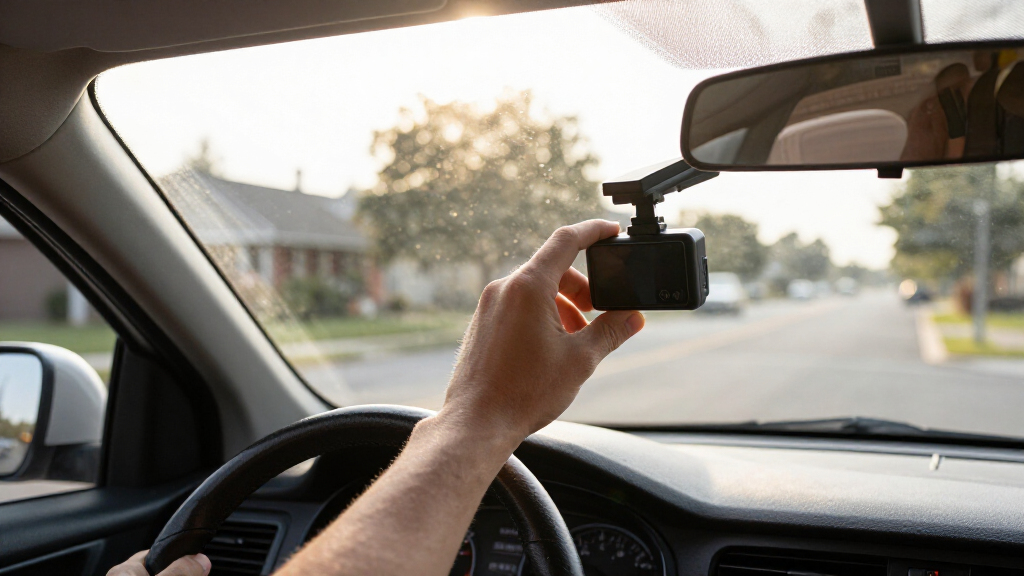
My ranking logic starts with evidence quality: a dash cam exists to capture usable footage, so I weighted sensor performance, real-world night vision, and whether license plates stay legible in recorded frames more heavily than headline resolution numbers. A 4K camera with a weak sensor produces prettier but less useful footage than a 1080p camera with STARVIS-class low-light hardware. I then scored coverage configuration — front-only versus front-and-rear versus three- and four-channel setups — because the right answer depends entirely on how and where you drive, not on raw channel count.
Beyond image quality, I evaluated usability and total cost of ownership: Wi-Fi app reliability, GPS stamping, whether a memory card is bundled, and how much windshield real estate the hardware consumes. Mount design and wiring complexity mattered too, since the best footage is worthless if the camera sags in summer heat or the install intimidates the buyer. Finally, I factored in brand track record and build quality, which is why an established name like Garmin earns a slot despite modest specs, while several spec-heavy no-name multi-channel units rank lower for inconsistent assembly and clunky software.
Factors to Consider When Choosing Dash Cams For Cars
Choosing between dash cams for cars comes down to matching the camera configuration to how you actually drive and park — not chasing the biggest resolution number on the box. These are the factors that most often make or break a purchase.
How Many Channels Do You Actually Need?
A front-only camera handles the most common crash scenario — being hit from behind is legally the other driver’s fault in most cases, and a rear-facing camera rarely proves your innocence. Where rear and cabin channels earn their keep is hit-and-run evidence, parking incidents, and rideshare use, where interior footage may be contractually required. Side cameras (the four-channel setups) sound appealing but add wiring complexity, more adhesive mounts to fail, and split storage across four streams. A common mistake is buying maximum coverage and then never wiring the extra cameras properly — a dangling rear lens captures nothing. My guidance: commuters and family drivers are well served by a solid dual-channel unit, and only rideshare drivers and frequent parkers in tight urban spots genuinely need three or more.
Resolution Versus Sensor Quality
Marketing leads with resolution, but the sensor determines whether 4K means anything. A 4K camera with a cheap sensor produces large files with muddy detail, while STARVIS-class sensors at 1440p or 1080p can outperform them, particularly at night and against headlights. The practical test is license plate legibility: footage that can’t resolve a plate at a few car lengths won’t settle a dispute. Resolution also carries a storage penalty — 4K front plus 1080p rear can fill a 128GB card in under a day of driving with loop recording constantly overwriting. Buyers who park for long periods with motion detection enabled should plan on larger cards or reduced bitrate modes, and should verify the camera supports high-capacity storage before buying.
Night Vision and Low-Light Behavior
Many collisions and near-misses happen at dawn, dusk, or night, which is exactly when budget cameras fall apart. STARVIS and Starlight sensor technology is the meaningful differentiator here — it pulls usable detail from dim streets where standard sensors produce black frames with headlight glare. Beware of infrared LED “night vision” claims on cabin cameras; IR helps only for the interior view and does nothing for the road ahead. Another overlooked factor is headlight flare handling: cheap lenses bloom oncoming lights into white blobs that hide plates entirely. If you drive mostly at night, sensor quality should outrank channel count and resolution in your decision, and it’s the single strongest argument for paying more.
Parking Mode and Power Management
A dash cam that only records while you drive misses the hit-and-run in the parking garage. True parking protection requires either a hardwire kit (drawing from a fused constant-power source) or a camera with a built-in battery, and many budget cameras advertise parking mode without including the hardware to use it safely. Cheap constant-power wiring can drain your car battery, so look for voltage cutoff protection that shuts the camera down before the battery is damaged. Motion-triggered recording saves storage but can miss the approach before impact; buffered parking mode that keeps a few seconds of pre-impact footage is the gold standard and usually appears only on mid-range and premium models. Factor the cost of a hardwire kit and professional installation into your budget if parked-car protection is a priority.
Connectivity, GPS, and Everyday Usability
The difference between a camera you check weekly and one you forget exists largely comes down to app quality and connectivity. Dual-band Wi-Fi (5GHz) transfers clips to your phone far faster than older 2.4GHz-only connections, which matters when you need to hand footage to an insurer minutes after an incident. GPS stamping embeds speed and location data into clips — useful evidence in disputes, but a privacy consideration if you share your car or footage widely. Screen size and touch capability are less critical than they seem, since a camera set up once and left alone rarely needs its display. Look also at mount design: models with quick-release mounts let you move the camera between vehicles, while permanent adhesive mounts mean a full reinstallation if you reposition it.
Heat Tolerance, Capacitors, and Build Longevity
Cars are brutal environments — summer windshield temperatures can exceed what consumer electronics are rated for. Cameras built with supercapacitors instead of lithium batteries survive heat far better and are the safer long-term choice in hot climates, even though they can’t record when the car is off without external power. Cheap adhesive mounts are the most common failure point, sagging or detaching after a few hot months and leaving your camera dangling by its cable. Check whether the manufacturer replaces mounts and cables affordably, because a lost proprietary cable can effectively total a budget camera. Finally, storage endurance matters: loop recording writes constantly, so a camera that churns through cheap microSD cards every few months will quietly cost more than a better-built unit.
Frequently Asked Questions
Is a 4-channel 360° dash cam better than a front-and-rear dual camera?
Not for most drivers. Four-channel setups like the 360° models in this lineup capture side impacts and parked-car damage that dual cameras miss, which is genuinely valuable for rideshare drivers and anyone parking on busy streets. The tradeoff is that side and interior lenses usually run at 1080p, so the extra angles come at lower detail, and you take on double the wiring, four mounts that can each fail, and storage split across four streams. A high-quality dual camera with a strong sensor will produce sharper, more persuasive footage of the angles that matter most in typical collisions. Choose four channels only if side and interior coverage solves a problem you actually have.
Do I need a memory card with more than 128GB for a 4K dash cam?
For most drivers, 128GB is the practical sweet spot, which is why several picks in this roundup bundle exactly that size. A 4K front camera with 1080p rear recording fills 128GB in roughly a full day of continuous driving, but loop recording overwrites the oldest footage automatically, so capacity determines how far back your history goes rather than whether recording stops. Where larger cards help is heavy multi-channel use (three or four cameras recording simultaneously) and long parking-mode sessions with motion detection. Verify the camera supports the capacity you buy — some budget models max out at 128GB — and invest in a high-endurance card, since constant loop writing destroys standard cards within months.
Are built-in Wi-Fi and GPS worth paying extra for?
Wi-Fi usually is, GPS depends on your needs. App connectivity lets you pull footage to your phone at the roadside without unclipping the camera and hunting for a card reader — invaluable right after an incident — and 5GHz Wi-Fi makes those transfers fast enough to actually use. GPS, on the other hand, embeds speed and location into every clip, which strengthens insurance claims and disputes but can work against you if footage shows you speeding in an incident that wasn’t your fault. Drivers who want pure evidence capture without self-incrimination sometimes prefer models without GPS. If both features cost only a small premium, Wi-Fi is the one I’d never skip.
Can I install a front-and-rear dash cam myself, or do I need professional help?
Most dual-channel cameras are realistic DIY installs if you’re comfortable tucking a cable along your headliner and door seals — the rear cable is the only fiddly part, and most kits include plastic trim tools for the job. Plan on 45 minutes to two hours depending on how cleanly your car’s trim hides wiring. Professional installation becomes worthwhile for three situations: hardwiring for parking mode (which involves tapping fused power and risks electrical problems if done wrong), vehicles with side-curtain airbags in the trim you’d be prying at, and luxury cars where damaged trim is expensive to replace. If you just want driving footage and don’t need parking mode, a cigarette-lighter-powered install is genuinely beginner-friendly.
Is 4K resolution worth it, or is 1080p enough for dash cams?
4K earns its premium when the sensor behind it is good, because the extra pixels are what let you zoom into footage and still read a license plate or a street sign. With a weak sensor, 4K just produces bigger files of soft footage, and some budget cameras interpolate up to 4K from lower native capture — a spec-sheet trick worth checking for. A well-built 1080p camera with a strong sensor, like the Garmin X110, delivers more usable evidence than a cheap 4K unit in many conditions. The real dividing line is night performance: if a camera’s 4K footage turns to noise after dark, the resolution bought you nothing for the collisions that happen at night. Pay for 4K paired with proven sensor technology, not 4K on its own.
Conclusion
For the best overall pick, the ROVE R2-4K Dual strikes the right balance of sharp front footage, rear coverage, GPS, and app connectivity without premium pricing. The best value choices are the Terunsoul 3-Channel and the 3-Channel 1296P model with bundled 32GB storage — both deliver multi-angle coverage at entry-level cost, ideal if you want maximum camera count per dollar. At the premium end, the REDTIGER F7NP with its STARVIS 2 sensor and the dual 4K Starlight model justify their cost through night performance and plate-level detail that cheaper cameras can’t match; serious evidence-focused drivers should start there.
For beginners and minimalists, the Garmin X110 is the easiest path to reliable footage — compact, trusted, and simple, with no wiring beyond the front windshield — while the Galphi 4K serves the same driver who wants higher resolution in a front-only setup. Specific needs map cleanly onto the rest: rideshare and taxi drivers should look at the cabin-equipped 3-channel and 4-channel models, parked-car and tight-space drivers get the most from the 360° four-channel units, and tech-forward buyers who want fast clip transfers will appreciate the ICESKY S03’s Wi-Fi 6 and the Ecomoment GT801’s GPS-and-Wi-Fi combo. Match the configuration to your driving habits first, then spend your budget on sensor quality — that order produces the fewest regrets.
Fall Picks
fall essentials
As an affiliate, we earn on qualifying purchases.