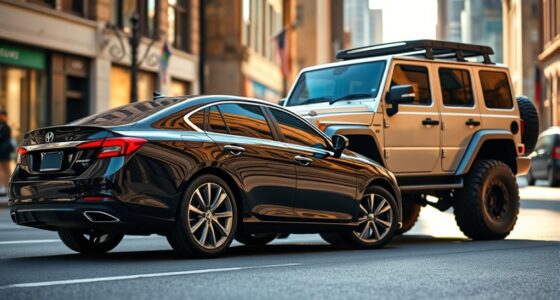
When leasing a city commuter car, focus on models with a sufficient electric range to handle your daily trips without worries. Check for easy access to charging stations, including fast chargers, at home, work, or in public spots. Look for smart charging features that let you control and optimize the process remotely. Choosing a vehicle with these options guarantees hassle-free urban driving, and if you’re curious, you’ll find useful tips to enhance your leasing experience.
Key Takeaways
- Ensure the lease includes access to reliable charging stations, ideally with fast chargers for quick top-ups.
- Look for vehicles with high electric range to reduce charging frequency and range anxiety in urban settings.
- Choose leases offering smart charging features and remote control apps for convenient, efficient charging management.
- Confirm availability of workplace or public charging options to enhance daily urban mobility.
- Consider lease terms that include incentives or discounts on charging to minimize ongoing costs.

City commuter cars are transforming how you navigate urban environments by offering compact, efficient, and eco-friendly transportation options. When you’re considering leasing a city car, it’s vital to focus on features that suit your daily routine and the city’s infrastructure. One of the most critical factors is the electric range, which determines how far the car can go on a single charge. If you mainly use your vehicle for short trips, a car with a shorter electric range might suffice. However, if you plan to venture beyond your neighborhood or need the flexibility to travel longer distances, look for models with a more substantial electric range to avoid range anxiety.
Another key aspect is the availability and accessibility of charging stations. Urban areas typically have a growing network of charging stations, but their distribution varies. When leasing, check whether your potential car can be conveniently charged at home or at nearby stations. Some cities are equipped with fast chargers that replenish your battery quickly, making it easier to top up during short stops. In contrast, standard chargers may require several hours for a full charge, so consider your daily schedule and whether you can accommodate longer charging times or need rapid charging options.
Leasing a city car also means paying close attention to the charging infrastructure. If your commute involves parking in locations with limited charging options, you’ll want a vehicle that offers flexible charging solutions, such as portable chargers or access to workplace charging stations. Additionally, consider the cost of charging; some leases include maintenance and charging incentives, which can help you save money over time. Check if the lease offers access to discounted or free charging stations, especially in urban areas where charging costs can add up. Furthermore, choosing a vehicle with active monitoring features can improve your charging efficiency and overall driving experience.
Finally, think about the overall efficiency and technology of the vehicle. Modern city commuter cars often come equipped with smart charging features that allow you to monitor and control charging remotely via smartphone apps. These features can help optimize charging times, especially if your electricity provider offers off-peak rates. A car with a good electric range combined with convenient access to charging stations ensures you stay mobile without the stress of running out of power or hunting for a station when you’re in a hurry. By prioritizing these aspects, you’ll choose a lease that supports your urban lifestyle, making city driving more sustainable, cost-effective, and hassle-free.
Frequently Asked Questions
What Are the Best Electric Commuter Cars Available Now?
You should consider the Tesla Model 3, known for its impressive battery range and quick charging capabilities at numerous charging stations. The Chevrolet Bolt EV also offers solid range and affordability, making it ideal for city commuting. Nissan Leaf is another reliable choice, especially if you prioritize affordability and access to charging stations. Always check the battery range and nearby charging stations to guarantee smooth urban driving.
How Does Leasing Differ From Buying a City Car?
Leasing a city car is like renting a movie; you enjoy it without long-term commitment. When you lease, you avoid vehicle depreciation concerns and can easily upgrade at lease termination. Buying means you own the car, facing depreciation and resale value. Leasing often has lower monthly payments, but you must adhere to mileage limits. Choose leasing if you want flexibility, and buying if you prefer ownership and long-term savings.
Are There Any Government Incentives for Leasing Urban Vehicles?
Yes, you can often benefit from government rebates and tax credits when leasing urban vehicles. These incentives aim to promote eco-friendly transportation and reduce emissions. By choosing a lease that qualifies, you might lower your monthly payments or upfront costs. Be sure to check with local agencies or your leasing company to confirm eligibility and understand the specific rebates or tax credits available in your area.
What Maintenance Is Typically Included in a Lease Agreement?
In your lease agreement, maintenance coverage usually includes routine services like oil changes, tire rotations, and inspections. Many leases also offer a battery warranty, protecting you against potential battery issues during the lease term. Always check if roadside assistance and repairs are covered. This way, you can drive confidently, knowing that essential maintenance and battery concerns are taken care of without unexpected expenses.
How Does Insurance Cost Impact Leasing a City Car?
Insurance impact influences lease decisions considerably. Higher insurance premiums can inflate your overall costs, so you should scrutinize coverage options carefully. Opt for policies that balance affordability with adequate protection, and compare quotes from different providers. By doing so, you avoid overpaying while ensuring your city car stays protected. Remember, diligent due diligence on insurance details helps you drive smarter, saving money and securing peace of mind.
Conclusion
When choosing a lease for your city commute, prioritize fuel efficiency, compact size, and easy maneuverability. Think about your daily needs—will it handle tight parking or stop-and-go traffic comfortably? Remember, the right car can make urban driving feel effortless. So, aren’t you ready to find a lease that keeps you moving smoothly through city streets? Make smart choices now, and enjoy hassle-free commuting every day.