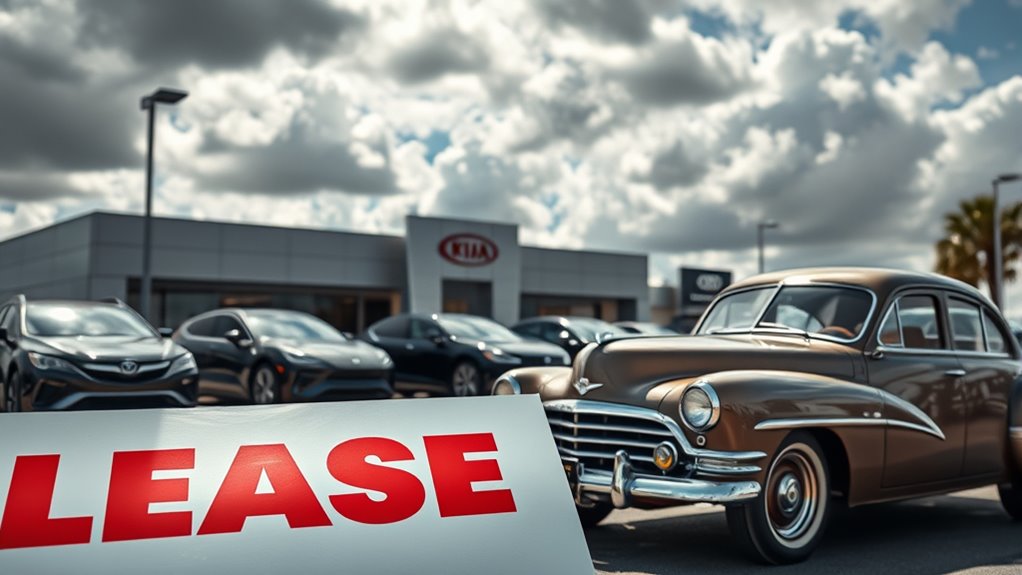

If you value long-term savings, leasing might not be the best choice, especially if you tend to go over mileage limits or want flexibility in customizing your car. High penalties for early termination or damage can quickly add up, turning a budget-friendly option into an expensive mistake. Leasing also offers less ownership control, so if you plan to keep a vehicle for years, buying is smarter. Want to know more signs that leasing isn’t right for you? Keep exploring.

Get garage and car supplies delivered free — and shop member deals
- Fast, free delivery on millions of items
- Access to Prime Big Deal Days deals on October 6–7
- Prime Video, Amazon Music and more included
Key Takeaways
- You plan to keep the car for many years, making ownership more cost-effective in the long run.
- You drive extensively beyond typical mileage limits, risking costly penalties.
- You want to customize or modify your vehicle freely without restrictions or extra charges.
- You prefer building equity and eventually owning the vehicle outright.
- You dislike strict lease terms, penalties, or restrictions that limit your driving freedom.

Leasing a vehicle might seem like a convenient way to drive new cars without the long-term commitment, but it’s not always the best choice. One sign that leasing isn’t worth it is if you’re worried about lease penalties. Many lease agreements include hefty fees for early termination or exceeding the terms. If you think there’s even a small chance you’ll need to return the car sooner than planned, leasing could cost you more than buying. These penalties can quickly add up, turning what seemed like a budget-friendly option into an expensive mistake.
Another major factor to think about is mileage restrictions. When you lease, you’re usually limited to a set number of miles each year—commonly 10,000 to 15,000. If you’re a person who drives a lot, these restrictions can be problematic. Going over your mileage limit often results in costly per-mile fees at the end of your lease. Even if you stay within limits, feeling confined by these restrictions can make the driving experience less satisfying. If you value flexibility and plan to take long trips or commute extensively, leasing might not be the best fit for you.
Beyond penalties and mileage restrictions, there are other signs that leasing may not be worth it. For instance, if you prefer customizing your vehicle or worry about wear and tear, leasing isn’t ideal. Most lease agreements include strict guidelines on how you can maintain or modify the car. Any damage beyond normal wear and tear could lead to additional charges when you return the vehicle. If you’re someone who likes to personalize your ride or isn’t careful about minor scratches, buying might be a smarter choice.
Furthermore, consider your financial goals. Leasing often means lower monthly payments, but you’re not building equity in the car. If you’re the type of person who wants to own and eventually keep a vehicle long-term, buying makes more sense. Over time, owning can be more economical because you’re not constantly making payments on a car you don’t own. Plus, when the loan is paid off, you free yourself from monthly payments altogether.
Additionally, understanding the importance of color accuracy in your vehicle’s display or interior lighting can influence your overall satisfaction with a purchase or lease. If you’re someone who values precise visuals, this factor plays a significant role in decision-making.
Lastly, think about your lifestyle. If you tend to keep cars for many years, leasing can feel restrictive. The car you lease is only yours for a few years, and then you’re back to square one, entering another lease or purchase. If stability and ownership are important to you, sticking with buying or financing a vehicle is usually the better approach.
best car lease return inspection tools
As an affiliate, we earn on qualifying purchases.
As an affiliate, we earn on qualifying purchases.
Frequently Asked Questions
How Can I Determine if Leasing Costs Outweigh Buying Costs?
You can determine if leasing costs outweigh buying benefits by comparing total expenses over time. Watch out for leasing pitfalls like high mileage fees or early termination costs that increase your total. Calculate whether monthly payments and fees exceed what you’d pay to own the vehicle outright, including potential resale value. If buying offers lower long-term costs and more flexibility, it’s likely the better choice for you.
What Are the Hidden Fees Associated With Leasing Agreements?
Leasing agreements can hide landmines like hidden charges and lease penalties that catch you off guard. You might not see extra costs for excess mileage, wear and tear, or early termination. These hidden fees can turn a seemingly straightforward lease into a financial trap. Always read the fine print carefully, ask about all potential charges upfront, and beware of penalties that can make leasing more expensive than buying in the long run.
How Does My Credit Score Impact Leasing Options?
Your credit score markedly impacts your leasing options by affecting your approval odds. A higher credit impact boosts your chances of getting approved and securing better lease terms, like lower interest rates and fewer fees. Conversely, a lower credit score may lead to denied applications or less favorable conditions. To improve your approval odds, check your credit report beforehand, address any issues, and consider waiting to lease until your credit score improves.
Are There Tax Advantages to Leasing Versus Buying?
Leasing can feel like catching a wave—smooth sailing with less commitment. You may benefit from tax deductions on lease incentives, reducing your taxable income. Unlike buying, where depreciation plays a bigger role, leasing offers immediate advantages through deductible lease payments. This means you might enjoy lower overall costs, especially if your business qualifies for specific tax incentives. Always check with a tax professional to maximize these benefits.
What Future Market Trends Should Influence My Decision to Lease or Buy?
You should consider future market trends like residual value considerations and lease end obligations when deciding to lease or buy. If the market shows signs of declining residual values, buying might protect you from potential depreciation losses. Conversely, if residuals are stable or rising, leasing could be advantageous. Keep an eye on economic shifts, interest rates, and industry forecasts, as these factors influence lease terms and long-term costs, guiding your decision.
Conclusion
So, before you sign that lease, ask yourself: is this really the best move? Sometimes, holding off or choosing to buy could save you money or give you more control. But what if the signs are there—hidden costs, limited flexibility, or rising expenses? Don’t rush into it. Stay alert, weigh your options carefully, and remember—what seems right now might not be the smartest move tomorrow. Are you ready to make the right choice?
Evergreen bestsellers Picks
bestsellers
As an affiliate, we earn on qualifying purchases.