
TL;DR

Get business pricing on garage and car supplies
- Business-only prices and quantity discounts
- Tax-exempt purchasing
- Multiple users, one account, clear invoices
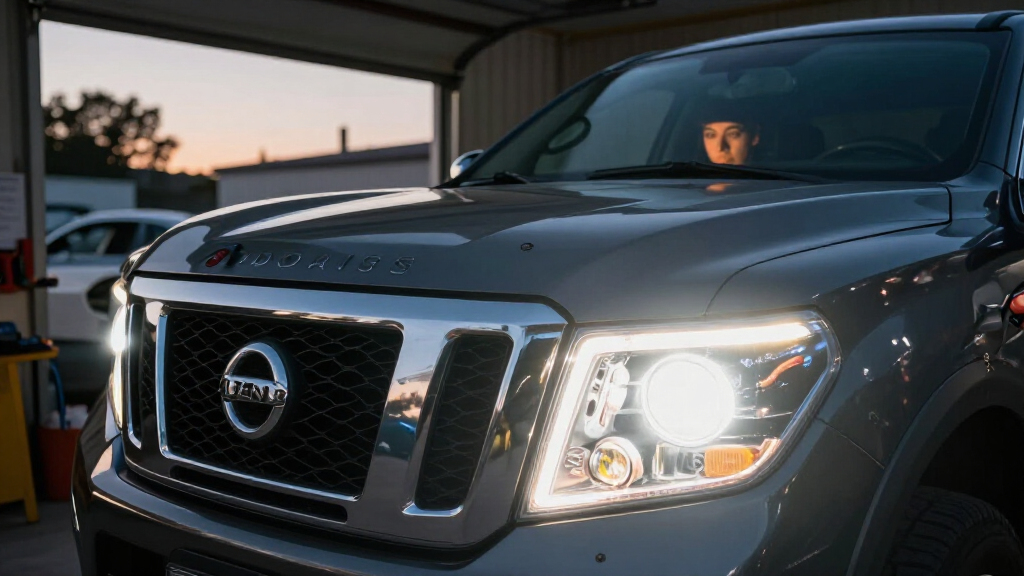
A new study reveals Nissan Titan headlights generate glare 615% above the IIHS safety threshold. Despite this, the vehicle is not currently considered illegal. The findings raise concerns about driver safety and manufacturer compliance.
A recent study has found that the headlights of the Nissan Titan produce glare that is 615% over the safety limit set by the Insurance Institute for Highway Safety (IIHS). Despite this significant excess, Nissan Titan models are still considered legally compliant with current regulations. The findings raise concerns about potential safety risks for other drivers and the adequacy of existing standards.
The study, conducted by an independent automotive safety research firm, measured headlight glare intensity from multiple Nissan Titan vehicles. Results showed glare levels reaching 615% above the IIHS limit, which is designed to prevent driver discomfort and reduce nighttime visibility hazards. However, Nissan has stated that their vehicles still meet all current legal requirements, and no recalls or legal actions have been initiated against the model.
Experts note that the IIHS limit is a safety benchmark, not a legal maximum, and that current vehicle regulations do not explicitly restrict headlight glare levels. The discrepancy between the study’s findings and legal compliance highlights ongoing debates about whether existing standards are sufficient to ensure driver and pedestrian safety.
Automotive safety advocates emphasize that excessive glare can impair visibility for oncoming drivers, potentially increasing the risk of accidents. Nissan has indicated it is reviewing the study’s findings and is committed to safety, but has not announced any immediate modifications or recalls related to headlight design.
Implications for Vehicle Safety Standards and Driver Safety
The discovery that Nissan Titan headlights produce glare 615% over the IIHS limit underscores potential gaps in current safety standards. While the vehicle remains legally compliant, the excessive glare could pose risks to other drivers, especially at night or in poor visibility conditions. This situation highlights the need for regulatory bodies to reassess whether existing standards adequately protect all road users and whether manufacturers should voluntarily adopt stricter headlight regulations.
For consumers, this raises questions about the safety of vehicles that meet legal requirements but still produce potentially hazardous glare. It may also influence future vehicle design, prompting manufacturers to prioritize glare reduction to improve overall road safety.
headlight glare reduction kit for trucks
As an affiliate, we earn on qualifying purchases.
As an affiliate, we earn on qualifying purchases.
Rising Attention to Headlight Glare and Safety Standards
Headlight glare has become an increasingly scrutinized aspect of vehicle safety in recent years, especially as automakers introduce more powerful lighting systems. The IIHS, a leading safety organization, sets glare limits to help prevent driver discomfort and crashes caused by impaired visibility. However, these limits are not legally binding, and many vehicles exceed them without violating laws.
The current study’s findings come amid growing public and regulatory concern about headlight brightness and glare, with calls for updated standards that better reflect real-world conditions. The Nissan Titan, a popular full-size pickup, has now become a focal point in this ongoing discussion, as its headlights significantly surpass safety thresholds.
While the study’s results are recent, the issue of headlight glare has been under review for several years, with some safety advocates arguing that standards are outdated and insufficient to prevent glare-related accidents. The lack of immediate legal action against the Titan reflects the complex regulatory landscape, where safety science and law often lag behind technological advancements.
Unclear Impact of Excessive Headlight Glare on Safety Regulations
It remains unclear whether regulatory agencies will revise standards in response to this study or if Nissan will modify its headlight design. The study’s findings are recent, and no formal safety warnings or recalls have been issued. The precise safety risk posed by the 615% excess glare levels in real-world driving conditions has not been fully quantified, and further research is needed to determine the actual impact on driver and pedestrian safety.
Ongoing Review and Potential Regulatory Reassessment
Regulatory bodies such as the IIHS and federal safety agencies are likely to investigate the study’s findings further. Nissan and other automakers may face increased pressure to voluntarily reduce headlight glare or update standards. Additional testing and safety evaluations are expected in the coming months, with possible policy discussions on stricter glare limits for vehicle headlights.
Consumers should watch for official updates from automakers and safety regulators, and consider the potential safety implications when choosing vehicles with high-intensity headlights.
Key Questions
What does it mean that Nissan Titan headlights are 615% over the IIHS limit?
This indicates that the glare intensity measured from Nissan Titan headlights exceeds the safety threshold set by the IIHS by over six times. It does not necessarily mean the vehicle is illegal but highlights a significant safety concern regarding headlight brightness and glare.
Are Nissan Titans illegal to drive because of this glare issue?
No. The vehicle remains compliant with current laws, which do not specify maximum glare levels. The issue is about safety standards, not legal violations.
Could this lead to recalls or safety warnings?
It is possible if regulatory agencies determine the glare poses a significant safety risk. Currently, no recalls or warnings have been issued, but investigations are ongoing.
Will Nissan change their headlights because of this study?
Nissan has stated it is reviewing the findings and is committed to safety. Whether they will modify their headlights depends on further safety assessments and potential regulatory actions.
How do headlight glare levels affect driver safety?
Excessive glare can impair visibility for oncoming drivers, increasing the risk of accidents, especially at night or in poor weather conditions.
Source: rss
Halloween Picks
halloween
As an affiliate, we earn on qualifying purchases.