
TL;DR
Aptera has announced that its solar EV production will be based in China. This move aims to leverage China’s manufacturing capabilities and supply chain. The development raises questions about global partnerships and future plans.
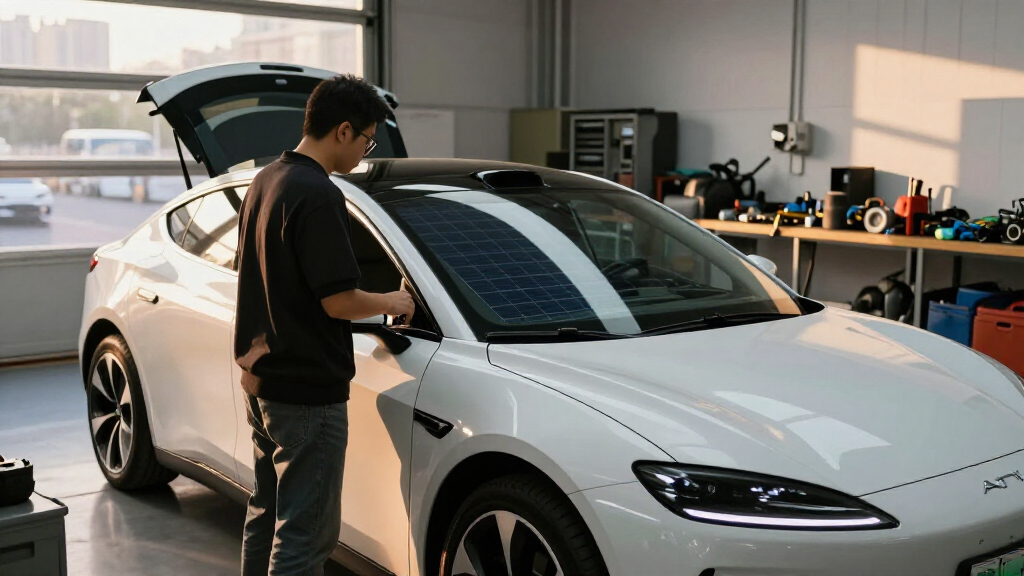
Aptera has confirmed that it will manufacture its solar-powered electric vehicle in China, marking a major shift in its production strategy. This decision underscores the company’s efforts to leverage China’s manufacturing infrastructure and supply chain efficiencies, which could impact its timeline and cost structure. The announcement was made during a press briefing on March 15, 2024, and is considered a pivotal development in Aptera’s plans to bring its innovative EV to market.
Aptera’s CEO, Steve Fambro, stated that the company chose China due to its established automotive manufacturing ecosystem and access to advanced solar panel components. The company aims to finalize manufacturing agreements within the next quarter, with initial production expected to begin by late 2024.
Sources close to the company indicated that the move is part of a broader strategy to reduce costs and accelerate production timelines. Aptera has previously emphasized its focus on solar integration and efficiency, and now it is aligning with a manufacturing hub known for high-volume EV assembly and global supply chain networks.
While the company has not disclosed specific partners or factories, industry analysts suggest that Aptera’s decision aligns with a trend among EV startups to outsource manufacturing to China, where infrastructure and component availability are more mature. This approach could enable faster scaling but also raises questions about quality control and intellectual property security.
Strategic Implications of China-Based Manufacturing for Aptera
This development signifies a critical step for Aptera in establishing a viable production pathway for its solar EV. By partnering with Chinese manufacturers, the company aims to reduce costs and improve supply chain resilience, which are key factors for bringing its innovative vehicle to market. However, it also introduces dependencies on international manufacturing and geopolitical considerations that could influence future operations and pricing. For investors and consumers, this move suggests a focus on scalability and affordability but also highlights potential risks related to quality assurance and trade tensions.
As an affiliate, we earn on qualifying purchases.
Aptera’s Manufacturing Strategy and Past Developments
Founded in 2005, Aptera initially gained attention with its lightweight, three-wheeled solar EV prototype. After a hiatus, the company revived its plans in 2021, emphasizing solar integration and efficiency. Prior to this announcement, Aptera had planned to manufacture in the United States, but supply chain challenges and cost considerations prompted a strategic pivot toward China.
In recent months, the company has been actively seeking manufacturing partners and has participated in industry events highlighting the importance of international collaboration for EV startups. The decision to move production to China aligns with broader industry trends where Chinese factories are increasingly serving global EV brands.
“Choosing China for manufacturing allows us to leverage the best supply chain and production expertise, enabling us to deliver our solar EV more efficiently.”
— Steve Fambro, CEO of Aptera
Uncertainties Surrounding Quality Control and Supply Chain Risks
It is not yet clear how Aptera will ensure quality standards in its Chinese manufacturing facilities or how it will manage intellectual property security. Additionally, potential geopolitical tensions or trade restrictions could impact supply chains or costs, but these factors remain unconfirmed at this stage.
Next Steps in Aptera’s Manufacturing and Market Rollout
Aptera is expected to finalize manufacturing agreements with Chinese partners within the next three months. The company plans to begin initial production by late 2024, with subsequent steps including quality testing and certification. Further updates on partnership details and production capacity are anticipated in the coming months.
Key Questions
Why did Aptera choose China for manufacturing?
According to the company, China offers advanced manufacturing infrastructure and supply chain efficiencies that are crucial for scaling production quickly and cost-effectively.
Will manufacturing in China affect the vehicle’s quality?
It remains to be seen how Aptera will enforce quality standards, though the company has indicated plans to maintain strict oversight and quality assurance processes.
What are the risks of moving production to China?
Potential risks include supply chain disruptions, geopolitical tensions, and intellectual property concerns, which could impact costs and timelines.
When will Aptera start delivering vehicles?
Initial production is expected to begin by late 2024, with deliveries likely following in early 2025, depending on certification and quality control processes.
Does this mean Aptera will no longer produce in the U.S.?
There has been no official statement on abandoning U.S. manufacturing plans, but current focus appears to be on China for scaling purposes.
Source: rss