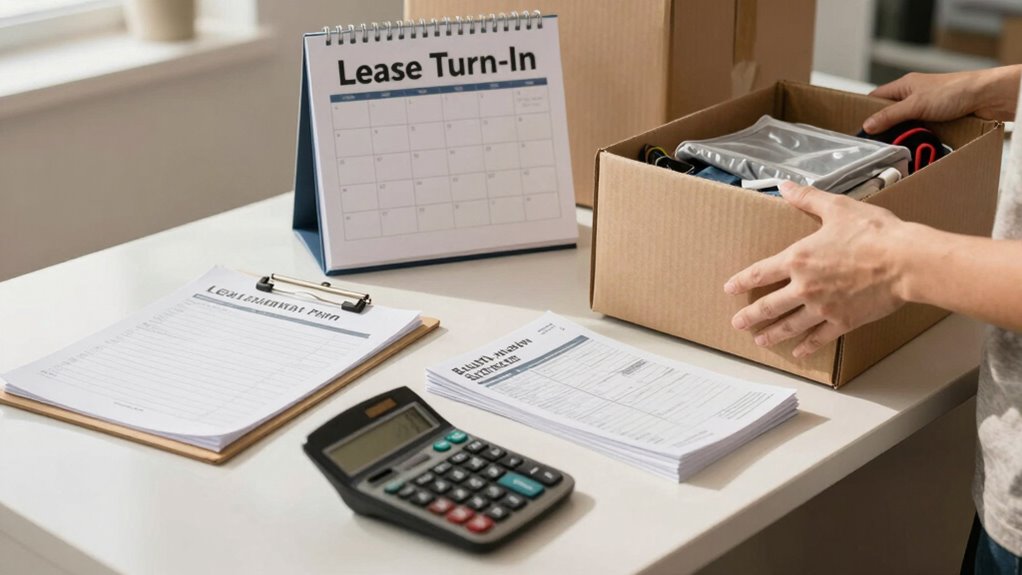
To prepare emotionally, accept that some wear and tear is normal and stay positive about the process. Organize all documents, photos, and repair receipts in advance to reduce stress. Financially, review your lease agreement for potential fees and fix minor damages if it’s cost-effective. Be honest about your car’s condition to avoid disputes. approach the turn-in with confidence and cooperation. Keep going, and you’ll uncover strategies to make the experience smooth and hassle-free.
Listen free for 30 days with Audible
Thousands of audiobooks and originals — cancel anytime.
As an affiliate, we earn on qualifying purchases.
Key Takeaways
- Review your lease terms and potential fees to understand financial obligations and avoid surprises at turn-in.
- Organize all necessary documents and repair records to reduce stress during the inspection process.
- Mentally prepare for honest assessments of vehicle condition to prevent disputes and emotional frustration.
- Budget for minor repairs or cleaning to prevent additional charges and ease the return process financially.
- Approach the turn-in with a cooperative attitude to foster a smooth experience and minimize conflicts.
When your lease is coming to an end, preparing for the turn-in process can feel overwhelming, but with a clear plan, you can make it smooth and hassle-free. The first step is understanding what’s involved, starting with a thorough vehicle inspection. This inspection helps you identify any damage or wear beyond normal use. It’s your chance to fix minor issues before the official check, avoiding costly charges later. During this process, it’s essential to review your lease documentation carefully. Make sure you understand the return conditions, including mileage limits, wear and tear standards, and any fees outlined in your lease agreement. Gathering all relevant paperwork, such as your lease contract, maintenance records, and any receipts for repairs, ensures you’re prepared for the inspection and final turn-in.
Next, you should schedule your vehicle inspection well in advance. Many leasing companies offer a pre-inspection service, which gives you an idea of what the official inspection will find. When you bring your vehicle in, be honest about its condition. If you notice scratches, dents, or interior damage, consider repairing them yourself if the cost is less than potential charges. Keep in mind, normal wear and tear is expected, but excessive damage can lead to additional fees. Take photos of your vehicle before the inspection to document its condition, which can serve as evidence if there’s any dispute later. Additionally, understanding content formats and how they relate to your vehicle’s condition can help you better prepare for the inspection process. Knowing the inspection checklist provided by your leasing company can ensure you cover all necessary points. Being aware of common damages and their impact on fees can help you decide whether repairs are worth the expense beforehand.
As for lease documentation, organize all relevant papers neatly in one folder. This includes your lease agreement, maintenance logs, and any communication with the leasing company. Having everything on hand streamlines the process and prevents unnecessary delays. When you’re ready to turn in the vehicle, arrive early and prepared. Be polite and cooperative, as a positive attitude can sometimes help reduce potential charges or fees. Remember, a well-organized and honest approach can make the entire turn-in smoother and more positive for everyone involved.
car repair kit for minor damages
As an affiliate, we earn on qualifying purchases.
As an affiliate, we earn on qualifying purchases.
Frequently Asked Questions
How Early Should I Start Preparing for Lease Turn-In?
You should start preparing for lease turn-in at least 60 to 90 days before the due date. This allows time for a lease extension if needed, and to schedule a vehicle inspection. During this period, you can address any repairs or maintenance, review your lease agreement, and gather necessary documents. Early preparation helps avoid last-minute surprises, saving you stress and potential costs when it’s time to return the vehicle.
What Are Common Penalties for Early Lease Termination?
Think of your lease as a ship sailing smoothly, but if you cut the voyage short, you face stormy seas—lease penalties and termination fees. Common penalties include hefty charges for early lease termination, often around a few months’ rent, plus possible additional fees. These charges aim to cover the landlord’s costs, so you should be prepared for financial penalties that can substantially impact your budget if you decide to leave early.
How Can I Negotiate Lease Return Conditions?
To negotiate lease return conditions, start by reviewing your lease agreement and understanding the required return condition. During the lease inspection, be honest about any damages and discuss possible repairs or allowances. Communicate proactively with your landlord or property manager, proposing solutions to minimize penalties. Clear, respectful conversations often lead to more flexible lease inspection outcomes, helping you achieve a smoother, less costly return process.
What Documentation Is Needed for Lease Turn-In?
A stitch in time saves nine—so, for lease turn-in, gather your documentation checklist early. You’ll need your lease agreement, proof of maintenance, and photos of the vehicle’s condition. During the lease inspection, these documents help verify the vehicle’s state and prevent unexpected charges. Keep everything organized and ready to present; it streamlines the process and leaves you confident that you’ve covered all bases.
Are There Any Tax Implications After Turning in a Lease?
After lease termination, there can be tax implications if you received any payments or benefits, like a lease payoff or residual value. These might be considered taxable income, so you should report them on your tax return. Additionally, if you claimed any deductions related to the lease, such as business use, you could face adjustments. It’s wise to consult a tax professional to understand how the lease turn-in affects your specific situation.
Conclusion
As lease turn-in season approaches, remember that a little prep now can save you from a mountain of stress later—think of it as avoiding the biggest headache of your year! Walk around your vehicle, tidy up, and gather all necessary documents. By staying organized and proactive, you’ll breeze through the process, leaving you free to enjoy the freedom of your next adventure. Don’t let this season turn into a nightmare—be ready and confident!
NFL season / tailgating Picks
team gear
As an affiliate, we earn on qualifying purchases.