

On turn-in day, review your lease agreement for specific instructions, including any fees or damage policies. Inspect your vehicle thoroughly, documenting dents, scratches, or worn areas with photos and notes. Clean the car inside and out, removing personal items and ensuring it looks spotless. Check that maintenance tasks are up to date, like tire pressure and fluid levels. Confirm all paperwork, keys, and records are ready, and plan to fuel up if required. Keep these tips in mind to make your lease return hassle-free.
Key Takeaways
- Review lease terms and instructions to ensure compliance with specific turn-in procedures and fees.
- Conduct a thorough vehicle inspection, documenting and photographing any damages beyond normal wear and tear.
- Clean the vehicle inside and out, removing personal items and ensuring it appears well-maintained.
- Verify all maintenance is completed, check fluid levels, tire pressure, and address any necessary repairs.
- Gather all required documentation, keys, and records, and confirm fuel levels are as specified for return.
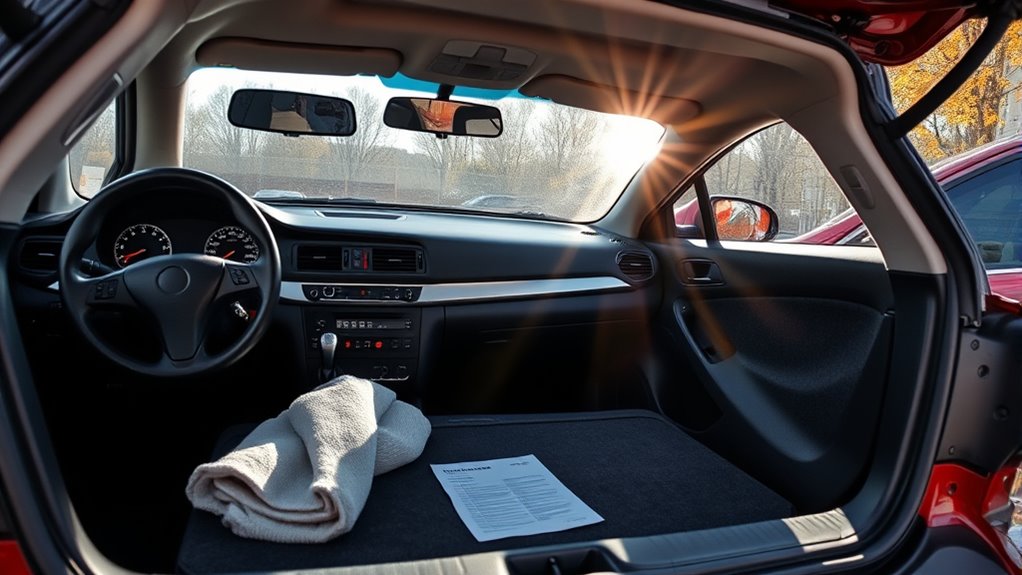
Returning a leased vehicle can feel overwhelming, but having a clear checklist makes the process much easier. One of the most significant things you can do is prepare your vehicle thoroughly, so you don’t face unexpected charges or delays. Start by reviewing your lease agreement and any instructions from the leasing company—these often include specific requirements for turn-in. Before heading to the dealership, it’s wise to perform some maintenance tips, such as checking your tire pressure, topping off fluids, and ensuring your brakes are in good condition. These simple steps not only keep your vehicle in great shape but also help you avoid additional fees for neglect or excessive wear.
Next, use an inspection checklist to evaluate your vehicle’s condition. Walk around your car and look for dents, scratches, or any other damage that might be considered beyond normal wear and tear. Pay close attention to the paint, bumpers, and mirrors. Inside, check for tears in the upholstery, stains, and functioning of features like the air conditioning, radio, and lights. Document any issues you find with photos and notes. This proactive approach ensures you’re aware of what might need repair or cleaning before returning the vehicle. If repairs are needed, consider getting them done ahead of time, especially if the charges are less than the penalties for damage at turn-in.
Perform a thorough vehicle inspection, document damages, and consider repairs to avoid extra charges at lease return.
Cleaning your vehicle thoroughly is also essential. Wash the exterior, vacuum the interior, and clean the windows. A spotless car shows that you’ve taken good care of it, which can positively influence the final assessment by the leasing company. Remember, excessive dirt or stains could be considered damage, leading to extra charges. Additionally, remove all personal items and ensure you have all the necessary documents, such as the lease agreement, keys, and maintenance records. These documents can help streamline the return process and clarify any questions about the vehicle’s condition.
Before returning the vehicle, double-check that you’ve addressed all maintenance tips and completed your inspection checklist. Confirm there’s no remaining fuel if your lease requires a full tank, or plan to fill it up if needed. It’s also helpful to be aware of emerging automation technologies that can assist in the inspection or cleaning process, making your turn-in even smoother. By taking these steps, you’ll avoid surprises and smooth out the turn-in process. Returning a leased vehicle doesn’t have to be stressful if you’re prepared. A thorough inspection, proper cleaning, and an understanding of your lease terms will help you finish your lease on good terms and prevent unnecessary charges.
Top picks for "lease return checklist"
Open Amazon search results for this keyword.
As an affiliate, we earn on qualifying purchases.
Frequently Asked Questions
Can I Negotiate My Lease Return Terms?
Yes, you can negotiate your lease return terms. If you’re worried about potential charges, consider requesting a lease extension or discussing early termination options with your leasing company. Being proactive and clear about your situation might lead to flexible arrangements, especially if you’ve maintained the vehicle well. Remember, open communication helps, and some companies are willing to work with you to avoid costly penalties at turn-in.
What Happens if I Damage the Vehicle?
Imagine your car as a mirror of your care. If you damage it, like from an accident, the lease may hold you responsible for repair costs. You’ll likely face charges for accident damage that exceeds normal wear and tear. It’s best to disclose any damage honestly, then work with the leasing company to understand your obligations, avoiding surprises that could add up when you return the vehicle.
Is an Appointment Necessary for Turn-In?
You don’t always need an appointment for turn-in, but it’s highly recommended to facilitate the lease inspection and paperwork preparation. Calling ahead ensures you can schedule a convenient time, reducing wait times and potential delays. Confirm with your leasing company if an appointment is necessary, especially if you’re returning the vehicle during busy periods. Being prepared and scheduled makes the process smoother and quicker for you.
How Early Should I Arrive on Turn-In Day?
Think of your lease return day as a race; arriving early is your starting gun. You should aim to arrive at least 15-30 minutes before your appointment to handle parking tips and prepare calmly. Being early helps you avoid last-minute stress and find a good parking spot, making the process smoother. Plus, it gives you time to double-check everything, ensuring your return goes off without a hitch.
Can I Return the Vehicle Earlier Than Scheduled?
Yes, you can return the vehicle earlier than scheduled, but you’ll need to discuss a lease extension or early termination with your leasing company. They may allow an early return, but often there are fees or penalties involved. Contact your lease provider beforehand to confirm your options, and be aware that returning early could influence your lease terms or require additional paperwork. Planning ahead helps ensure a smooth return process.
Conclusion
As you complete your lease return, remember that staying organized and thorough makes the process smoother. Think of it like a well-choreographed dance—each step leading to a successful turn-in day. When you verify your documents, clean the vehicle, and address any damages, you’re confirming the theory that preparation prevents surprises. Trust the rhythm of this checklist to guide you confidently. Before you know it, you’ll be free from the lease, ready for your next adventure.