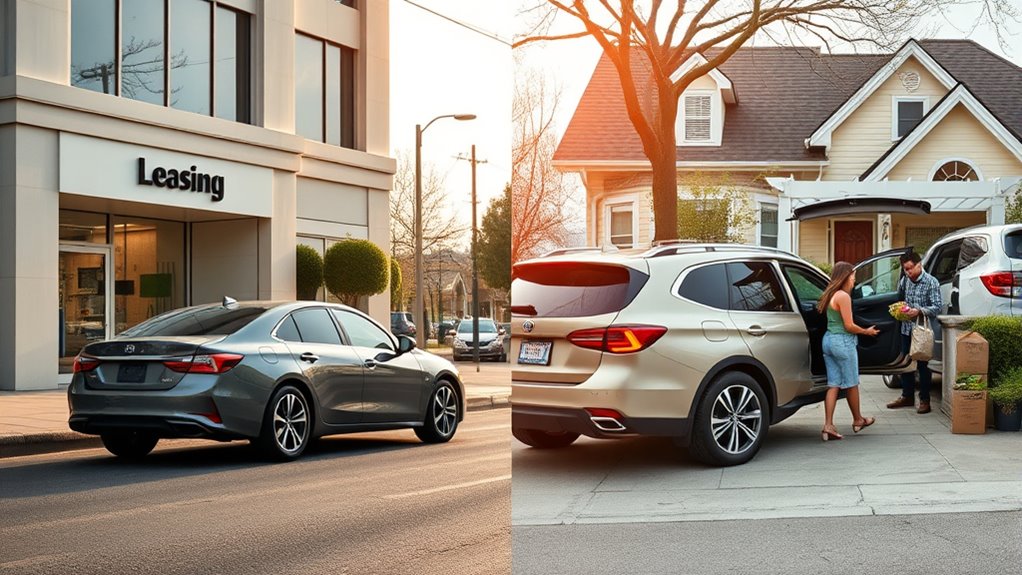

Leasing a car offers you convenience through lower monthly payments, included maintenance, and the ability to switch cars every few years without hassle. It simplifies ownership by reducing repair worries and often includes service packages. On the other hand, owning gives you long-term control, unlimited driving, and the freedom to customize your vehicle. To discover which option best fits your lifestyle and needs, keep exploring the key differences further.
Key Takeaways
- Leasing offers a straightforward process with included maintenance, reducing hassle and planning for repairs.
- Owning requires managing maintenance and repairs independently, which can be more time-consuming.
- Leasing allows for easy vehicle upgrades every few years without resale concerns.
- Ownership provides long-term control over the vehicle, including customization and unlimited driving.
- Lease agreements often include maintenance packages, simplifying ongoing upkeep and reducing inconvenience.

Deciding whether to lease or own a car depends on your financial situation and personal preferences. When evaluating the convenience factor, you need to contemplate how each option impacts your daily life. Leasing a car often means lower monthly payments and the chance to drive a new vehicle every few years, which can be appealing if you like having the latest technology or styling. However, it also comes with specific responsibilities, especially regarding insurance costs and maintenance. Since leased vehicles typically have mileage limits, you might face additional charges if you go over, and you must keep the car in good condition to avoid hefty fees at the end of the lease. This means staying on top of minor repairs and ensuring the vehicle remains undamaged, which can be a hassle if you’re busy or forgetful.
On the other hand, owning a car gives you full control over its use and upkeep. You’re free to customize it, drive as much as you want, and avoid mileage restrictions. But ownership also means you’re responsible for all maintenance responsibilities, from oil changes to tire replacements. These ongoing costs can add up, especially as your vehicle ages. Insurance costs for owned vehicles may be higher initially, but over time, you might find that owning becomes more economical if you keep the car for several years. When you own, you don’t have to worry about returning the car in pristine condition at the end of a lease, which provides peace of mind if you prefer to handle repairs on your own schedule.
Convenience also extends to the process itself. Leasing can be more straightforward—many lease agreements include maintenance packages, so you don’t have to worry about routine upkeep, and you can often swap cars every few years without the hassle of selling or trading in. Owning, however, requires more effort to keep the vehicle in top shape, but it offers the flexibility to keep it as long as you want. If convenience is your priority and you prefer predictable costs, leasing might be the better choice, especially since many lease agreements include maintenance options that reduce your responsibilities. Conversely, if you value long-term investment and don’t mind handling repairs and maintenance, owning provides a sense of ownership and control that some find more satisfying.
Ultimately, the decision hinges on your lifestyle, willingness to handle vehicle responsibilities, and financial priorities. Both options have their convenience benefits, but understanding how insurance costs and maintenance responsibilities play into each will help you make the best choice for your situation. Additionally, understanding the benefits of glycolic acid exfoliation can help you achieve healthier, more radiant skin that complements your overall self-care routine.
Frequently Asked Questions
How Does Leasing Impact Credit Scores Compared to Buying?
Leasing a car can positively impact your credit score if you make payments on time, showing responsible credit use. However, missed payments harm your credit impact and reduce your score. Leasing offers greater financial flexibility since monthly payments are typically lower, but it may limit your ability to build equity. On the other hand, buying builds ownership and credit history, but requires larger upfront costs.
Are There Mileage Limits on Leased Vehicles?
Yes, leased vehicles typically have mileage restrictions, usually ranging from 10,000 to 15,000 miles per year. If you exceed these mileage limits, you’ll face lease penalties, which can be costly. It’s important to take into account your driving habits before leasing, so you don’t end up paying extra for mileage overages. Staying within the mileage restrictions helps avoid these penalties and keeps your leasing experience smooth.
What Are the Tax Implications of Leasing Versus Owning?
Leasing a car offers tax benefits like deducting monthly lease payments if you use the vehicle for business, while owning lets you claim depreciation rules to write off the car’s value over time. Owning may lead to bigger deductions through depreciation, but leasing keeps your taxes simpler and manageable. So, you could say, your choice impacts your tax savings more than you’d expect—like a punch to the wallet!
Can I Customize a Leased Car?
You can’t typically customize a leased car since lease agreements usually prohibit modifications. However, lease customization options are limited, and any changes must often be reversed before returning the vehicle. If you value lease flexibility, stick to non-permanent updates like accessories or decals. For full customization, owning a car is better, giving you the freedom to personalize without restrictions. Always check your lease terms before making any modifications.
How Does Early Termination Differ for Leasing and Buying?
When you terminate a lease early, you face lease penalties that often include hefty fees and remaining payments. In contrast, buying offers more ownership flexibility—you can sell the car whenever you want and avoid penalties. Leasing limits your options if you need to exit early, while ownership provides greater control. Consider these differences carefully to decide which route aligns best with your financial situation and lifestyle needs.
Conclusion
Ultimately, whether you choose to lease or own, it boils down to what fits your lifestyle best. Leasing might be the easier route, offering lower payments and less hassle, but owning gives you the freedom to keep your car as long as you want. Think of it as two sides of the same coin—pick the one that aligns with your needs, and remember, sometimes you have to bite the bullet to get what’s best for you.