
TL;DR

Get business pricing on garage and car supplies
- Business-only prices and quantity discounts
- Tax-exempt purchasing
- Multiple users, one account, clear invoices
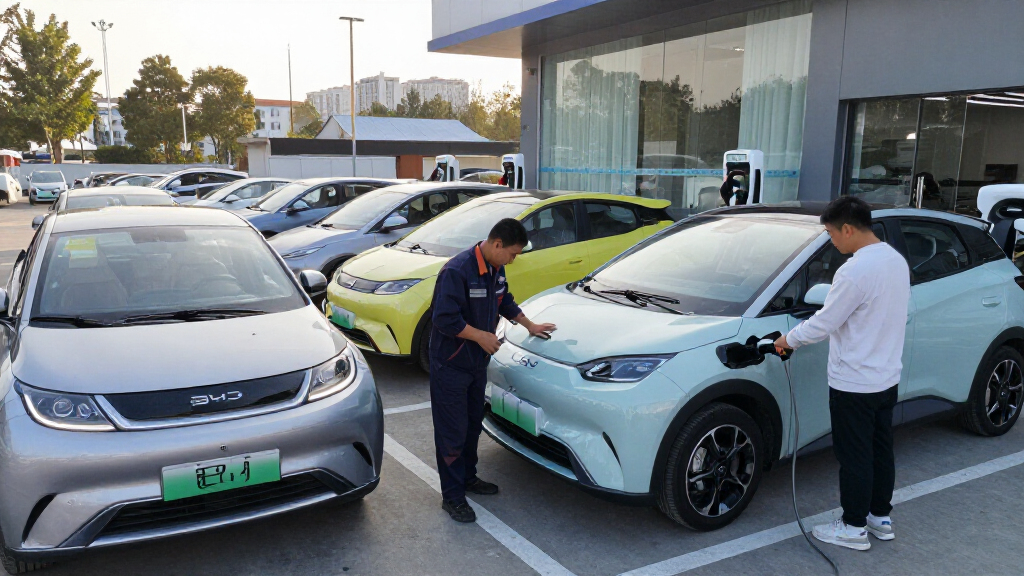
BYD sold 305,743 battery-electric passenger cars worldwide in October 2026, its first month above 300,000 and a 37.4% increase from October 2025. Total group sales reached more than 490,000 vehicles, but plug-in hybrid sales fell 17.2% year over year and January-to-October total New Energy Vehicle sales remained 2.16% below the same period in 2025.
BYD sold 305,743 battery-electric passenger cars in October 2026, passing 300,000 in a single month for the first time, according to figures reported by electrive. The result was 37.4% higher than in October 2025 and came as the Chinese automaker’s total deliveries, including plug-in hybrids, exceeded 490,000 vehicles.
The October battery-electric vehicle (BEV) figure was also 11.9% above September, marking a third consecutive month in which BYD set a new monthly record for BEV sales, the report said. Total vehicle sales rose 5.74% month over month and were about 11% higher than a year earlier. BYD’s figures cover the group’s brands, but the available brand totals are not separated by drivetrain.
Plug-in hybrid sales moved in the opposite direction. BYD sold 177,382 plug-in hybrid vehicles in October, down 17.2% from the same month last year. Together, the reported BEV and plug-in hybrid passenger-car totals amount to 483,125 vehicles; the report separately describes group deliveries as more than 490,000. It does not explain the difference in scope between those figures, so they should not be treated as directly interchangeable.
BYD’s October total included 423,843 vehicles under its core brand, 43,872 from Fangchengbao, 15,152 from Denza and 258 from Yangwang. The figures are group-wide, while the published brand breakdown does not show how many vehicles in each brand total were fully electric or plug-in hybrid.
Exports reached 170,194 vehicles, 102.8% more than in October 2025, though 5.8% below September. The report says exports made up around 35% of October sales. Sales in China were 319,974, down 10.6% year over year but up 13.1% from September.
BEVs Lead BYD’s October Growth
The figures show a change in the mix of BYD’s sales: BEV growth is outpacing plug-in hybrids, both in October and across the first ten months of 2026. From January through October, BYD sold 1,935,700 battery-electric passenger cars, up 5.86% year over year, while plug-in hybrid sales were 1,625,969, down 11.02%. That shift matters to readers tracking the company’s electric-vehicle business because its monthly record is being driven by fully electric models rather than growth across both drivetrains.
International sales are another important part of the picture. BYD exported 1,513,154 New Energy Vehicles in the first ten months, a 93.75% increase from the same period a year earlier. October exports alone were more than twice the year-earlier level. The source report presents international business as an increasingly important growth driver as domestic competition and softer year-over-year sales weigh on the China market.
However, the monthly record does not mean BYD is ahead of its prior-year pace for the full year to date. It sold 3,621,744 New Energy Vehicles from January through October, 2.16% fewer than in the corresponding period of 2025. October’s BEV milestone is therefore a sign of growth in one important category, not evidence that total year-to-date sales have returned to growth.
Products Worth Considering

Autel MaxiCharger AC Home Level 2 EV Charger, 50A, Hardwired J1772, Wi-Fi, 25-Foot Cable

DEWALT 20V MAX XR Hammer Drill and Impact Driver Combo Kit with Two 4Ah Batteries and Charger

Meguiar's G55048 Ultimate Car Care Kit
As an affiliate, we earn on qualifying purchases.
Exports and China Sales Diverge
BYD sells vehicles through four brands included in the group figures: BYD, Fangchengbao, Denza and Yangwang. The source report describes these as New Energy Vehicles, a category that includes both fully electric cars and plug-in hybrids. That distinction matters when comparing headline totals: a group-wide NEV figure is not the same as a BEV-only tally.
The report’s monthly series shows exports rising over much of 2026, from 100,482 vehicles in January to a peak of 189,466 in August, before easing to 180,700 in September and 170,194 in October. Over the same period, domestic sales recovered from 89,590 in February to 319,974 in October. October’s domestic figure was stronger than September’s, but remained below October 2025’s 357,802.
Across the first ten months, BYD’s total NEV sales were down 2.16% year over year, an improvement on the 3.9% deficit after nine months, according to the report. BEV sales were up while plug-in hybrids were down, and exports grew sharply. These figures provide a snapshot of the balance between the company’s domestic and overseas businesses, rather than a forecast of full-year performance.
Sales Scope and Full-Year Pace
The source material provides sales figures but no direct statement from a BYD executive explaining the record, the rise in BEVs or the decline in plug-in hybrids. It also does not identify which markets or models contributed most to the October BEV increase, or provide prices, production figures or dealer inventory data that could explain the sales movement.
The report’s description of group deliveries as above 490,000 does not exactly match the sum of the stated October BEV and plug-in hybrid passenger-car figures. The available information does not clarify the accounting or vehicle categories behind that gap. Brand totals likewise lack a drivetrain breakdown, limiting comparisons among BYD, Fangchengbao, Denza and Yangwang.
It is also unclear whether the export surge will continue at the same pace or how it will affect BYD’s full-year total. October exports declined from September, while domestic sales rose month over month. The reported year-to-date figures show that total NEV sales were still below the prior-year level through October, despite the recent monthly records for BEVs.
November Sales Will Test Momentum
The next monthly sales release will show whether BYD can sustain BEV sales at or above October’s record and whether the export pullback from September continues. A further comparison will be the balance between fully electric vehicles and plug-in hybrids, given their contrasting year-over-year results in October.
BYD’s subsequent monthly and full-year figures will also clarify whether overseas growth can offset weaker year-over-year domestic sales and close the remaining year-to-date gap. The source material does not give a date for the next release or provide company guidance for the rest of 2026.
Key Questions
How many battery-electric passenger cars did BYD sell in October 2026?
BYD sold 305,743 battery-electric passenger cars in October, according to the figures reported by electrive. It was the first time the company exceeded 300,000 BEVs in one month.
How did October BEV sales compare with the previous year?
The reported October total was 37.4% higher than October 2025. It was also 11.9% above September 2026.
Did BYD’s plug-in hybrid sales also increase?
No. BYD sold 177,382 plug-in hybrids in October, a 17.2% decline from October 2025, according to the report.
Were BYD’s total sales up for the year through October?
No. BYD sold 3,621,744 New Energy Vehicles from January through October 2026, 2.16% fewer than in the same period of 2025. BEV sales were up 5.86%, while plug-in hybrid sales were down 11.02%.
How much of BYD’s October business came from exports?
BYD exported 170,194 vehicles in October, up 102.8% year over year and down 5.8% from September. The source report says exports accounted for around 35% of total October sales.
Source: electrive.com