TL;DR

Get garage and car supplies delivered free — and shop member deals
- Fast, free delivery on millions of items
- Access to Prime Big Deal Days deals on October 6–7
- Prime Video, Amazon Music and more included
Mate Rimac, CEO of Bugatti Rimac and president of Bugatti and the Rimac Group, used an Instagram video to urge European carmakers to focus on distinctive luxury and physical materials instead of trying to match Chinese rivals on screens and other technology. His proposal is a strategic argument, not an announced industry plan, and the source report notes that mass-market models remain important to major automakers.
Mate Rimac, CEO of Bugatti Rimac and president of Bugatti and the Rimac Group, has urged European automakers to compete through luxury, craftsmanship and real materials rather than trying to match Chinese rivals on large screens, fewer buttons and faster charging. He made the argument in an Instagram video, criticizing what he sees as a race to copy features that Chinese brands can deliver competitively.
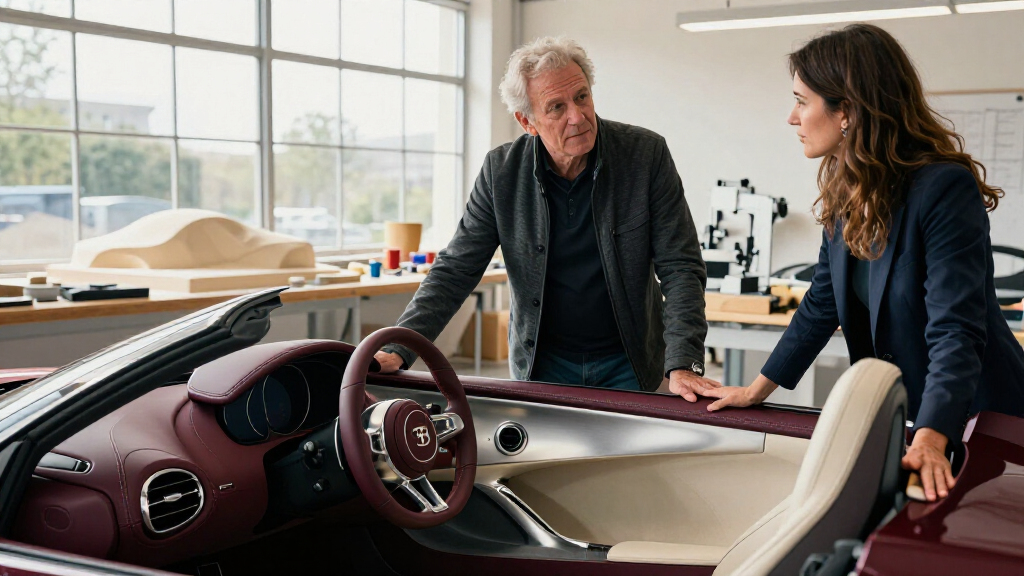
Rimac said European manufacturers were spending large sums on consultants to respond to pressure on the industry. He argued that they should avoid chasing features such as “the biggest screens, less buttons, faster recharge times” when Chinese automakers are already strong in those areas. Instead, he pointed to the interior of a vintage Rolls-Royce in the video, tapping its surfaces as examples of leather and tangible materials that could set European vehicles apart.
His recommendation was not simply to add premium trim to every model. Rimac said European companies should accept that they cannot make a car for everyone and should find a distinct niche. He compared the approach with Swiss watchmaking, claiming that Swiss brands make 5% of the world’s watches but generate 90% of watchmaking profits. Those figures were part of Rimac’s argument in the video; the source report does not independently verify them.
The video is a public view on industry strategy, not a policy announcement or a disclosed change to Bugatti Rimac’s product plans. The Drive’s report identifies Mercedes-Benz, BMW, Audi and Ferrari as examples of European manufacturers that may be among the companies he had in mind, while noting that Rimac did not name specific automakers in the quoted speech.
The Case for a Luxury Niche
Rimac’s comments address a strategic question facing European automakers: how to distinguish their cars as Chinese manufacturers compete in areas such as digital features and charging performance. His proposed answer is to emphasize attributes he associates with European luxury—materials, tactile controls and craftsmanship—rather than trying to win a feature-by-feature contest.
That approach could support higher-priced, lower-volume products, but it does not straightforwardly replace the broad model ranges that large manufacturers depend on. The Drive’s report points out that Mercedes, BMW and Audi sell vehicles across multiple price points, and that Porsche’s Cayenne is an important example of a model beyond its traditional sports-car focus. Rimac’s remarks therefore frame a debate about where to compete, not a practical blueprint showing how major brands could abandon mass-market customers.
As an affiliate, we earn on qualifying purchases.
Screens Versus Tactile Interiors
The video reflects a wider design tension in the car industry: manufacturers have increasingly used large central displays and touch-based interfaces, while some drivers and commentators favor physical buttons and controls. Rimac’s criticism links that design choice to a broader competitive concern, arguing that European brands should not define their future by copying products and features that rivals can provide.
His example was a vintage Rolls-Royce interior, which he used to illustrate the appeal of leather and other substantial materials. The source report does not establish that this interior represents a specific proposed design for future Bugatti or Rimac vehicles. It also notes a limitation in Rimac’s prescription: luxury-led positioning may be more feasible for premium brands than for companies that rely on sales across a much wider market.
““What you should not do is try to do what everyone else is doing and what the Chinese are very hard to beat at; the biggest screens, less buttons, faster recharge times.””
— Mate Rimac, in an Instagram video
How Far Could Brands Refocus?
Rimac did not identify which companies should adopt his recommendations, set out a timetable or describe specific changes to vehicle lineups. It is also unclear whether his comments reflect any planned changes at Bugatti Rimac or were intended as a broader personal view of the industry.
The source report does not independently substantiate the watchmaking figures Rimac cited, nor does it quantify how much European automakers spend on consultants. The economic case for shifting toward lower-volume luxury products remains unresolved: the report argues that large brands depend on selling beyond their most expensive models. No response from the automakers mentioned in the report is included.
No Industry Plan Announced
For now, the development is Rimac’s public intervention, rather than a confirmed change in policy from European manufacturers. The source report gives no indication of a response from Mercedes-Benz, BMW, Audi or Ferrari, and no follow-up initiative or product announcement is described.
The next concrete signs would be statements from those companies or changes in future vehicle designs and product strategies. Until then, Rimac’s comments should be read as an argument about how European brands might differentiate themselves—not evidence that the industry is moving away from screens or mass-market models.
Key Questions
What did Mate Rimac say European carmakers should do?
He said they should focus on luxury, craftsmanship and real materials instead of trying to match competitors on large screens, fewer buttons and faster charging.
Who is Mate Rimac?
Rimac is the CEO of Bugatti Rimac and president of Bugatti and the Rimac Group, according to the source report.
Did Rimac announce changes to Bugatti or Rimac cars?
No. The report describes an Instagram video expressing his industry views, not an announced product or design change at Bugatti Rimac.
Which automakers did Rimac name?
He did not name specific companies in the quoted remarks. The Drive’s report suggests he may have been referring to European manufacturers such as Mercedes-Benz, BMW, Audi and Ferrari.
Why is a luxury-only strategy difficult for major automakers?
Large manufacturers sell vehicles across different price ranges, and the source report argues they cannot rely only on flagship luxury models. It points to the breadth of Mercedes, BMW and Audi lineups and Porsche’s Cayenne as examples of the importance of broader sales.
Source: rss
Halloween Picks
halloween
As an affiliate, we earn on qualifying purchases.