TL;DR

Get business pricing on garage and car supplies
- Business-only prices and quantity discounts
- Tax-exempt purchasing
- Multiple users, one account, clear invoices
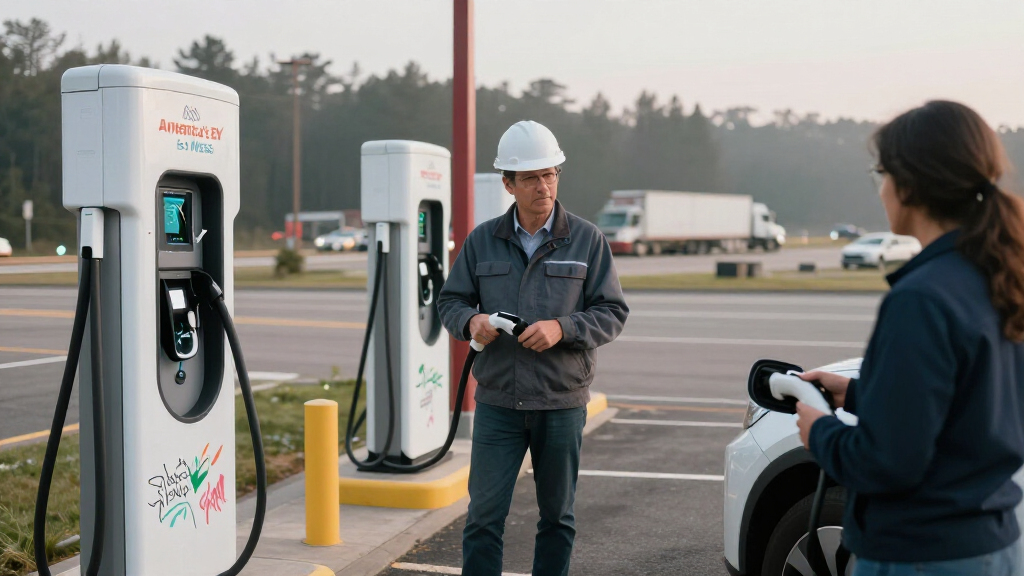
Ionna CEO Seth Cutler told The Drive that equipment, service staffing and technology interoperability have complicated the rollout of EV charging in the United States. The automaker-backed venture aims to build at least 2,000 U.S. stations with 30,000 chargers by 2030, but its progress and the reliability of the broader network remain developing.
Ionna CEO Seth Cutler told The Drive that shortages of trained service staff, new equipment and technology interoperability issues help explain why U.S. electric vehicle charging remains difficult for drivers. His comments outline the challenges facing the automaker-backed venture as it pursues a nationwide fast-charging network intended to reach 2,000 U.S. stations and at least 30,000 chargers by 2030.
Cutler described EV charging as a nascent market in which equipment and systems are still developing, while too few people are trained to maintain the equipment. He said interoperability quirks also need to be resolved. In his view, companies that enter later may benefit from lessons learned by earlier operators; he said that timing has helped Ionna.
He also argued that operators’ priorities affect the customer experience. Companies can focus on installing chargers to expand a network, he said, or design and operate charging stations around the needs of drivers. Cutler said that difference shapes company behavior and can lead to different results for customers.
Ionna was formed by BMW, Mercedes-Benz, General Motors, Honda, Hyundai, Kia and Stellantis to build a fast-charging network that could compete with Tesla’s Supercharger network. Toyota joined later, bringing the total number of automaker partners to eight, according to The Drive. The article describes Ionna’s goal as at least 30,000 chargers at 2,000 U.S. stations by 2030, followed by expansion into Canada.
Reliability Shapes Driver Confidence
Charging availability and reliability affect whether drivers can use an EV for longer trips and daily travel without lengthy detours or uncertainty. The Drive’s report cites about 5.7 million EVs on U.S. roads, alongside roughly 250,000 public chargers, of which 73,000 are DC fast chargers. Those figures provide a snapshot, but the source does not give a date or a comparison baseline for them.
Cutler’s comments point to an operational challenge beyond installing hardware: drivers need equipment that works and support that can fix it. A large network target may expand access, but the interview does not establish how reliably Ionna’s stations are operating or whether the venture is on schedule to meet its 2030 goal.
Eight Automakers Back Ionna
The automakers created Ionna to build a high-powered fast-charging network across North America. Its planned scale is meant to give drivers another major charging option alongside Tesla’s network. The Drive reports that Tesla has opened its charging standard to other automakers, though it does not provide details in this material about access at individual stations or compatibility.
Cutler contrasted EV charging with gas stations, saying he has found cellular communications and cell towers a more useful comparison. The interview transcript provided here ends as he begins to explain that comparison, so it does not include his full account of how it applies to charging infrastructure.
Progress and Reliability Still Unclear
The supplied interview material does not state how many Ionna stations or chargers are currently operating, what milestones the company has met, or how it measures station reliability. It also does not give a detailed construction schedule or explain how Ionna plans to staff and service a network at its stated scale.
The figures for U.S. EVs and public chargers are presented without a specific measurement date or comparison baseline. Cutler’s explanations are his account of industry challenges; the interview excerpt does not independently verify how much each factor contributes to outages or delays across the country.
Ionna’s 2030 Buildout Target
Ionna’s stated next benchmark is a U.S. network of 2,000 stations and at least 30,000 chargers by 2030, with Canada planned afterward. The source material does not provide an interim timetable or a new milestone announced in the interview. The company’s progress, station performance and approach to maintenance will show how its plans address the issues Cutler described.
Key Questions
What is Ionna?
Ionna is an automaker-backed venture created to build a fast-charging network. Its founding partners were BMW, Mercedes-Benz, General Motors, Honda, Hyundai, Kia and Stellantis; Toyota later joined, according to The Drive.
What is Ionna’s U.S. network goal?
The Drive reports that Ionna aims to build at least 30,000 chargers at 2,000 U.S. stations by 2030, then expand into Canada.
Why does Cutler say EV charging is challenging?
Cutler cited new equipment, a shortage of trained service staff and technology interoperability issues. He also said operators’ focus on installing chargers versus serving drivers can affect the customer experience.
How many public chargers are in the United States?
The source article cites roughly 250,000 public chargers, including about 73,000 DC fast chargers. It does not specify the figures’ measurement date or comparison baseline.
Source: rss
Fall Picks
fall essentials
As an affiliate, we earn on qualifying purchases.