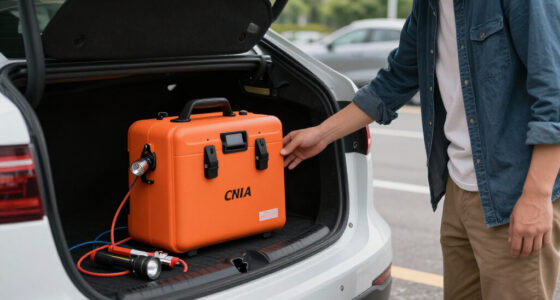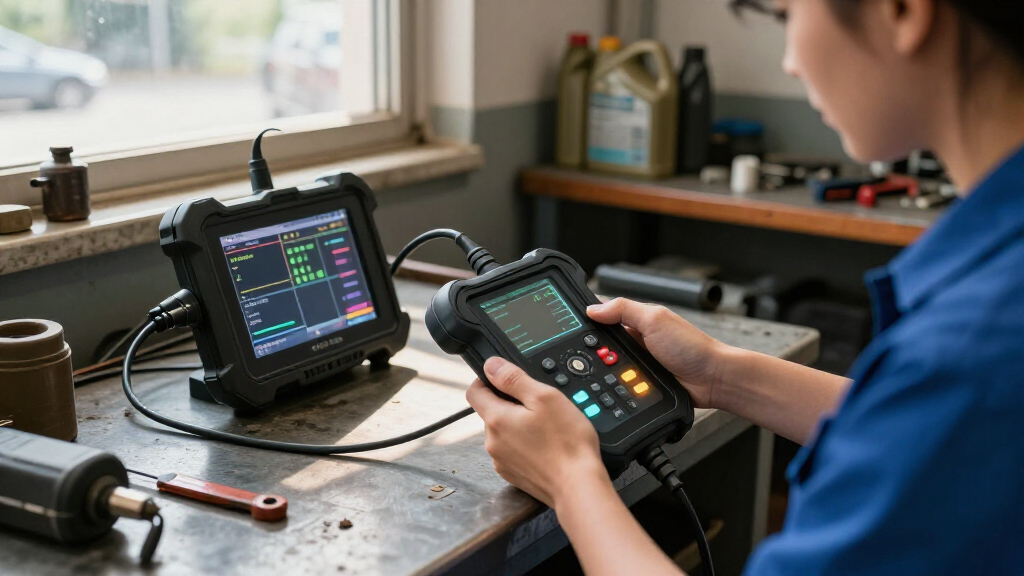

A car diagnostic scanner can save you from paying a mechanic $100 just to read a check-engine light, but the category spans everything from basic $25 code readers to $700 bidirectional scan tools — and picking the wrong tier is the most common mistake buyers make. After comparing 15 popular models, the XTOOL D8BT stands out as the best overall pick for serious home mechanics thanks to bidirectional testing, ECU coding, and wireless freedom. For casual owners, the ANCEL AD310 and FOXWELL NT301 cover read-and-clear duties at a fraction of the price, while the FOXWELL NT604 Elite adds ABS, SRS, and transmission coverage for a mid-range middle ground. The main tradeoff you’ll face is price versus depth: cheap readers only access the engine computer, while premium tools talk to every module in the car and can even command components to actuate. Read on for the full breakdown, including who each scanner is actually for.

Get business pricing on garage and car supplies
- Business-only prices and quantity discounts
- Tax-exempt purchasing
- Multiple users, one account, clear invoices
Complete the kit


Key Takeaways
- Basic code readers under $40 (ANCEL AD310, MOTOPOWER MP69033, Autel MS309) performed nearly identically for reading and clearing engine codes — paying more only matters if you need systems beyond the engine.
- Only three models in this lineup — the XTOOL D8BT, Innova 5610, and THINKCAR THINKSCAN 689 — offer bidirectional control, which is the single feature that separates DIY tools from professional-grade diagnostics.
- Phone-based Bluetooth scanners (FIXD and the Bluetooth 5.4 iOS/Android adapter) are the cheapest way to get live data graphing, but ongoing subscription costs can exceed the hardware price within two years.
- The FOXWELL NT604 Elite earned the mid-range spot because ABS, SRS, and transmission coverage is the most commonly missed capability at entry-level prices — most buyers don’t realize a check-engine-only reader can’t clear an airbag light.
- Battery and charging-system testing, included in the Innova 5210, V318, and BluSon YM319, proved to be a quietly valuable feature for anyone diagnosing intermittent electrical issues rather than just fault codes.
| Autel MS309 OBD2 Scanner Universal Car Engine Fault Code Reader |  | Best Overall Basic Code Reader | Compatibility: OBD II vehicles, 1996+ (US) | Functions: Read/clear codes, freeze frame, I/M readiness, vehicle info | Code Types: Generic and manufacturer-specific | VIEW LATEST PRICE | See Our Full Breakdown |
| XTOOL D8BT V3.0 OBD2 Scanner, Bidirectional Scan Tool, ECU Coding |  | Best Premium Professional Tool | Functionality: 3-in-1: VAG Guidance, PMI, FCA AutoAuth | Connectivity: Wireless and wired via VCI box | Display: 8-inch Android touchscreen | VIEW LATEST PRICE | See Our Full Breakdown |
| V318 OBD2 Scanner Diagnostic Tool with Battery Voltage Test |  | Best Budget Pick | Compatibility: Most 12V OBDII/EOBD gasoline vehicles | Functions: Read/clear codes, DTC lookup, live data, battery voltage test | Display: Color screen | VIEW LATEST PRICE | See Our Full Breakdown |
| ANCEL AD310 Classic Enhanced Universal OBD II Scanner Car Engine Fault Code Reader |  | Best for Beginners | Compatibility: 1996+ OBD2 vehicles — US, EU, and Asian models | Protocols: KWP2000, J1850 VPW, ISO9141, J1850 PWM, CAN | Functions: Read/clear emission codes, live data | VIEW LATEST PRICE | See Our Full Breakdown |
| FOXWELL NT604 Elite OBD2 Scanner with ABS, SRS, Transmission Diagnostics |  | Best Mid-Range Full-System Scanner | Compatibility: 60+ car brands worldwide | Systems Covered: Engine, transmission, ABS, SRS | Functions: Read/clear codes, live data stream, DTC library, data playback, print | VIEW LATEST PRICE | See Our Full Breakdown |
| FOXWELL NT301 OBD2 Scanner |  | Best Overall | Display: 2.8-inch color screen | Compatibility: 1996+ gasoline cars, light trucks, SUVs; many 2000+ European and Asian models; 12V diesel vehicles | Protocols Supported: KWP2000, J1850 VPW, ISO9141, J1850 PWM, CAN | VIEW LATEST PRICE | See Our Full Breakdown |
| Innova 5210 OBD2 Scanner & Engine Code Reader |  | Best for ABS and Battery Checks | Brand: Innova | Model: 5210 | Functions: Engine codes, ABS codes, battery tester, oil reset, live data, smog readiness | VIEW LATEST PRICE | See Our Full Breakdown |
| FIXD Bluetooth OBD2 Scanner |  | Best Smartphone-Powered Pick | Brand: FIXD | Model: 2 | Connectivity: Bluetooth, iPhone and Android compatible | VIEW LATEST PRICE | See Our Full Breakdown |
| ANCEL AD410 Enhanced OBD2 Scanner |  | Best Value | Compatibility: 1996+ US vehicles; many 2000+ EU/Asian vehicles | Display: 2.4-inch color screen | Protocols Supported: CAN, ISO9141, KWP2000, J1850 VPW, J1850 PWM | VIEW LATEST PRICE | See Our Full Breakdown |
| MOTOPOWER MP69033 Car OBD2 Scanner Code Reader |  | Best Budget Basic | Display: 2.8-inch LCD with backlight | Protocols Supported: 9 protocols | Power Source: Vehicle’s OBDII port | VIEW LATEST PRICE | See Our Full Breakdown |
| BluSon YM319 OBD2 Scanner Diagnostic Tool with Battery Tester |  | Best for Battery Health Checks | Brand: BluSon | Model: YM319 | Display: 2.4-inch HD color screen, 10 brightness levels | VIEW LATEST PRICE | See Our Full Breakdown |
| Innova 5610 OBD2 Bidirectional Scan Tool | 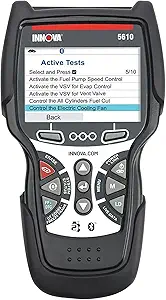 | Best Bidirectional Value | Brand: Innova | Model: 5610 | Vehicle Coverage: Most vehicles 1996–2023 (select makes/models) | VIEW LATEST PRICE | See Our Full Breakdown |
| OBD2 Scanner Diagnostic Tool for iOS & Android, Bluetooth 5.4 |  | Best Phone-Based Pick | Compatibility: 96%+ of car makes and models, 1996 to present | Protocols: 9 OBDII protocols | Connectivity: Bluetooth 5.4 | VIEW LATEST PRICE | See Our Full Breakdown |
| VDIAGTOOL VD10 OBD2 Scanner Code Reader for Car Diagnostics |  | Best Warranty for a Budget Reader | Brand: VDIAGTOOL | Model: VD10 | Display: 2-line backlit LCD | VIEW LATEST PRICE | See Our Full Breakdown |
| THINKCAR THINKSCAN 689 OBD2 Scanner Full System Bidirectional Scan Tool |  | Best Professional Grade | Brand: thinkcar | Model: THINKSCAN 689 | Operating System: Android 10, 4-core processor | VIEW LATEST PRICE | See Our Full Breakdown |
| car diagnostic scanner | Compatibility | Display |
|---|---|---|
| Autel MS309 OBD2 Scanner Unive | OBD II vehicles, 1996+ (US) | LCD with on-screen DTC definitions |
| XTOOL D8BT V3.0 OBD2 Scanner | — | 8-inch Android touchscreen |
| V318 OBD2 Scanner Diagnostic T | Most 12V OBDII/EOBD gasoline vehicles | Color screen |
| ANCEL AD310 Classic Enhanced U | 1996+ OBD2 vehicles — US, EU, and Asian models | — |
| FOXWELL NT604 Elite OBD2 Scann | 60+ car brands worldwide | — |
| FOXWELL NT301 OBD2 Scanner | 1996+ gasoline cars, light trucks, SUVs; many 2000+ European and Asian models; 12V diesel vehicles | 2.8-inch color screen |
| Innova 5210 OBD2 Scanner & Eng | Most vehicles 1996 and newer | — |
| FIXD Bluetooth OBD2 Scanner | 1996+ gasoline and hybrid; 2006+ diesel | — |
| ANCEL AD410 Enhanced OBD2 Scan | 1996+ US vehicles; many 2000+ EU/Asian vehicles | 2.4-inch color screen |
| MOTOPOWER MP69033 Car OBD2 Sca | — | 2.8-inch LCD with backlight |
| BluSon YM319 OBD2 Scanner Diag | 1996+ US, 2000+ EU and Asian cars, light trucks, SUVs | 2.4-inch HD color screen, 10 brightness levels |
| Innova 5610 OBD2 Bidirectional | — | — |
| OBD2 Scanner Diagnostic Tool f | 96%+ of car makes and models, 1996 to present | — |
| VDIAGTOOL VD10 OBD2 Scanner Co | — | 2-line backlit LCD |
| THINKCAR THINKSCAN 689 OBD2 Sc | — | — |
More Details on Our Top Picks
Autel MS309 OBD2 Scanner Universal Car Engine Fault Code Reader
The Autel MS309 earns the top spot among basic scanners because it nails the fundamentals without padding the price. It reads and clears both generic and manufacturer-specific codes, pulls freeze frame data, and shows on-screen DTC definitions — a step up from the MOTOPOWER MP69033, which makes you look codes up manually. Its I/M readiness check is genuinely useful before a smog test, something the ANCEL AD310 also does well but with a less polished interface. The tradeoff is scope: this is an engine-only tool with no ABS, SRS, or transmission access, and post-2017 FCA vehicles are locked out. Compared with the FOXWELL NT604 Elite, you give up three entire vehicle systems to save real money.
Pros:- On-screen code definitions save lookup time
- Handles manufacturer-specific codes, not just generic ones
- I/M readiness mode helps pass emissions tests
- True plug-and-play with no registration or app setup
Cons:- Engine diagnostics only — no ABS, SRS, or transmission coverage
- Blocked on post-2017 FCA vehicles due to security restrictions
- No live data graphing for deeper troubleshooting
Best for: DIY owners who want fast, reliable check-engine-light answers before heading to a shop
Not ideal for: Owners of 2018+ Fiat, Chrysler, Dodge, or Jeep vehicles, since security gates block code access
- Compatibility:OBD II vehicles, 1996+ (US)
- Functions:Read/clear codes, freeze frame, I/M readiness, vehicle info
- Code Types:Generic and manufacturer-specific
- Display:LCD with on-screen DTC definitions
- Warranty:12 months
- Support:Lifetime free technical support
Our verdict“If you want one affordable tool that tells you exactly why the check engine light is on, this is the one to buy.”
XTOOL D8BT V3.0 OBD2 Scanner, Bidirectional Scan Tool, ECU Coding
At the opposite end of the spectrum from the Autel MS309, the XTOOL D8BT V3.0 is a workshop-grade platform disguised as a scanner. Bidirectional control lets you command modules to test components directly, and ECU coding plus FCA AutoAuth covers doors that basic readers can’t open — including the post-2017 Chrysler vehicles the MS309 locks out. The 8-inch Android tablet runs wirelessly via the VCI box, which means you can test from outside the car. Against the Innova 5610, it offers broader brand coverage and a larger screen, but demands far more from the user. The catch: functions vary sharply by make and model, and VIN verification before purchase is effectively mandatory to avoid disappointment.
Pros:- Bidirectional control and ECU coding for advanced troubleshooting
- Wireless VCI operation with a large 8-inch touchscreen
- Covers 150+ brands including gated FCA vehicles
- 3 years of free software updates included
Cons:- Feature availability varies widely by vehicle make and model
- Requires VIN verification before purchase to confirm fit
- High price and complexity overwhelm non-professionals
Best for: Professional technicians and serious DIYers who need bidirectional testing and ECU coding across many brands
Not ideal for: Casual owners who just want to read a check engine light — it’s expensive and overkill
- Functionality:3-in-1: VAG Guidance, PMI, FCA AutoAuth
- Connectivity:Wireless and wired via VCI box
- Display:8-inch Android touchscreen
- Hardware:2GB RAM, 64GB storage, 5000mAh battery
- Brand Coverage:150+ vehicle brands
- Updates:3 years free
- Warranty:2 years
- Includes:Charger, adapter, cables, VCI box, tool case
Our verdict“This is a shop investment, not a glovebox gadget — buy it only if bidirectional testing and coding are part of your workflow.”
V318 OBD2 Scanner Diagnostic Tool with Battery Voltage Test
The V318 wins the value slot by bundling features that usually cost more: a color screen, live data streaming, and a battery voltage test that the ANCEL AD310 doesn’t offer at a comparable price. That voltage readout is more practical than it sounds — a weak battery causes a surprising share of phantom warning lights, and this tool catches it before you chase codes that don’t exist. Compared with the BluSon YM319, another budget battery-tester combo, the V318’s color display makes live data far easier to follow. The tradeoffs are real, though: it’s limited to 12V gasoline vehicles on OBDII/EOBD protocols, so diesel and many European models are off the table, and there’s no ABS or SRS access.
Pros:- Color screen is rare at this price point
- Battery voltage test helps catch electrical issues early
- Live data stream supports deeper troubleshooting
- Plug-and-play with no batteries or setup needed
Cons:- Gasoline-only — no diesel vehicle support
- Compatibility must be verified before purchase
- Too basic for professional or advanced use
Best for: First-time scanner buyers who want live data and battery checking without spending much
Not ideal for: Diesel owners or anyone needing ABS, SRS, or transmission diagnostics
- Compatibility:Most 12V OBDII/EOBD gasoline vehicles
- Functions:Read/clear codes, DTC lookup, live data, battery voltage test
- Display:Color screen
- Connectivity:16-pin OBD2 port
- Power:Powered by vehicle OBD port, no batteries
- Design:Lightweight handheld
Our verdict“For the price of a single shop diagnostic fee, this covers the checks most owners actually need.”
ANCEL AD310 Classic Enhanced Universal OBD II Scanner Car Engine Fault Code Reader
Simplicity is the ANCEL AD310’s whole argument, and it wins here. One cable, one button flow, no menus to decode — a first-timer can pull codes within a minute of opening the box, which isn’t always true of the feature-heavier Autel MS309. Its 2.5-foot cable and 12-ounce body make it a natural glovebox tool, and support for all five major OBDII protocols means US, European, and Asian vehicles from 1996 onward are covered. The limitation is equally simple: it only reads emission-related faults. If your ABS or airbag light is on, this screen stays silent, and unlike the ANCEL AD410 sibling it lacks enhanced live data depth. It’s a code reader, full stop — and for many owners that’s enough.
Pros:- Simplest operation in the roundup — no learning curve
- Supports all five major OBDII protocols across US, EU, and Asian cars
- Compact and light enough for permanent glovebox storage
- Fast, accurate reads with no batteries or charging
Cons:- Emission-related codes only, not full engine diagnostics
- No ABS, SRS, or transmission support
- Incompatible with pre-1996 OBDI vehicles
Best for: Drivers with zero mechanical experience who want the simplest possible code-reading experience
Not ideal for: Anyone troubleshooting ABS, SRS, or transmission issues — those systems are entirely out of reach
- Compatibility:1996+ OBD2 vehicles — US, EU, and Asian models
- Protocols:KWP2000, J1850 VPW, ISO9141, J1850 PWM, CAN
- Functions:Read/clear emission codes, live data
- Dimensions:8.9 x 6.9 x 1.4 inches
- Weight:12 ounces
- Cable Length:2.5 feet
- Power:Powered via vehicle OBDII port
Our verdict“Buy this if you want a no-frills tool that answers ‘what’s that light?’ — skip it if you need anything beyond emissions codes.”
FOXWELL NT604 Elite OBD2 Scanner with ABS, SRS, Transmission Diagnostics
The FOXWELL NT604 Elite occupies the smart middle ground between basic readers and pro tools. For well under professional pricing, it reads and clears codes across four systems: engine, transmission, ABS, and SRS — coverage the Autel MS309 and ANCEL AD310 simply can’t touch. An ABS or airbag warning light is exactly the scenario where a cheap code reader fails you, and this is the least expensive sensible answer in the lineup. Lifetime free updates beat the XTOOL D8BT’s 3-year window, and AUTOVIN pulls vehicle info automatically. Know the boundary, though: no service resets. There’s no oil reset or ABS bleeding here, and crash data can’t be cleared — for that you’d step up to the Innova 5210 or a bidirectional tool.
Pros:- Four-system coverage (engine, transmission, ABS, SRS) at a mid-range price
- Lifetime free software updates
- AUTOVIN automatically identifies the vehicle
- Ships with a protective case and carrying bag
Cons:- No service or reset functions like oil reset or ABS bleeding
- AUTOVIN fails on some older or niche brands
- Crash data cannot be cleared
Best for: Owners who want ABS, SRS, and transmission diagnostics without paying professional-tool prices
Not ideal for: Buyers expecting service functions like oil reset or EPB service — those are absent
- Compatibility:60+ car brands worldwide
- Systems Covered:Engine, transmission, ABS, SRS
- Functions:Read/clear codes, live data stream, DTC library, data playback, print
- Vehicle Info:AUTOVIN automatic identification
- Updates:Lifetime free
- Includes:Protective case and KO plastic carrying bag
Our verdict“The best value for anyone whose warning lights go beyond the engine — just don’t expect reset functions.”
FOXWELL NT301 OBD2 Scanner
The FOXWELL NT301 earns the top spot because it balances capability, price, and longevity better than anything else in this lineup. The live data graphing is what separates it from the cheaper MOTOPOWER MP69033 — instead of just seeing raw sensor numbers, you get a visual trend, which makes intermittent misfires and failing O2 sensors far easier to pinpoint. Lifetime free updates mean the code library stays current, something the ANCEL AD410 can’t promise. Compared with the Innova 5210, the NT301 gives up ABS and battery testing, but its engine diagnostics are deeper and its 10,000+ vehicle coverage is broader.
The tradeoff is usability: the 2.8-inch screen washes out in direct sunlight, and the menus assume you know what I/M readiness or EVAP testing mean. This is a tool for someone willing to learn, not a plug-and-pray gadget.
Pros:- Live data graphing makes intermittent problems easier to diagnose
- Lifetime free updates keep the tool current
- 10,000+ vehicle compatibility across US, European, and Asian models
- Plug-and-play with no charging required
Cons:- Small screen is hard to read in bright sunlight
- No ABS, transmission, or airbag coverage
- Steep learning curve for users unfamiliar with diagnostic terminology
Best for: DIY owners who want professional-grade engine diagnostics with live data graphing and long-term update support
Not ideal for: Owners wanting ABS, airbag, or transmission diagnostics — the cheaper FOXWELL NT604 Elite covers those systems instead
- Display:2.8-inch color screen
- Compatibility:1996+ gasoline cars, light trucks, SUVs; many 2000+ European and Asian models; 12V diesel vehicles
- Protocols Supported:KWP2000, J1850 VPW, ISO9141, J1850 PWM, CAN
- Key Features:Live data graphing, I/M readiness, EVAP testing, O2 sensor testing
- Updates:Lifetime free updates
- Power:Plug & Play, no charging required
- Warranty:1-year seller assurance
Our verdict“If you only buy one scanner for engine work, this is the one — capable, current, and priced for regular people.”
Innova 5210 OBD2 Scanner & Engine Code Reader
The Innova 5210 carves out a niche the other sub-$100 options here can’t touch: it reads ABS codes and tests battery health alongside standard engine diagnostics. That combination usually requires stepping up to a FOXWELL NT604 Elite or a bidirectional tool like the Innova 5610, both of which cost more. The RepairSolutions2 app pairing is the other differentiator — after pulling a code, the app suggests likely fixes and part numbers, which is far more actionable than the ANCEL AD410’s generic built-in database.
The catch is inconsistency. ABS coverage varies by make and model, so verify your vehicle before buying, and emission readiness checks require a proper drive cycle to complete. Compared with the FIXD scanner, it works without a smartphone for basic tasks, but you’ll want the app for the full experience.
Pros:- Reads engine and ABS codes plus tests battery health
- RepairSolutions2 app provides repair suggestions and verified fixes
- No subscription required
- Works with most 1996+ vehicles
Cons:- ABS code support varies significantly by vehicle make and model
- Emission readiness requires a completed drive cycle
- Some advertised features are unavailable on certain models
Best for: Owners who want ABS code reading, battery health testing, and guided repair suggestions in one affordable handheld
Not ideal for: Owners of older or uncommon vehicles where ABS coverage is patchy — a full-system tool like the THINKSCAN 689 is safer
- Brand:Innova
- Model:5210
- Functions:Engine codes, ABS codes, battery tester, oil reset, live data, smog readiness
- Connectivity:Bluetooth with RepairSolutions2 app
- Compatibility:Most vehicles 1996 and newer
- Included:Code reader with attached OBD2 cable, quick start guide
- Customer Rating:4.4/5
Our verdict“The most versatile sub-$100 option here if your vehicle’s ABS is supported — check compatibility first.”
FIXD Bluetooth OBD2 Scanner
The FIXD scanner takes the opposite approach from handhelds like the ANCEL AD410: it’s a tiny dongle that stays plugged in under your dash and streams everything to your phone. That form factor is its biggest advantage — continuous monitoring means it can flag a problem the moment it appears rather than when you finally plug in a scanner, and it tracks maintenance schedules across multiple vehicles. The app’s plain-English repair estimates are friendlier than the FOXWELL NT301’s technical readouts, making it the better choice for non-mechanics.
The tradeoffs are real, though. It’s useless without your smartphone, some makes get limited support, and there’s no stated warranty — unusual in a category where even budget tools like the MOTOPOWER carry better buyer protection. It’s a monitoring device more than a deep diagnostic tool.
Pros:- Wireless Bluetooth works with iPhone and Android
- Continuous monitoring with maintenance alerts across multiple vehicles
- Free app with unlimited scans and repair cost estimates
- Compact enough to leave permanently plugged in
Cons:- Requires a smartphone to function at all
- Limited support for some vehicle makes and models
- No warranty specified
Best for: Casual drivers and multi-car households who want continuous health monitoring and plain-English explanations on their phone
Not ideal for: Professional or serious DIY use — no live graphing depth or standalone capability, and warranty coverage is unclear
- Brand:FIXD
- Model:2
- Connectivity:Bluetooth, iPhone and Android compatible
- Compatibility:1996+ gasoline and hybrid; 2006+ diesel
- Weight:27.22 g
- Included:FIXD scanner, FIXD mobile app
- Warranty:None specified
Our verdict“Buy this to keep tabs on your car between garage visits, not to replace a proper handheld scanner.”
ANCEL AD410 Enhanced OBD2 Scanner
The ANCEL AD410 wins on value because it covers every core OBD2 function — code reading, clearing, live data, and emissions readiness — at a price that undercuts the FOXWELL NT301 while offering a similar experience. Its standout feature is the built-in DTC lookup database: pull a code and the definition appears on screen, no phone or manual needed. That makes it more self-contained than the FIXD dongle and more straightforward than the NT301’s deeper menu structure.
What you give up is breadth. It’s strictly engine and emissions codes — no ABS, no transmission, no airbag — so if your warning light isn’t the check engine light, this tool can’t help. The 2.4-inch display is also the smallest in this batch, and there’s no wireless option. For basic fault-finding before a smog test, though, it’s hard to beat.
Pros:- Built-in DTC lookup library defines codes on screen
- No app, phone, or external power needed
- Covers all core OBD2 modes including live data and I/M readiness
- Broad 1996+ US and 2000+ EU/Asian compatibility
Cons:- Engine and emissions codes only — no ABS, airbag, or transmission
- 2.4-inch display is small for detailed live data
- No Bluetooth or wireless connectivity
Best for: Budget-conscious drivers who need reliable check-engine-light diagnostics and emissions readiness checks without app dependence
Not ideal for: Anyone troubleshooting ABS, airbag, or transmission warnings — the Innova 5210 or FOXWELL NT604 Elite cover those systems
- Compatibility:1996+ US vehicles; many 2000+ EU/Asian vehicles
- Display:2.4-inch color screen
- Protocols Supported:CAN, ISO9141, KWP2000, J1850 VPW, J1850 PWM
- Power Source:Vehicle’s OBD2 port
- Key Features:Read/clear codes, live data, I/M readiness, DTC lookup
- Languages:Multiple languages supported
Our verdict“The smartest cheap scanner here for check-engine-light work, as long as you accept its engine-only scope.”
MOTOPOWER MP69033 Car OBD2 Scanner Code Reader
The MOTOPOWER MP69033 is the simplest, cheapest entry point in this batch, and it doesn’t pretend otherwise. Where the ANCEL AD410 adds a DTC lookup library and the FOXWELL NT301 adds live graphing, the MP69033 does the fundamentals: read codes, erase codes, view freeze frames, and show real-time data on a readable 2.8-inch backlit LCD. Support for 9 protocols and six languages gives it broader compatibility than its price suggests, and the 2.5-foot cable is longer than most, which helps when working around the footwell.
Its limits are hard boundaries, not quirks — no ABS, airbag, or oil service reset, and no wireless connectivity. Think of it as a first scanner for someone who just wants to know what the check engine light means before deciding whether a shop visit is necessary.
Pros:- Very low price with reliable core code reading and clearing
- 9 protocols and 6 languages for wide compatibility
- Backlit 2.8-inch LCD is clear and easy to navigate
- Powered from the OBD2 port, no battery or charging
Cons:- Cannot read or clear ABS, airbag, or oil service codes
- No Bluetooth or wireless connectivity
- Requires engine running for live data, which drains fuel during long sessions
Best for: First-time scanner buyers who want the cheapest reliable way to read and clear check engine codes
Not ideal for: Owners tracking down ABS, airbag, or oil light issues — and anyone wanting wireless or graphing features
- Display:2.8-inch LCD with backlight
- Protocols Supported:9 protocols
- Power Source:Vehicle’s OBDII port
- Cable Length:2.5 feet
- Languages:English, German, Dutch, Spanish, French, Italian
- Supported Vehicles:US cars since 1996; EU since 2000; Asian vehicles
- Limitations:No ABS, airbag, or oil service light support
Our verdict“The definition of a basic code reader: cheap, dependable, and deliberately limited to engine diagnostics.”
BluSon YM319 OBD2 Scanner Diagnostic Tool with Battery Tester
What separates the BluSon YM319 from basic code readers like the FOXWELL NT301 is its built-in battery health monitoring, which turns a simple fault-code reader into a two-in-one maintenance tool. You can read and clear engine codes, record live data, and then check whether your battery is actually the culprit behind a no-start — all on a 2.4-inch color screen that is far easier to read than the monochrome displays on budget rivals like the ANCEL AD310. The cloud printing function is genuinely useful if you want a record for your mechanic. The tradeoff is scope: unlike the FOXWELL NT604 Elite, there is no ABS, SRS, or transmission coverage, and hybrid or EV owners are out of luck entirely. This pick makes the most sense for owners of gas-powered vehicles who suspect electrical issues as often as mechanical ones.
Pros:- Combines engine fault code reading and clearing with battery health testing
- Live data recording plus cloud printing for sharing results with a mechanic
- 2.4-inch color screen with 10 brightness levels beats monochrome budget rivals
- 13-language support and wide protocol coverage for US, EU, and Asian vehicles
Cons:- Engine-system only — no ABS, SRS, or transmission coverage
- Does not support hybrid or new energy vehicles
Best for: Drivers of 1996+ gas vehicles who want fault codes and battery health in one affordable device
Not ideal for: Hybrid or EV owners, and anyone needing ABS, SRS, or transmission diagnostics
- Brand:BluSon
- Model:YM319
- Display:2.4-inch HD color screen, 10 brightness levels
- Compatibility:1996+ US, 2000+ EU and Asian cars, light trucks, SUVs
- Protocols:All OBDII protocols
- Languages:13, including English, German, French, Spanish, Russian
- Warranty:1 year
Our verdict“A smart choice if battery health matters as much to you as engine codes, but skip it for full-system or EV work.”
Innova 5610 OBD2 Bidirectional Scan Tool
The Innova 5610 occupies a middle ground that few scanners handle well: it offers bidirectional controls — letting you command components like the fuel pump or electronic parking brake — at a price far below pro tools like the THINKCAR THINKSCAN 689. Compared with the simpler Innova 5210, this model adds those active test functions, real-time data streaming across multiple systems, and wireless pairing with the RepairSolutions2 app, which translates codes into likely fixes and verified parts. That app integration is the real differentiator: instead of just a code, you get repair guidance most standalone readers can’t match. The compromises are real, though. Coverage is limited to select makes and models rather than universal, app features demand an internet connection, and bidirectional testing assumes some familiarity with vehicle systems. This option stands out for committed DIYers ready to graduate beyond read-only tools.
Pros:- Bidirectional controls for testing fuel pumps, electronic parking brakes, and more
- RepairSolutions2 app pairing converts codes into likely fixes and parts info
- Real-time data streaming across multiple vehicle systems
- Comes with protective boot, soft pouch, USB cable, and multilingual support
Cons:- Not universal — compatibility is limited to select makes and models
- App features and updates require an internet connection
- Advanced functions demand prior knowledge of vehicle systems
Best for: Experienced DIY mechanics who want bidirectional testing and guided repairs without paying professional-tool prices
Not ideal for: Complete beginners who just need to read a check-engine code — the ANCEL AD310 does that for far less
- Brand:Innova
- Model:5610
- Vehicle Coverage:Most vehicles 1996–2023 (select makes/models)
- Key Functions:Bidirectional controls, reset functions, real-time data streaming
- Connectivity:Bluetooth pairing with RepairSolutions2 app
- Weight:1.3 pounds
- Included:Code reader with boot, OBD2 cable, USB cable, pouch, manual
Our verdict“A strong step-up pick for hands-on DIYers who want active testing and repair guidance, provided their vehicle is on the supported list.”
OBD2 Scanner Diagnostic Tool for iOS & Android, Bluetooth 5.4
Unlike handheld units such as the MOTOPOWER MP69033 or the VDIAGTOOL VD10, the V011 is a palm-sized dongle that puts everything on your phone. That design choice cuts cost and clutter — no screen, no buttons — while Bluetooth 5.4 delivers a faster, more stable wireless link than older adapters like the FIXD. Coverage is broad: 96% of makes from 1996 onward across nine protocols, with live data visualization on your phone’s large display and in-app tutorials for first-timers. The honest tradeoff is dependence on the dedicated app; you cannot use third-party software freely, and diagnostics stop if Bluetooth or your phone battery dies. Also understand that clearing codes requires actually fixing the problem — the tool won’t erase a persistent fault, which is standard behavior but worth stating. This model is better suited to casual owners who check their car occasionally rather than weekly tinkerers.
Pros:- Bluetooth 5.4 gives faster, more stable wireless connection than older adapters
- 96% vehicle coverage from 1996+ across nine protocols
- Live data visualization on your phone’s large screen
- Beginner-friendly app with tutorials and troubleshooting support
Cons:- Locked to one dedicated app — no third-party software support
- Useless without a charged phone with Bluetooth enabled
- Cannot clear codes until the underlying fault is actually repaired
Best for: Casual drivers who want cheap, occasional diagnostics on the phone they already carry
Not ideal for: Workshop users or frequent diagnosers who need a standalone screen and offline reliability
- Compatibility:96%+ of car makes and models, 1996 to present
- Protocols:9 OBDII protocols
- Connectivity:Bluetooth 5.4
- Platform:iOS and Android app
- Functions:Fault code reading, performance testing, live data visualization
- Languages:9, including English, German, Spanish, French, Italian
Our verdict“The most convenient way for occasional users to turn their smartphone into a diagnostic screen, as long as app dependence doesn’t bother you.”
VDIAGTOOL VD10 OBD2 Scanner Code Reader for Car Diagnostics
The VDIAGTOOL VD10 competes directly with the ANCEL AD310 and MOTOPOWER MP69033 in the plug-and-play category, and its ace is a five-year warranty — most rivals in this price bracket offer one or two. Operation is exactly what a first-time buyer wants: plug it in, read the code, see a plain-language definition, and pull freeze frame data to show your mechanic. It covers 99% of OBDII-compliant vehicles across all five major protocols, so compatibility anxiety is minimal. Where it falls short of mid-tier options like the FOXWELL NT301 is convenience and depth — there is no wireless connectivity, no color display, and the two-line LCD means scrolling through live sensor data one item at a time. Compared with the BluSon YM319, you also lose battery testing and printing. This pick makes the most sense for a glovebox tool that just needs to work reliably for years.
Pros:- Five-year warranty, far longer than typical budget code readers
- True plug-and-play operation with detailed DTC definitions on screen
- 99% OBDII vehicle coverage across all major protocols
- Freeze frame data and vehicle info retrieval at a low price
Cons:- Two-line monochrome LCD makes live data review tedious
- No wireless or Bluetooth connectivity
- Engine-only diagnostics — no ABS, SRS, or transmission support
Best for: First-time buyers who want a no-frills glovebox scanner backed by an unusually long warranty
Not ideal for: Users who want live graphing, wireless connectivity, or systems beyond the engine
- Brand:VDIAGTOOL
- Model:VD10
- Display:2-line backlit LCD
- Vehicle Coverage:99% OBDII-compliant vehicles — post-1996 US, post-2006 EU, post-2009 Asian
- Protocols:CAN, ISO9141, KWP2000, J1850 PWM, J1850 VPW
- Power:Powered via OBDII port — no batteries
- Warranty:5 years
Our verdict“The safest cheap scanner buy thanks to its five-year backing, as long as you only need engine codes.”
THINKCAR THINKSCAN 689 OBD2 Scanner Full System Bidirectional Scan Tool
The THINKSCAN 689 is the shop-grade option in this lineup, and the gap between it and everything else here is structural, not incremental. Running Android 10 on a 4-core processor with 64GB of storage, it covers 140+ brands, performs full-system diagnostics, and adds bi-directional control and ECU coding that the Innova 5610 only partially matches. With 34+ service functions — resets, calibration, relearn, initialization — plus CANFD and DOIP protocol support, it handles vehicles that freeze out cheaper tools. The standout commercial point: no annual subscription fees, unlike Autel’s professional tiers. But this capability cuts both ways. Compatibility still varies by model, so confirm your vehicle before buying; FCA AutoAuth may cost extra; and expect up to 30 minutes of initial setup and charging. This is overkill next to the VDIAGTOOL VD10 — it is a tool for people who diagnose cars for a living, or serious hobbyists with a fleet.
Pros:- Full-system diagnostics, bi-directional control, and ECU coding across 140+ brands
- 34+ service functions including resets, calibration, and relearn procedures
- No annual subscription fees, unlike many professional platforms
- Modern hardware: Android 10, 4-core CPU, 64GB storage, 4150mAh battery, CANFD and DOIP support
Cons:- Coverage varies by model — vehicle confirmation before purchase is advised
- Some functions like FCA AutoAuth carry additional costs
- Lengthy initial setup and up to 30 minutes of charging before first use
Best for: Independent mechanics and serious hobbyists who need dealer-level functions without recurring fees
Not ideal for: Occasional check-engine-light users — a sub-$50 reader like the ANCEL AD310 covers that need
- Brand:thinkcar
- Model:THINKSCAN 689
- Operating System:Android 10, 4-core processor
- Memory:64GB
- Battery:4150mAh
- Coverage:140+ vehicle brands, full-system diagnostics
- Service Functions:34+ resets, adaptation, relearn, calibration, initialization, matching
- Protocols:CANFD and DOIP
Our verdict“The most capable scanner in this roundup, justified only if you diagnose vehicles regularly rather than once a year.”
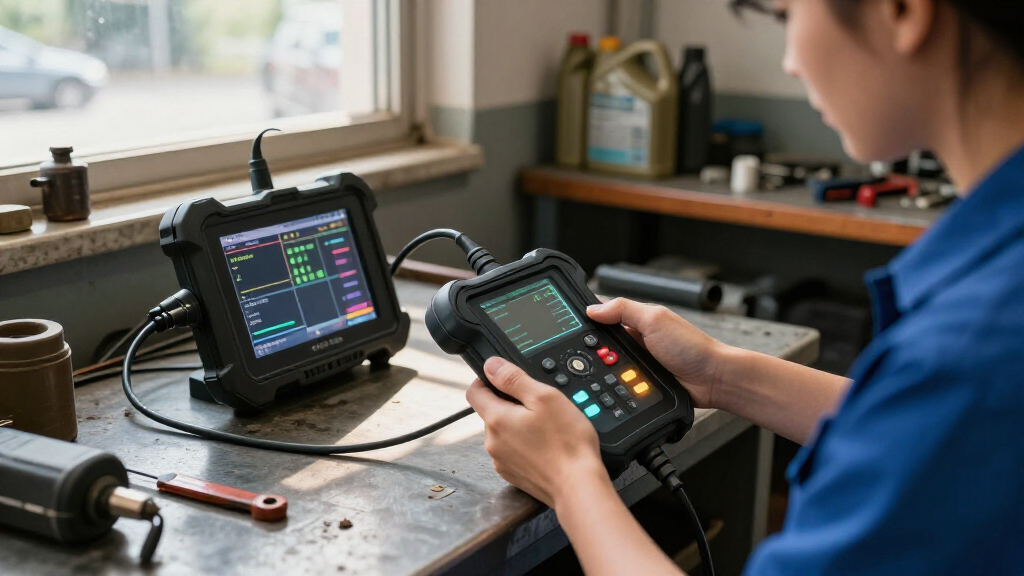
How We Picked
My ranking logic starts with a simple question: what can this tool actually access? Scanners were tiered by diagnostic depth — engine-only code readers, multi-system tools that cover ABS/SRS/transmission, and full-system bidirectional units that can send commands to vehicle modules. Within each tier, I weighed ease of use, screen quality, live-data capability, update policies, and whether features are free or locked behind subscriptions. A brilliant scanner that frustrates you at the plug ranks below a simpler tool that works instantly.
Value was judged relative to tier, not absolute price. A $30 reader that does its one job flawlessly beats a $150 tool that does three jobs poorly, which is why several budget picks rank above pricier competitors. I also penalized hidden costs — subscription fees for data that competitors include free — and rewarded broad vehicle coverage with clear documentation. The final order reflects who each tool serves best, from first-time car owners to seasoned DIYers who need coding and actuation tests.
Factors to Consider When Choosing Car Diagnostic Scanner
Before settling on a specific model, it helps to understand how the scanner market is structured and where buyers most often go wrong. These are the factors that actually change what you can diagnose, in order of importance.Engine-Only vs. Multi-System Coverage
The single biggest distinction in this category is whether a scanner reads only the OBD2 powertrain data stream or communicates with individual vehicle modules. A basic code reader will tell you why the check-engine light is on, but it cannot clear an airbag warning, diagnose a locked ABS pump, or inspect transmission solenoids — those faults live on separate computers that require system-level access. Many buyers discover this limitation only after an airbag or ABS light appears and their new scanner reports “no codes found.” Multi-system tools typically cost two to four times more than engine-only readers, but that premium buys access to the majority of warning lights on your dash. If you own an older vehicle you plan to keep for years, the extra coverage usually pays for itself the first time it saves a dealership visit.
Do You Actually Need Bidirectional Control?
Bidirectional capability lets a scanner send commands to the car — cycling fuel injectors, running an ABS bleed procedure, or commanding a radiator fan to spin. It’s the feature that turns diagnosis into testing: instead of guessing whether a component is faulty, you activate it and watch. This capability is genuinely useful for hands-on repair work, but it’s also the most oversold spec in the market, and casual owners routinely overpay for it. If you don’t replace your own sensors, bleed your own brakes, or troubleshoot electrical faults, a bidirectional tool will sit mostly unused. Be honest about your repair habits before spending $300 to $700 on this tier — the money may be better spent elsewhere.
Handheld vs. Phone-Based Scanners
Dedicated handhelds work instantly with no pairing, no app updates, and no phone battery drain, which matters in a cold garage or driveway. Bluetooth dongles paired with an app are cheaper, more portable, and often present data more clearly on a large phone screen, but they introduce failure points: dropped connections, app bugs, and operating-system updates that break compatibility. The more serious trap is subscription creep — several phone-based ecosystems gate advanced functions, code definitions, or repair reports behind monthly fees that quietly exceed the hardware cost over a couple of years. Always check what’s free forever versus what requires payment before buying a Bluetooth scanner, and compare that total cost against a standalone unit.
Vehicle Compatibility and Protocol Support
Every scanner sold today claims to work on “most 1996 and newer vehicles,” and for basic OBD2 functions that’s broadly true — the port and protocol are standardized. Where claims diverge is enhanced and system-level coverage: ABS, SRS, and transmission access often depends on manufacturer-specific software that varies by brand, model year, and region. Diesel trucks, hybrids, and European imports are frequent compatibility gaps at budget price points. Check the manufacturer’s published coverage list for your exact make and model before purchasing, not just the marketing claims on the box. A mid-priced scanner with confirmed coverage for your specific car beats a more expensive tool with vague promises.
Live Data, Freeze Frame, and Battery Testing
Live data streaming — watching sensor values change in real time — is what separates genuinely useful diagnostic work from simple code reading. A misfire code tells you a symptom; watching fuel trims and oxygen sensor voltages tells you the cause. Graphing makes trends visible, and freeze-frame data captures sensor conditions at the exact moment a fault set, which is invaluable for intermittent problems. Battery and charging-system testing, included on a handful of models here, addresses the other half of no-start complaints that code reading can’t touch. If you diagnose rather than just clear lights, prioritize tools with smooth graphing and fast data refresh rates.
Updates, Warranty, and Long-Term Cost of Ownership
Vehicle software changes every model year, so a scanner without updates becomes obsolete the moment a new protocol or module arrives. Some brands include lifetime updates at the purchase price; others charge annual renewal fees after the first year, which can double the real cost of ownership over five years. Check the update policy before buying, especially for system-level tools where coverage breadth is the whole point. Warranty length and the availability of actual customer support also matter more than buyers expect — a frozen scanner mid-diagnosis with no support channel is a dead tool. Budget brands often skip support entirely, which is acceptable for a $30 reader but a real risk on a $500 bidirectional unit.
Frequently Asked Questions
Will a cheap OBD2 scanner damage my car?
No — a scanner passively reading data cannot harm your vehicle’s electronics, because it’s simply listening to the same data stream your car already broadcasts. The only real risks come from actions you take after reading the codes, such as clearing codes right before an emissions test (which resets readiness monitors and causes an automatic rejection) or using bidirectional commands you don’t fully understand on advanced tools. Basic engine-only readers have no ability to change anything in the car beyond clearing stored codes. If you stick to reading codes, researching the fault, and fixing the underlying problem before clearing, a cheap scanner is completely safe. The bigger risk with budget tools is wasted money, not damaged electronics — if it can’t access the system where your fault lives, it simply won’t help you.
Can a scanner tell me exactly which part to replace?
Not by itself, and this is the most common misconception in the category. A diagnostic trouble code points to the circuit or system where a fault was detected — for example, a P0420 catalyst efficiency code could mean a bad catalytic converter, failing oxygen sensors, an exhaust leak, or even just old spark plugs causing incomplete combustion. Professional diagnosis involves reading the code, then using live data and testing to isolate the actual cause. Scanners with graphing and bidirectional testing make this process much easier, which is why serious DIYers eventually upgrade from code readers. If you want repair suggestions, some phone-based ecosystems and Innova’s RepairSolutions2 app pair codes with verified fix reports, but treat those as starting points, not verdicts. Buying a $300 part based solely on a $30 scanner’s code display is how people waste money.
Do I need bidirectional control as a DIYer?
Only if you do your own component-level diagnostics and repairs. Bidirectional tools let you command parts to activate — cycling injectors, running an ABS motor, or testing a cooling fan — which turns guesswork into confirmation, and it’s genuinely necessary for procedures like electronic brake bleeding on many modern vehicles. But if your workflow is “light comes on, read the code, look it up, replace the obvious part,” a bidirectional scanner adds cost and complexity you won’t use. A reasonable middle path exists: multi-system tools like the FOXWELL NT604 Elite cover ABS, SRS, and transmission diagnostics at roughly a third the price of bidirectional units. Upgrade to bidirectional only when you hit a diagnostic wall that passive tools can’t solve — you’ll know when that happens.
Are Bluetooth app-based scanners as good as handheld units?
For basic code reading and live data, phone-based setups are often better — the large screen makes graphs easier to read, and the hardware costs less than most handhelds. The tradeoffs are reliability and long-term cost. Bluetooth connections drop, apps get bugs or get abandoned, and iOS compatibility is inconsistent across cheap dongles. More importantly, several phone ecosystems lock code definitions, repair reports, or advanced functions behind monthly subscriptions that quietly cost more than a standalone scanner over two or three years. Handhelds like the ANCEL AD310 or FOXWELL NT301 work instantly with zero pairing and zero recurring fees, which is why they dominate the entry tier. As a rule, choose Bluetooth if you value portability and screen size and have verified the free tier covers your needs; choose handheld if you want a tool that just works years from now.
Why can’t my scanner read my ABS or airbag light?
Because ABS, SRS, transmission, and body-module faults are stored on separate computers that require manufacturer-specific communication beyond the standardized OBD2 protocol. All OBD2 scanners sold in the US must access emissions-related powertrain data, but nothing requires them to talk to other modules — that coverage depends on software the manufacturer developed for specific makes and models. This is the most common surprise for buyers who assumed “OBD2 scanner” meant full-vehicle access. If your ABS or airbag light is the reason you’re shopping, you need a multi-system tool and should verify your exact make, model, and year appears on the brand’s published coverage list before ordering. Budget-friendly multi-system options exist, but European vehicles and diesel trucks often require higher-tier tools to get full module access.
Conclusion
The right pick depends entirely on how deep your diagnostics go. For best overall, the FOXWELL NT604 Elite balances price and capability better than anything else here, covering engine, ABS, SRS, and transmission for buyers who want one tool that handles most dashboard warnings. The ANCEL AD310 takes best value — it does the core read-and-clear job as well as scanners twice its price. For best premium, the XTOOL D8BT delivers bidirectional control, ECU coding, and wireless convenience that rival professional tools at a DIY price, with the THINKCAR THINKSCAN 689 and Innova 5610 as strong alternatives depending on your vehicle coverage. Beginners should start with the Autel MS309 or MOTOPOWER MP69033 — simple, cheap, and nearly impossible to misuse. For specific needs: the FIXD or generic Bluetooth 5.4 adapter suits phone-first users who want live data on a big screen, the Innova 5210 fits battery-and-engine troubleshooters, and the V318 or BluSon YM319 work well as glovebox spares with voltage testing. Match the tool to your repair habits, not the spec sheet, and you won’t overspend.
Fall Picks
fall essentials
As an affiliate, we earn on qualifying purchases.