
TL;DR
A 7-seat electric vehicle has reportedly achieved a range of 582 miles on a single charge, setting a new benchmark. However, there are caveats and uncertainties about the conditions and practicality of this claim.
A 7-seat electric vehicle has reportedly achieved a range of 582 miles on a single charge, according to unconfirmed reports. This milestone, if verified, could represent a significant breakthrough in EV range capabilities, especially for larger family-oriented models. However, details about the testing conditions and the vehicle’s real-world applicability remain unclear, raising questions about whether this feat is practical or an isolated demonstration.
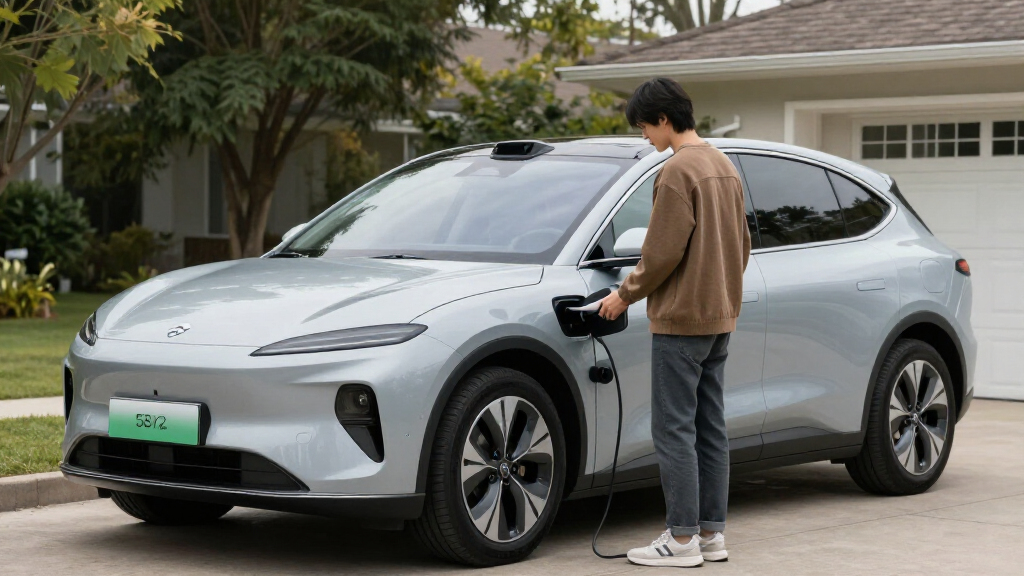
The vehicle in question is a large, seven-passenger electric SUV or minivan that allegedly completed a range test covering 582 miles without needing a recharge. The claim has circulated primarily through social media and some automotive enthusiast channels, but no official manufacturer or independent verification has confirmed the figure. Experts note that achieving such a range on a full charge would require highly optimized conditions, including a controlled environment, low speeds, and minimal use of auxiliary systems.
Sources suggest that the test may have involved a specific driving cycle designed to maximize efficiency, possibly similar to laboratory testing rather than real-world driving. The vehicle’s battery size, energy consumption rate, and testing parameters have not been publicly disclosed. Industry analysts warn that without detailed data, it is difficult to assess whether this range is achievable in everyday conditions or if it represents an outlier.
Additionally, some reports indicate that the vehicle’s manufacturer might have used a prototype or a pre-production model, which could differ significantly from consumer-ready versions. The ‘catch’ appears to be related to the test conditions, which may not reflect typical driving scenarios, or to the vehicle’s configuration, which might be optimized solely for range testing rather than everyday usability.
Implications for EV Range and Large Family Vehicles
If verified, this achievement could signal a major advancement in electric vehicle technology, particularly for larger models that traditionally struggle with range limitations. A 582-mile range on a single charge would reduce range anxiety significantly, potentially making 7-seat EVs more appealing to consumers concerned about long-distance travel. However, the lack of detailed verification means that consumers and industry watchers should approach this claim cautiously. The development could also influence future battery research and vehicle design, pushing automakers to pursue higher efficiency and larger capacity batteries.
As an affiliate, we earn on qualifying purchases.
Current EV Range Standards and Testing Conditions
Most modern electric SUVs and minivans currently offer ranges between 250 and 370 miles on a full charge, according to manufacturer estimates and independent testing. Achieving over 500 miles would represent a substantial leap, comparable to or exceeding the longest-range EVs available today. Historically, such claims have often been based on laboratory tests under ideal conditions, which may not translate directly to real-world driving. The industry has seen previous instances where range claims were inflated or only achievable under specific, controlled circumstances.
The recent interest in ultra-long-range EVs has been driven by advancements in battery technology, aerodynamics, and vehicle efficiency. However, most automakers remain cautious about claiming ranges beyond 400-500 miles without extensive real-world testing. The current buzz around this 582-mile figure appears to be based on early reports, with no official validation yet provided by manufacturers or independent testers.
Unverified Nature of the Range Claim and Testing Conditions
It is not yet clear whether the 582-mile range has been independently verified or if it was achieved under real-world driving conditions. The details of the test environment, vehicle configuration, and whether the vehicle was a production model or a prototype remain undisclosed. Experts caution that such high range figures are often achieved under laboratory conditions that may not reflect everyday use, and the absence of detailed data fuels skepticism about the claim’s authenticity and practical relevance.
Need for Independent Verification and Real-World Testing
Automakers or testing agencies are expected to release more detailed data or conduct independent tests to verify the claim. Consumers and industry watchers will be looking for real-world range tests that confirm whether such distances can be reliably achieved outside controlled environments. Meanwhile, automakers may accelerate efforts to improve battery efficiency and range to meet or surpass this benchmark, but until verified, the claim remains a promising but unconfirmed milestone.
Key Questions
Is the 582-mile range achievable in everyday driving?
It is currently unconfirmed whether the range was achieved in real-world conditions or under laboratory testing. Most experts advise caution until independent verification is available.
What vehicle was used for the range test?
The specific vehicle model and configuration have not been publicly disclosed, and it is unclear whether it was a prototype or a production-ready model.
How does this range compare to current EVs?
Most current seven-seat EVs offer ranges between 250 and 370 miles, making 582 miles a significant increase if verified, but such claims are often based on ideal testing conditions.
What are the implications for EV technology if this claim is verified?
Verification could lead to advancements in battery technology and increased consumer confidence in long-range EVs, especially larger models designed for families.
When will we know more about the test results?
Further details and independent testing results are expected in the coming weeks, but no official confirmation has been announced yet.
Source: rss