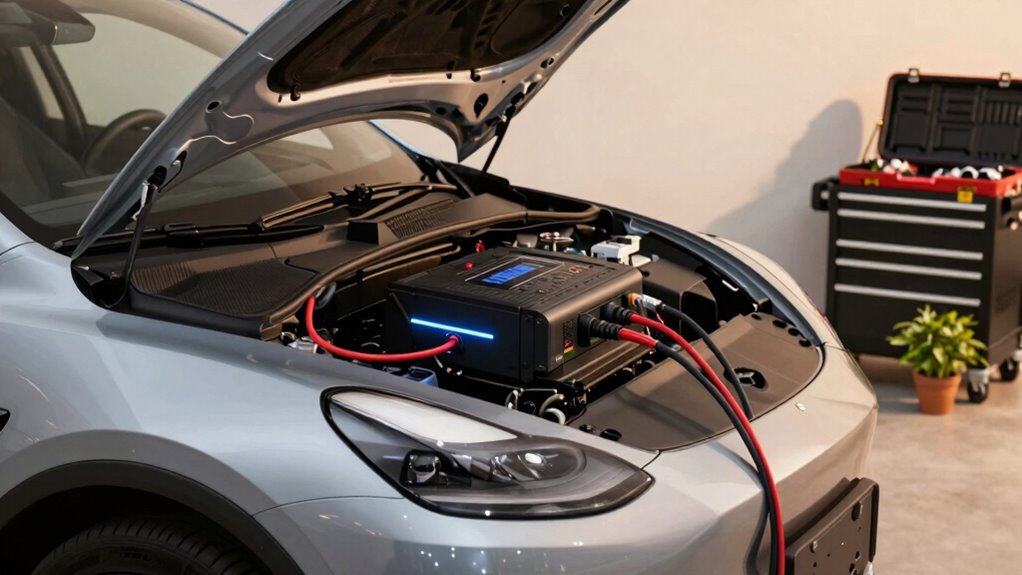

If your car sits for days, using a battery maintainer or charger helps prevent your battery from losing charge due to natural self-discharge and parasitic drain. Maintainers deliver a gentle, continuous charge that keeps the battery healthy without overcharging, ensuring reliable starts later. Chargers are used for quick recharging if needed. Choosing the right device based on your battery type and following proper care practices can greatly extend your battery’s life—learn more to keep your vehicle ready.
Key Takeaways
- They provide a controlled, steady charge to prevent battery self-discharge during inactivity.
- Maintainers compensate for natural battery self-discharge, keeping the charge level stable over days.
- Proper devices prevent overcharging and damage from deep discharges during long periods of inactivity.
- Maintainers extend battery lifespan by reducing the need for deep cycling and recharging.
- They ensure the vehicle starts reliably after sitting for days by keeping the battery healthy.
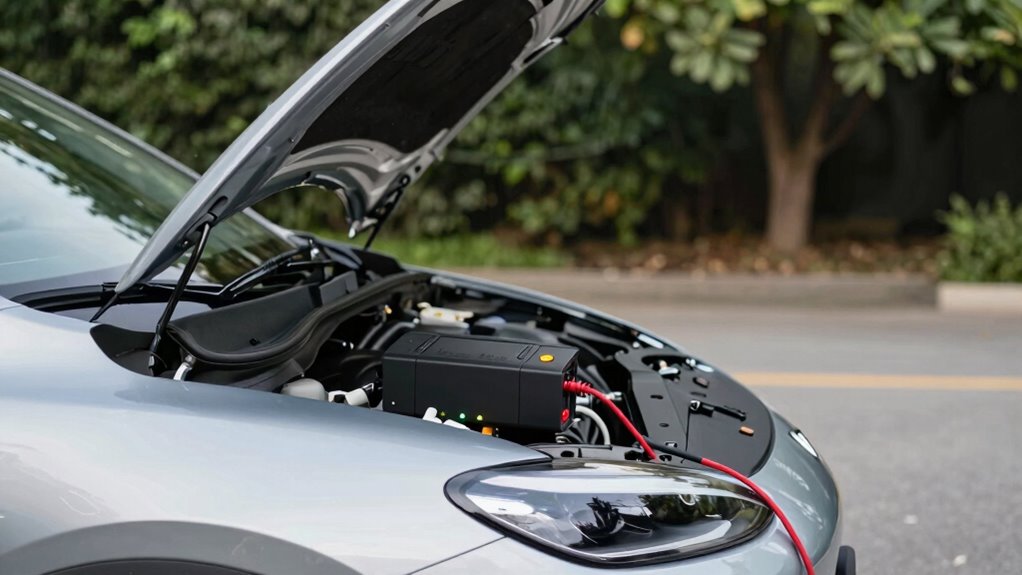
If your car sits idle for days, a dead battery can quickly become a frustrating problem. When a vehicle isn’t used regularly, the battery’s charge gradually diminishes because of parasitic drain and natural self-discharge. That’s where battery chargers and maintainers come into play. They’re designed to keep your battery healthy, ensuring your car starts reliably after periods of inactivity. These devices work by providing a steady, controlled flow of electricity, preventing the battery from losing its charge completely.
Understanding how batteries work helps clarify why these tools are so effective. Batteries operate through chemical reactions — specifically, the flow of ions within the battery’s electrolyte. Over time, especially when the car isn’t in use, these chemical processes slow down or reverse, leading to a loss of stored energy. Battery chemistry can be delicate; repeated deep discharges and recharges can damage the internal plates, reducing overall capacity and lifespan. That’s why maintaining a proper charge with a quality charger or maintainer is essential. It minimizes the number of full discharge and recharge cycles your battery undergoes, extending its lifespan and maintaining optimal performance.
Proper charging preserves battery chemistry, extends lifespan, and ensures reliable starts after periods of inactivity.
Battery chargers are typically used for initial recharging when your battery’s voltage drops below a certain level. They often deliver a high current to quickly bring the battery back to a full charge. However, this process can be harsh if repeated frequently, as it puts stress on the battery’s chemistry. Conversely, battery maintainers are designed for long-term care. They provide a gentle, low-current charge that compensates for the natural self-discharge that occurs when your vehicle sits idle. This slow, continuous trickle helps keep the battery at an ideal state of charge without overcharging, which can cause damage or reduce its lifespan.
The key to effective use of these devices lies in understanding charging cycles. A cycle involves discharging and recharging a battery, and frequent deep cycles can wear out your battery faster. Maintainters minimize these cycles by keeping your battery topped off, avoiding the stress and strain of deep discharges. They adapt to the battery’s needs, automatically switching between modes and preventing overcharging. This smart regulation preserves the battery’s chemistry and prolongs its useful life, ensuring your car is ready to go when you need it. Additionally, understanding how battery chemistry functions can help you choose the right device for your needs. Recognizing the importance of proper maintenance practices also plays a vital role in extending your battery’s overall lifespan. Proper maintenance practices reduce deep discharges and help maintain the battery’s health over time. It is also beneficial to be aware of body chemistry interactions with different materials used in batteries and chargers, which can influence the longevity of your battery. Furthermore, following manufacturer guidelines ensures you select the appropriate charger or maintainer for your specific battery type, promoting longevity and reliability.

NOCO GENIUS1: 1A 6V/12V Smart Battery Charger – Automatic Maintainer, Trickle Charger & Desulfator with Overcharge Protection & Temperature Compensation – for Lead-Acid & Lithium Batteries
- Compact and Powerful: 35% smaller, 35% more power
- All-in-One Charging: Charger, maintainer, trickle, desulfator
- Versatile Battery Compatibility: Supports 6V/12V lead-acid and lithium batteries
As an affiliate, we earn on qualifying purchases.
As an affiliate, we earn on qualifying purchases.
Frequently Asked Questions
Can Using a Charger Damage My Car’s Battery?
Using a charger correctly won’t damage your car’s battery. If you pay attention to battery capacity and avoid overcharging, you guarantee safe charging safety. Modern chargers automatically shut off or adjust to prevent over-voltage, protecting your battery. Always follow the manufacturer’s instructions to keep your battery healthy. Proper use maintains your battery’s lifespan and keeps your car ready to go, even after sitting for days.
How Often Should I Charge a Parked Car’s Battery?
Ever wonder how often you should charge your parked car’s battery? Typically, you should charge it every 2 to 4 weeks to maintain best battery lifespan. Regular charging prevents the battery from discharging completely, which can shorten its life. If you live in cold climates or rarely drive, more frequent charging might be necessary. Keeping a consistent charging frequency ensures your car starts easily and keeps the battery healthy over time.
Are There Risks of Overcharging With Maintainers?
Yes, there are overcharging risks with maintainers if you don’t use a quality, automatic model. Overcharging can damage your battery and reduce its longevity. To avoid this, choose a maintainer with a good automatic shut-off feature that stops charging once the battery reaches full capacity. Proper use prevents overcharging risks, helping extend your battery’s life and ensuring reliable starts whenever you need them.
Do Chargers Work on All Types of Car Batteries?
Ever wonder if your charger can tame every battery? Yes, most chargers work on various types, but battery compatibility is key. You must choose a charger suited for your battery’s chemistry—lead-acid, AGM, or gel—to guarantee ideal charging efficiency. Using the right charger prevents damage and ensures your car starts reliably after sitting. Don’t risk it—match your charger to your battery for safe, effective power.
Can a Maintainer Prevent Battery Sulfation?
Yes, a maintainer can help prevent battery sulfation by using advanced charging technology that adapts to your battery’s chemistry. It continuously supplies a low, steady charge, reducing the risk of sulfation buildup on lead-acid batteries. By maintaining proper voltage levels, it keeps the battery healthy, extending its lifespan. This process guarantees your car’s battery stays in good condition, especially during long periods of inactivity.
Conclusion
Using a battery charger or maintainer isn’t just a convenience—it’s a smart way to prevent your car’s battery from dying after days of sitting. Some say these devices can even extend your battery’s lifespan, saving you money in the long run. While it might seem like a simple trick, maintaining your battery properly could mean the difference between a quick start and a costly repair. Keep your car ready—your peace of mind depends on it.