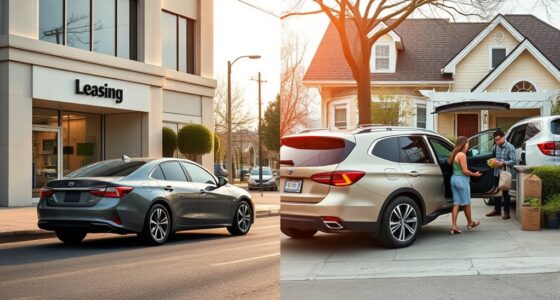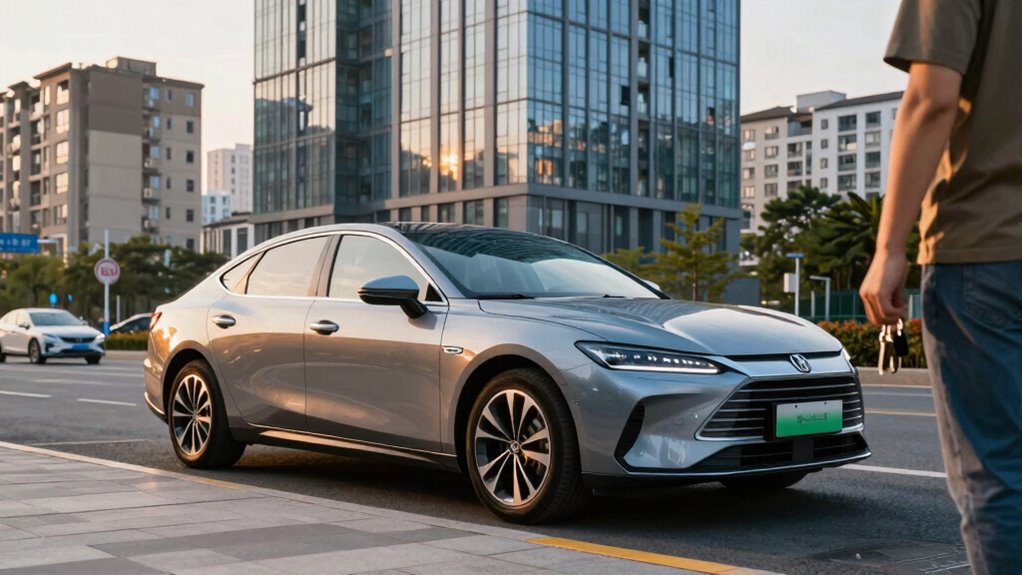

If you’re planning to move to a city in a few years, leasing might be your best choice. It requires less upfront money, offers shorter commitments, and you can drive a new car every few years, often with warranty coverage. Buying could cost more long-term, especially with maintenance, if you only stay briefly. To decide, consider your financial stability and how long you plan to stay—more details can help shape your decision.
Key Takeaways
- Leasing offers lower upfront costs and flexibility for short-term city stays.
- Buying provides ownership benefits if planning to stay long-term or resell later.
- Leasing reduces maintenance worries with warranty coverage, ideal for brief urban residence.
- Buying may be more economical if you intend to keep the vehicle beyond a few years.
- Consider your future mobility plans and financial stability to choose the best option.
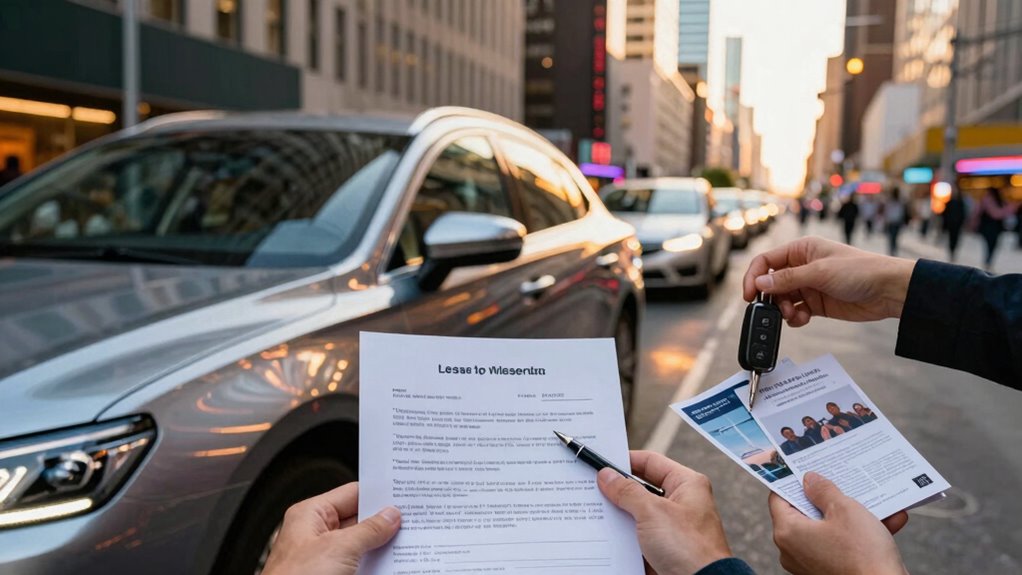
If you’re planning to move to a city in a few years, deciding whether to lease or buy a car can considerably impact your finances and flexibility. Leasing often feels like a tempting option because it usually requires a lower upfront payment and offers lower monthly payments. Plus, leasing keeps you in a new car every few years, which means you’re less likely to worry about costly repairs or high car maintenance bills. Since leased vehicles are often under warranty, you typically won’t have to pay for major repairs, saving you money and hassle. However, leasing comes with mileage restrictions, and if you go over the limit, you’ll face hefty fees. This can be a problem if your plans are uncertain or if you anticipate a lot of driving in the city.
On the other hand, buying a car gives you more freedom, especially if you’re unsure about your long-term plans. When you purchase, you own the vehicle outright after the loan is paid off, which means no mileage restrictions. This is advantageous if you decide to keep the car longer, as you won’t be constantly making payments. Buying can also be more economical in the long run, especially if you take good care of your vehicle and keep it for many years. But remember, owning a car means you’re responsible for all car maintenance, which can add up quickly, particularly as the vehicle ages. In an urban environment, where stop-and-go traffic is common, regular maintenance becomes even more important to keep your car running smoothly and avoid costly repairs. Additionally, long-term ownership can provide more financial stability for drivers who prefer predictable costs. Proper maintenance, including managing softener brine impact and ensuring appropriate filter sizing and flow, can extend your vehicle’s lifespan and reduce unexpected expenses.
Insurance costs are another factor to deliberate. Generally, leased cars tend to have higher insurance premiums because leasing companies often require comprehensive coverage to protect their investment. Buying a car might give you the flexibility to shop around for more affordable insurance, especially if you’re willing to accept some risk. In a city, insurance costs can be a significant part of your budget, so it’s wise to compare your options carefully. Ultimately, if you’re only planning to be in the city for a few years, leasing might seem more appealing because it minimizes long-term commitments and maintenance concerns. But if you prefer ownership and want the flexibility to keep the car longer or sell it later, buying could be the better choice. Weigh the costs, risks, and your mobility plans carefully before making your decision.
As an affiliate, we earn on qualifying purchases.
Frequently Asked Questions
How Does Insurance Differ Between Leasing and Buying a Car?
When leasing, insurance premiums are often higher because lenders require extensive coverage, including gap insurance, to protect their investment. Buying typically offers more flexibility, potentially lowering premiums since you can choose your coverage levels. Coverage differences may also influence costs; leases often demand full coverage, while buying allows for more tailored policies. So, your insurance costs and coverage options vary depending on whether you lease or buy a car.
Are There Specific Lease Terms Ideal for Short-Term City Stays?
Yes, opting for short-term contracts offers the most lease flexibility for your short city stay. Look for leases that last 6 to 12 months, so you aren’t tied down long-term. These flexible lease terms let you adapt as your plans change without hefty penalties. By choosing short-term contracts, you can enjoy the convenience of leasing while accommodating your temporary stay, making your move smoother and more cost-effective.
What Are the Hidden Costs Associated With Leasing or Buying in a City?
When leasing or buying, watch out for hidden costs like maintenance costs that can add up unexpectedly, especially if your vehicle requires frequent repairs. Buying also affects resale value, which can be uncertain in a city environment with fluctuating demand. Leasing might include some maintenance, but you could face extra charges for excess mileage or wear and tear. Consider these factors carefully to avoid surprises down the road.
Can I Switch From Leasing to Buying Before My Lease Ends?
Yes, you can switch from leasing to buying before your lease ends, but be aware of lease penalties that might apply for early termination. Some dealerships or leasing companies offer purchase incentives, encouraging you to buy if you decide to switch early. You’ll need to negotiate and review your lease agreement carefully, as penalties and incentives vary. Planning ahead helps you minimize costs and make a smooth shift from leasing to ownership.
How Does City Parking Availability Impact Lease or Purchase Decisions?
You might think city parking is a minor detail, but it actually impacts your decision more than you’d expect. With strict parking regulations and limited urban infrastructure, leasing might seem tempting to avoid long-term commitments. However, if you buy, you gain flexibility to navigate parking challenges or invest in a spot. Either way, understanding city parking availability helps you choose whether to lease or buy wisely, saving headaches later.
Conclusion
Thinking about moving soon? Leasing might be your best bet, especially since 60% of drivers who lease report less financial stress during relocations. This flexibility lets you avoid long-term commitments and potential resale hassles. If you plan to stay less than three years, leasing can save you money and headaches. Remember, your decision should align with your future plans—leasing offers flexibility, while buying builds equity if you’re set on settling down.