When deciding between leasing and buying, your monthly budget is affected by payments, ownership costs, and flexibility. Leasing usually offers lower monthly payments with fewer long-term expenses, making it easier to stay within your budget. Buying means higher initial payments but can save you money over time as you build equity and avoid lease-end restrictions. To truly understand which option suits your financial situation, continue exploring more detailed pros and cons.
Key Takeaways
- Leasing typically offers lower monthly payments due to paying only for depreciation, easing monthly budget constraints.
- Buying involves higher initial payments but can be more cost-effective long-term as payments end after loan payoff.
- Leasing includes warranty coverage, reducing maintenance costs, while buying requires paying for repairs and upkeep.
- Leasing limits mileage and customization, which can prevent extra fees and unexpected costs.
- Buying grants ownership, allowing for unlimited mileage and modifications, but entails higher monthly payments.
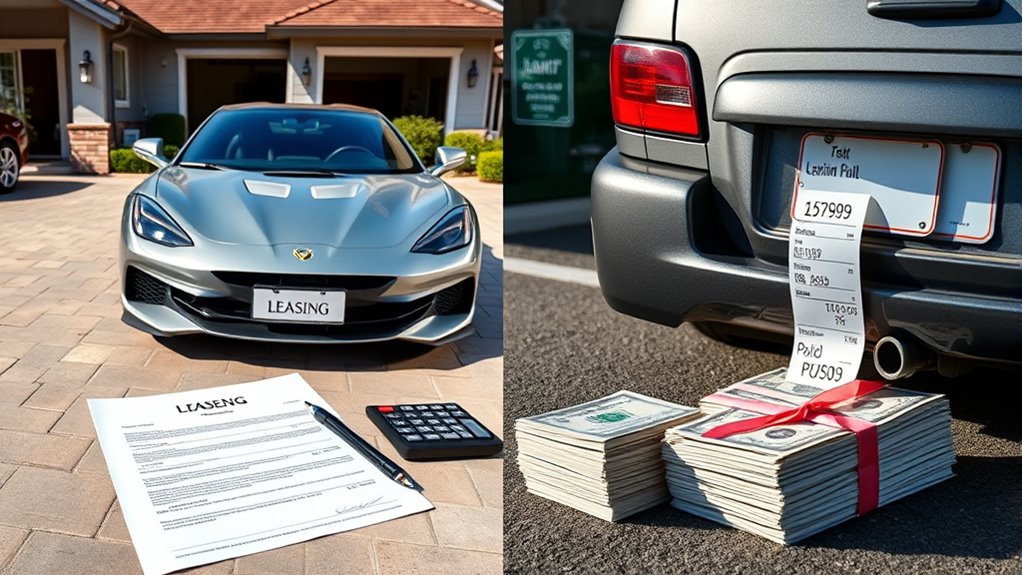
Deciding whether to lease or buy a vehicle is a common dilemma that can substantially impact your finances and lifestyle. When you’re weighing these options, it’s essential to consider how each choice affects your monthly budget and long-term financial health. Leasing typically involves lower monthly payments because you’re essentially paying for the vehicle’s depreciation during the lease term, not the entire purchase price. On the other hand, buying means you’re paying off the full value of the car over time, which can lead to higher monthly payments initially but eventually results in outright ownership.
One key factor to consider is resale value. When you buy a car, you have the potential to recoup some of your investment if you decide to sell or trade it in later. The vehicle’s resale value influences how much of your initial investment you can recover, which can make buying more cost-effective in the long run. Conversely, with leasing, resale value isn’t your concern; the leasing company bears that risk. You simply return the vehicle at the end of the lease and move on, which can be advantageous if you prefer to drive a new car every few years without worrying about depreciation.
Buying a car offers potential resale value; leasing shifts that risk to the dealer.
Ownership responsibilities also play a significant role in your decision. When you buy a vehicle, you’re responsible for maintenance, repairs, and keeping the car in good condition. These costs can add up, especially as the vehicle ages. Leasing typically comes with fewer ownership responsibilities because leased cars are usually under warranty, and your contract may restrict modifications or excessive wear and tear. This can make leasing more predictable and less burdensome for your monthly budget, especially if you prefer a hassle-free driving experience.
Another consideration is the impact of AI in retail success, which has shown how data-driven decisions can influence market trends and consumer behavior. Similarly, understanding the long-term costs and benefits of leasing versus buying can significantly influence your financial stability and satisfaction with your vehicle choice.
However, buying offers the freedom of unlimited mileage and customization, which can be valuable if you plan to keep the car for many years. Leasing often comes with mileage limits, and exceeding them can lead to hefty fees, impacting your monthly costs. Also, if you’re someone who enjoys having the latest technology and safety features, leasing can allow you to switch cars every few years, ensuring you’re always driving a newer model without the worry of resale value or long-term ownership responsibilities.
Ultimately, your choice depends on your financial situation and lifestyle preferences. Leasing might be better if you want lower monthly payments and fewer responsibilities, while buying could be more advantageous if you’re looking for long-term value and ownership control. Carefully weighing resale value and ownership responsibilities will help you make a decision that aligns with your budget and driving habits.

The Ultimate Car Buying & Leasing Guide: How to Save Thousands on New, Used, or Leased Cars in Today’s Market—Including EVs, Tariffs, and Dealership Secrets
As an affiliate, we earn on qualifying purchases.
As an affiliate, we earn on qualifying purchases.
Frequently Asked Questions
How Does Lease or Buy Impact My Credit Score?
Leasing or buying impacts your credit score by influencing credit impact and scoring factors. When you lease, your payment history shows on your report, helping or hurting your score based on timely payments. Buying adds a loan account, affecting your debt-to-income ratio and credit mix. Consistently making payments boosts your score, while missed or late payments harm it. Both options influence your credit profile, so timely payments are key.
Are There Tax Advantages to Leasing or Buying?
You can enjoy tax benefits whether you lease or buy. Leasing often allows you to deduct monthly lease payments as business expenses, while buying offers depreciation deductions over time. These depreciation deductions can considerably reduce your taxable income. If you’re considering which option benefits your finances most, weigh these tax advantages carefully, as they can provide substantial savings and influence your decision to lease or purchase.
What Are the Long-Term Financial Implications of Leasing Vs Buying?
When you lease, you avoid paying loan interest, but your payments don’t build equity, and residual value impacts your costs if you decide to buy later. Buying means paying loan interest over time, but you gain ownership and potential asset value. Long-term, leasing may cost more if you keep renewing, while buying builds equity and benefits from residual value, making it more cost-effective if you plan to keep the asset for years.
How Do Maintenance Costs Differ Between Leasing and Buying?
Imagine your car as a garden—you’re responsible for its upkeep. When you buy, you handle maintenance costs, including warranty costs and insurance premiums, which can add up over time. Leasing often covers these costs through the lease agreement, reducing your financial surprise. So, if you prefer predictable expenses, leasing might be like having a gardener handle the weeds, while buying means you’re the one pulling them.
Can I Switch From Leasing to Buying Later?
Yes, you can switch from leasing to buying later, but it often involves a lease extension or negotiating an ownership transfer with the lessor. You’ll need to review your lease agreement and discuss your options with the dealer. Be prepared for possible fees or payments to cover the changeover. This process lets you move toward ownership while respecting your current lease terms.

Best Buyer Book: The How To Of Negotiating Your Next New or Used Car or Truck: Negotiate your best lease, finance or cash deal in less than 30 minutes … by knowing how a dealership works.
As an affiliate, we earn on qualifying purchases.
As an affiliate, we earn on qualifying purchases.
Conclusion
Choosing between leasing and buying is like steering a river—you need to know whether you want to steer smoothly with predictable currents or take the adventurous rapids. Leasing offers a gentle float with lower monthly costs, perfect for short-term goals. Buying is like paddling upstream—you invest more upfront but gain full control. Weigh your financial flow carefully, and you’ll find the path that keeps your monthly budget sailing smoothly without surprises.

Used Car Buying Guide: Guide to Inspecting and Buying a Used Car (Haynes Techbook)
Step-by-step procedures written from a complete teardown and rebuild, giving you the confidence to tackle repairs at any…
As an affiliate, we earn on qualifying purchases.
As an affiliate, we earn on qualifying purchases.

TLGREEN 95 Piece Tool Set, Tool Kit, Mechanics Tool Set, Portable Toolbox with Adjustable Wrench Pliers Socket Bits, with Plastic Toolbox, for House Apartment Garage (Red)
The tools are heat-treated with carbon steel and placed in a suitable box,compact carrying case for storage and…
As an affiliate, we earn on qualifying purchases.
As an affiliate, we earn on qualifying purchases.