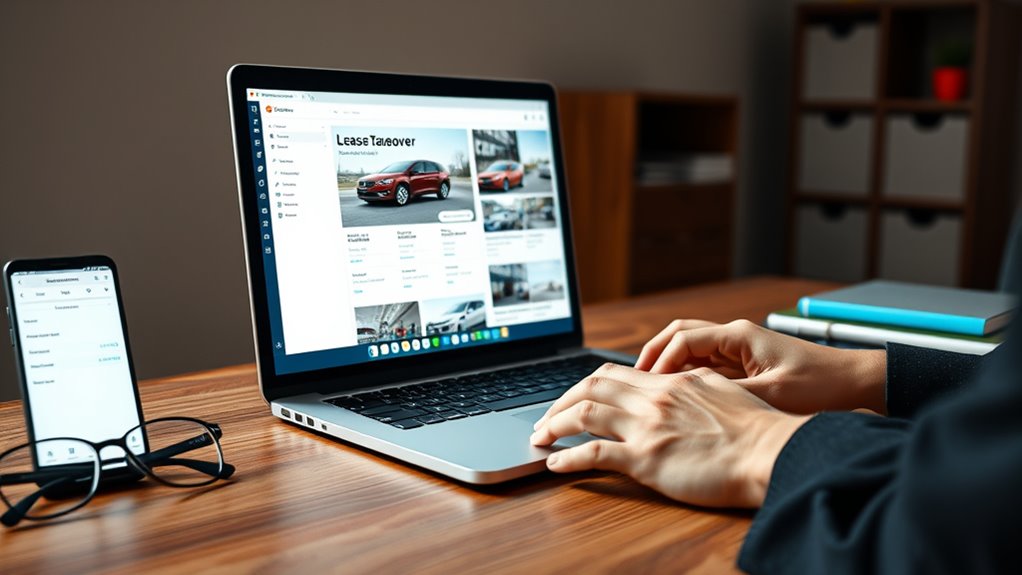

When using Swapalease or LeaseTrader, start by carefully reviewing lease listings, paying close attention to remaining term, mileage limits, and condition details. Reach out directly to the leaseholder to ask questions about the vehicle’s history and any potential issues. Follow the platform’s steps for transferring the lease, providing all required documents and understanding associated fees. Staying organized and thorough will help you navigate the process smoothly—continue to discover more tips for a successful lease takeover.
Key Takeaways
- Review lease details thoroughly, including remaining term, mileage limits, and costs, before initiating a transfer.
- Communicate directly with the current leaseholder to verify vehicle condition and history.
- Use platform tools and guides to assess lease fit and navigate the transfer process smoothly.
- Confirm transfer procedures with the leasing company and ensure all paperwork is correctly handled.
- Keep organized records of documents and stay informed about fees and legal requirements for a successful transfer.

If you’re looking to take over a lease, websites like Swapalease and LeaseTrader can make the process much easier. These platforms connect individuals wanting to exit their vehicle leasing agreements with those interested in starting a lease. When you’re considering a lease transfer, these sites simplify the often complex process of finding a suitable vehicle, verifying its condition, and handling the paperwork. They offer a streamlined way to browse available lease options, review details such as monthly payments, remaining lease term, and vehicle condition, all in one place. This transparency helps you make informed decisions quickly, saving you time and effort compared to traditional methods.
Using lease takeover websites effectively means understanding what you’re getting into. Vehicle leasing agreements often come with specific terms, fees, and conditions that need careful review before proceeding. When browsing listings, pay close attention to the remaining lease duration, mileage limits, and any potential fees associated with early termination or transfer. Many lease transfer platforms provide tools or guides to help you evaluate whether a particular lease fits your budget and driving needs. They’re also helpful in understanding the process of transferring the lease legally, ensuring all paperwork is handled correctly to avoid future complications.
Another key tip is to communicate directly with the current leaseholder through the platform. This allows you to ask questions about the vehicle’s history, maintenance, and any issues that might not be immediately apparent in the listing. Clear communication helps prevent surprises after taking over the lease. Once you’re confident in a lease transfer, you’ll typically need to work with the leasing company to complete the transfer process. Platforms like Swapalease and LeaseTrader often facilitate this process, guiding you through the required steps and documentation. Be prepared to provide proof of income, credit checks, and possibly pay a transfer fee. Completing these steps correctly ensures the vehicle’s lease is transferred legally and smoothly. Additionally, understanding the home improvement principles of organization and decluttering can help you keep track of lease documents and related paperwork more efficiently.

BTSKY New Universal A4 Document Bags Portfolio Organizer- Waterproof Travel Gear Organizer Zipper Case/Document File Bag for Ipads, Notebooks, Pens, Document Dark Grey New
- Portable Size: Compact for travel, 9.84"L x 1.18"W x 13.39"H
- Versatile Organizer: Holds laptops, tablets, notebooks, and accessories
- Waterproof Material: Thick, waterproof cloth keeps contents dry
As an affiliate, we earn on qualifying purchases.
As an affiliate, we earn on qualifying purchases.
Frequently Asked Questions
How Do I Verify the Legitimacy of Lease Takeover Listings?
To verify the legitimacy of lease takeover listings, you should start with lease verification by requesting official documentation from the seller. Look for signs of scam prevention, like unusual payment requests or incomplete information. Always communicate directly with the leasing company to confirm the lease transfer details. Avoid deals that seem too good to be true, and use trusted platforms with secure messaging to protect yourself from potential scams.
What Are Common Fees Associated With Swapalease and Leasetrader?
When you use Swapalease or LeaseTrader, you should know that common fees include lease transfer fees and sometimes listing fees. Transfer fees are paid to facilitate the lease transfer process, covering paperwork and administrative costs. Listing fees may apply if you want to promote your lease. Be sure to check each platform’s fee structure beforehand, so you’re aware of any costs involved before committing to a lease transfer.
Can I Transfer a Lease if I Have Bad Credit?
Yes, you can transfer a lease even if you have bad credit, but it might be more challenging. You should explore credit options to improve your chances of lease approval, such as providing a larger security deposit or finding a cosigner. Keep in mind that the lease approval process may take longer, and some lease transfer platforms may have stricter requirements for applicants with poor credit.
How Long Does the Lease Transfer Process Typically Take?
The lease transfer process usually takes between 7 to 21 days, depending on your lease company and the buyer’s approval. During this period, the processing duration involves paperwork, credit checks, and approval steps. You can speed up the lease transfer timeline by providing all required documents promptly and staying in close contact with the leasing company. Patience is key, but most transfers move forward quickly once all steps are completed.
Are There Restrictions on Vehicle Types for Lease Transfers?
Think of lease transfer restrictions as a gatekeeper standing guard. Usually, vehicle restrictions limit transfers to certain makes, models, or years, while lease transfer limits cap the number of transfers allowed per lease. Some websites or leasing companies might have specific rules, so it’s vital to check for vehicle restrictions and lease transfer limits upfront. Being aware of these guarantees you don’t hit unexpected roadblocks along your lease transfer journey.
Conclusion
Finding lease takeover websites like Swapalease or LeaseTrader can be a game-changer, especially since over 85% of users find a suitable lease transfer within just a few weeks. By following these tips, you’ll make smarter decisions and avoid common pitfalls. Remember, staying informed and patient increases your chances of a smooth transfer. With the right approach, you’ll be driving your new lease in no time—so don’t rush, just stay proactive!