The main difference between MSRP and the selling price in a lease is that MSRP is the manufacturer’s suggested retail price, while the actual selling price is what you negotiate and pay, often lower than MSRP. This gap affects your monthly lease payments and total costs. By understanding how trade-in values and incentives influence the final price, you can negotiate better terms. Keep exploring to learn how to leverage this information for smarter leasing.

Get business pricing on garage and car supplies
- Business-only prices and quantity discounts
- Tax-exempt purchasing
- Multiple users, one account, clear invoices
Key Takeaways
- MSRP is the manufacturer’s recommended price; the selling price is usually negotiated lower.
- The difference affects lease payments and total cost, with lower selling prices reducing expenses.
- Trade-in value and incentives can lower the actual selling price below MSRP.
- Dealers often inflate trade-in values and offer incentives to make deals more attractive.
- Negotiating below MSRP helps secure better lease terms and overall savings.
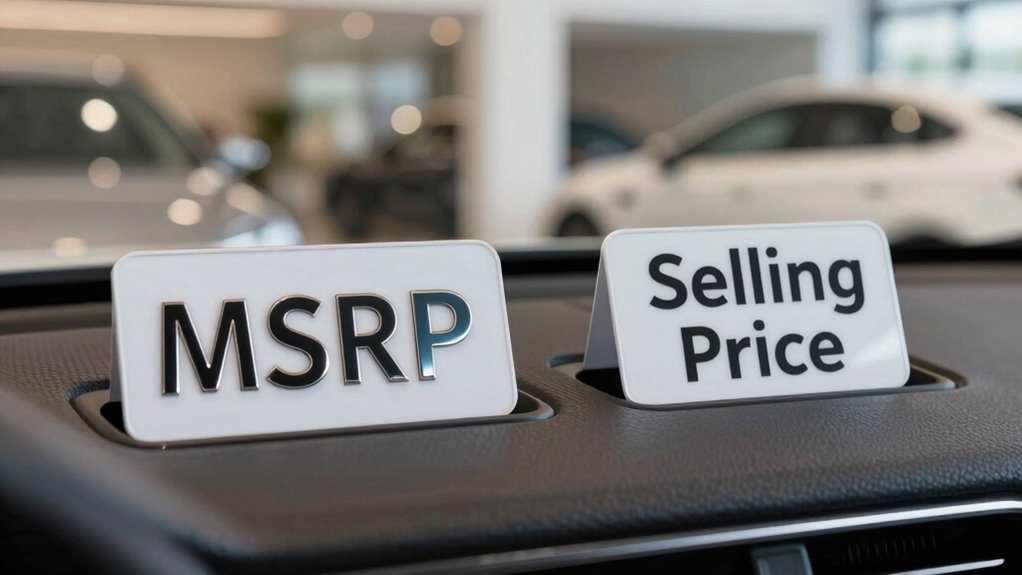
Ever wonder what sets the Manufacturer’s Suggested Retail Price (MSRP) apart from the actual selling price? When it comes to leasing a vehicle, understanding this difference can save you money and help you negotiate better. The MSRP serves as the starting point, the price the manufacturer recommends you pay. But that’s rarely what you’ll actually spend. Instead, the dealer’s asking price—the selling price—can be influenced by several factors, including trade-in value and dealer incentives. Recognizing how these elements work can give you an edge during negotiations.
Your trade-in value plays a significant role in the overall deal. If you have a vehicle to trade in, the dealer will appraise it and offer you a trade-in value, which reduces the amount you need to finance or lease. A higher trade-in value means you’ll likely pay less upfront or have a lower monthly lease payment. Dealers often use your trade-in as a bargaining chip, sometimes inflating its value to make the deal seem more attractive. Keep in mind, though, that the trade-in value isn’t just about the vehicle’s worth; it’s also a strategic part of the dealer’s profit. They might offer more on your trade to offset other costs or to close the deal quickly. Understanding valuation methods can help you better assess offers and avoid overestimating your vehicle’s worth. Additionally, knowing how market conditions influence trade-in values can further empower your negotiations. Being aware of the connected technology trends in the automotive industry can also give you insights into model demand and potential incentives.
Dealer incentives are another essential factor that can lower the actual selling price. These are special offers, rebates, or bonuses that the manufacturer provides to dealers to promote certain models or clear inventory. When a dealer takes advantage of these incentives, they often pass some of the savings onto you, reducing the lease’s total cost. Sometimes, dealer incentives are used to make the vehicle more competitive against other dealerships, especially if a model isn’t selling as quickly. This can lead to discounts that go beyond typical negotiations, making the actual selling price below the MSRP. Additionally, understanding the vinyl record revival trend in vintage audio can sometimes influence dealer promotions for related collectible models, adding another layer to negotiation strategies.
In a lease, the difference between the MSRP and the final selling price is vital because it affects your monthly payments and the total amount you pay over the lease term. The lower the selling price, the less you pay in the long run. By understanding how trade-in value and dealer incentives work, you can better navigate negotiations, potentially securing a more favorable lease deal that doesn’t just rely on the sticker price but reflects the true market value. Being informed helps you avoid paying more than necessary and guarantees you get the best deal possible.
As an affiliate, we earn on qualifying purchases.
Frequently Asked Questions
How Is the MSRP Determined for a Vehicle?
You can determine a vehicle’s MSRP by understanding that it’s set during vehicle manufacturing, reflecting the company’s pricing strategies. Manufacturers consider production costs, market demand, competition, and features to establish this sticker price. It acts as a starting point for negotiations and pricing discussions. Keep in mind, the MSRP isn’t final; dealers often adjust the selling price based on market conditions, incentives, and other factors.
Can the Selling Price Be Negotiated Below MSRP?
Yes, you can negotiate the selling price below MSRP. Dealers often have incentives, including trade-in value offers and manufacturer rebates, that can help lower the price. By highlighting these incentives and comparing offers from multiple dealerships, you strengthen your bargaining position. Remember, being informed about the vehicle’s true market value and trade-in options helps you secure the best deal possible, often below the initial MSRP.
Does the Selling Price Include Taxes and Fees?
The selling price typically doesn’t include taxes and fees; those are additional costs you’ll pay on top. When discussing pricing strategies, dealers often consider incentives and negotiations to lower the selling price, but taxes and fees are set by local authorities or the dealership itself. Always ask for a detailed breakdown so you understand exactly what you’re paying, including any applicable dealer incentives that might reduce the overall cost.
How Does the Lease Residual Value Relate to MSRP?
Did you know that residual value typically makes up about 50% of MSRP after three years? The lease residual value directly relates to MSRP, serving as an estimate of the car’s worth at lease end. It influences residual calculations and lease incentives. Fundamentally, a higher residual value means lower monthly payments, making it vital to understand how lease terms are structured relative to the original MSRP.
Are There Benefits to Leasing Over Buying Based on MSRP?
Leasing can have benefits over buying based on MSRP, especially with trade-in valuation and lease end options. You often pay less upfront and monthly, making it easier to upgrade or switch cars. Plus, lease end options let you trade in easily or buy at a predetermined price, which can be advantageous if the trade-in valuation is high. This flexibility helps you manage costs and vehicle choices better.
Conclusion
So, next time you’re eyeing that sleek lease deal, remember—MSRP is just a lofty sticker, and the selling price is where the real game begins. It’s funny how the numbers you see upfront often hide the true cost. Don’t be fooled by the price tag’s charm; beneath it, the actual deal is quietly waiting. After all, in the world of leasing, the biggest surprise isn’t the car—it’s how much you actually pay.
Halloween Picks
halloween
As an affiliate, we earn on qualifying purchases.